Oktoberfest 2025 in Munich – Everything You Need to Know
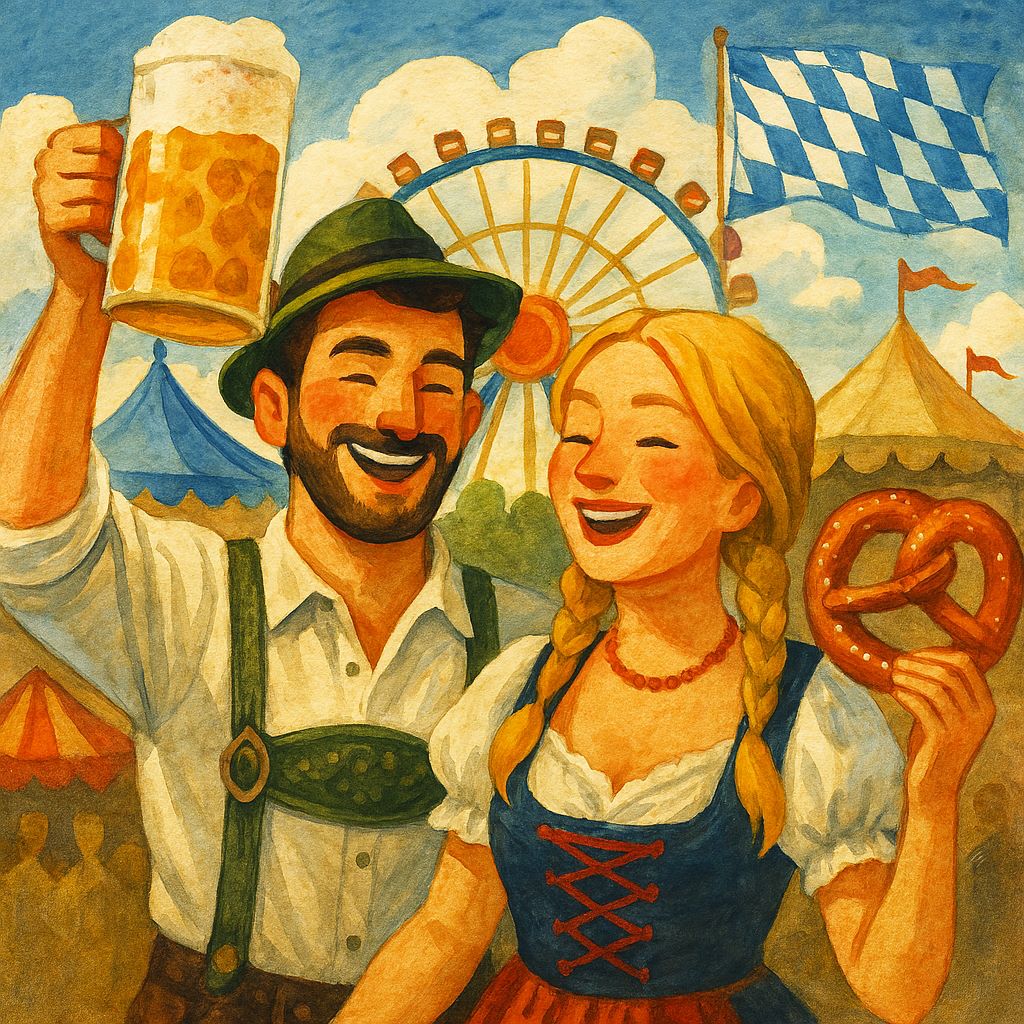
Oktoberfest 2025: Beer, Bavarian Traditions, and the Munich Wiesn
Oktoberfest is one of those German traditions that has become famous far beyond Germany. Every year, people travel to Munich for the beer tents, Bavarian food, music, rides, and the atmosphere of the Wiesn. In 2025, the festival returned for its 190th edition, bringing millions of visitors to the Theresienwiese.
I have always found it interesting that Oktoberfest is both a very traditional German festival and a genuinely international event. Visitors arrive from all over the world, yet many of the things that define the celebration are closely connected with Munich and Bavaria.
How Oktoberfest Began in 1810
The first Oktoberfest took place on October 17, 1810. The occasion was the wedding of Crown Prince Ludwig of Bavaria, later King Ludwig I, and Princess Therese of Saxe-Hildburghausen.
The original celebration looked very different from the Oktoberfest we know today. A large horse race was held on a meadow outside Munich, and the area was named Theresienwiese in honor of the bride. The name remains in use today, while locals commonly shorten it to Wiesn.
The festival gradually developed over the following decades. Agricultural exhibitions, entertainment, food, beer, and fairground attractions became part of the event. What began as a royal wedding celebration eventually developed into Munich’s famous annual folk festival.
The official Oktoberfest food selection at GermanBuy reflects just one small part of the culinary tradition that has grown around the Wiesn.
Oktoberfest 2025: Dates and Location
Oktoberfest 2025 ran from Saturday, September 20, through Sunday, October 5, 2025. As always, the festival took place on the Theresienwiese in Munich.
The opening ceremony followed the traditional format. At noon on the first Saturday, Munich’s mayor tapped the first beer barrel in the Schottenhamel Festhalle and officially opened the festival with the familiar words O’zapft is! The 2025 festival was the 190th Oktoberfest.
What Makes the Munich Oktoberfest Special?
It is easy to reduce Oktoberfest to beer. Beer is certainly an important part of it, but the Wiesn is much more than a collection of giant beer tents.
The festival brings together several different sides of Bavarian culture:
- Beer tents serving Munich Oktoberfest beer by the Maß
- Bavarian food such as roast chicken, pork knuckle, sausages, dumplings, and pretzels
- Traditional clothing including Dirndl and Lederhosen
- Brass bands and folk music throughout the festival grounds
- Fairground rides ranging from traditional attractions to large modern rides
- Parades and ceremonies that connect the modern festival with its traditions
- Family activities and quieter areas away from the biggest beer tents
That mixture is part of what makes Oktoberfest different from an ordinary beer festival. It is also a large public fair, a cultural event, and a place where old traditions and modern entertainment exist side by side.
What Is a Maß?
If you have never been to Oktoberfest, one word you will hear constantly is Maß.
A Maß is the traditional one-liter serving of beer at the Munich Oktoberfest. One liter is approximately 33.8 U.S. fluid ounces.
The large glass mug is called a Maßkrug. At the Wiesn, beer is served by the liter rather than in the smaller glasses that many visitors may know from other beer festivals.
That is one reason the Oktoberfest beer experience is worth approaching with a little moderation. A full Maß is a substantial amount of beer, and drinking water and taking breaks are sensible parts of enjoying a long day at the festival.
Oktoberfest Beer in 2025
Beer prices are always one of the topics visitors want to know about before Oktoberfest begins. In 2025, the official price range for a liter of beer was approximately €14.50 to €15.80, depending on the tent.
The breweries represented at the large tents include well-known Munich names such as Augustiner, Hacker-Pschorr, Hofbräu, Löwenbräu, Paulaner, and Spaten.
The beer is only one part of the experience, though. Sitting at a long wooden table, listening to the band, sharing food with friends, and watching the crowd around you are just as much a part of the Wiesn atmosphere.
What Do People Eat at Oktoberfest?
Oktoberfest food is hearty, traditional, and designed to accompany a long day at the festival.
Roast chicken, known as Hendl, is one of the familiar choices. Other traditional dishes include pork knuckle, sausages, potato dishes, dumplings, Bavarian specialties, and large soft pretzels known as Brezn.
Munich-style Weisswurst is another classic associated with Bavarian food culture, while German sauerkraut is a familiar accompaniment to many traditional meals.
Vegetarian and vegan choices have also become much more common at the festival. Oktoberfest food is no longer limited to the traditional meat-heavy menu of the past.
Traditional Clothing at Oktoberfest
You do not have to wear traditional clothing to visit Oktoberfest. You will see plenty of visitors in ordinary clothes.
Still, Dirndl and Lederhosen have become an important part of the visual identity of the festival. For many visitors, wearing traditional clothing is simply part of the fun.
It is worth remembering, however, that Bavarian traditional dress is not a costume invented specifically for tourists. Dirndl and Lederhosen have their own regional history and remain part of Bavarian cultural life beyond the Oktoberfest grounds.
The Fairground Side of Oktoberfest
The rides are another reason why Oktoberfest feels different from a conventional beer festival.
The Theresienwiese becomes a huge fairground during the festival, with roller coasters, Ferris wheels, carousels, traditional attractions, games, and food stalls spread between the beer tents.
This side of Oktoberfest goes back a long way. The festival did not begin with beer tents. Fairground entertainment gradually became part of the event as Oktoberfest developed during the nineteenth century.
There is also the Oide Wiesn, a separate historical area that recreates aspects of an older Oktoberfest atmosphere with traditional rides, entertainment, and a more nostalgic character.
What Was New at Oktoberfest 2025?
The 2025 festival introduced and expanded several visitor-oriented features while keeping the traditional character of the Wiesn.
One particularly useful addition was the availability of free drinking water. In 2025, visitors could use five free drinking-water taps on the festival grounds. Later reports noted that the service was heavily used during the festival.
The festival also continued to develop its sustainability measures and visitor services. At the same time, many of the traditions that make Oktoberfest recognizable remained unchanged: the ceremonial barrel tapping, the music, the Bavarian food, the beer tents, and the fairground atmosphere.
A Few Things Worth Knowing Before Visiting
Oktoberfest can be extremely busy, particularly on weekends and during the evenings. A little planning makes the experience much easier.
- Arrive early if you want to enjoy the grounds before the largest crowds arrive.
- Consider a table reservation if you are visiting with a group and want guaranteed seating in a particular tent.
- Wear comfortable shoes. The festival grounds are large, and you may spend many hours on your feet.
- Drink water as well as beer. Free drinking-water stations were available at the 2025 festival.
- Keep your belongings secure. Large crowds make it easy to lose track of a phone, wallet, or bag.
- Use public transportation when possible. Getting to and from the Theresienwiese is much easier without having to deal with parking.
Do You Need a Ticket for Oktoberfest?
There is no general admission ticket for Oktoberfest. Visitors can enter the festival grounds freely.
The beer tents are different. A seat in a tent can be reserved, and reservations are particularly useful for groups and busy evening periods. A reservation is not the same thing as an entrance ticket to Oktoberfest itself.
That distinction is useful for first-time visitors because the Oktoberfest grounds are open to everyone, while seating inside a popular tent can be much harder to find at busy times.
Oktoberfest Is More Than a Beer Festival
For many people outside Germany, Oktoberfest is almost synonymous with beer, giant pretzels, Dirndl, and Lederhosen. Those things are certainly part of it, but they only tell part of the story.
The Wiesn has more than two centuries of history behind it. It has changed considerably since the first horse race in 1810, yet it has retained a strong connection with Munich and Bavarian traditions.
That combination is what I find most interesting about Oktoberfest. It can be a huge international event without losing its local character.
For visitors coming to Germany for the first time, it is also a chance to see a side of Bavarian culture that goes well beyond the beer tent. The music, food, traditional clothing, rides, parades, and the atmosphere of the Theresienwiese all belong to the experience.
Oktoberfest 2025 in Munich
Oktoberfest 2025 was the 190th edition of Munich’s famous festival. From September 20 through October 5, the Theresienwiese once again became a meeting place for Munich residents and visitors from around the world.
The final visitor count reached approximately 6.5 million people, according to the preliminary official report. Around 6.5 million liters of beer were consumed during the 16-day festival.
Those numbers are impressive, but they do not really explain why Oktoberfest has lasted for so long. The enduring appeal is easier to understand when you look beyond the beer itself: Oktoberfest brings together history, Bavarian food, music, craftsmanship, fairground traditions, and the simple pleasure of spending time together.
That is the Wiesn at its best.