German Christmas Markets: A Beloved Holiday Tradition
Why German Christmas Markets Are Such a Beloved Holiday Tradition
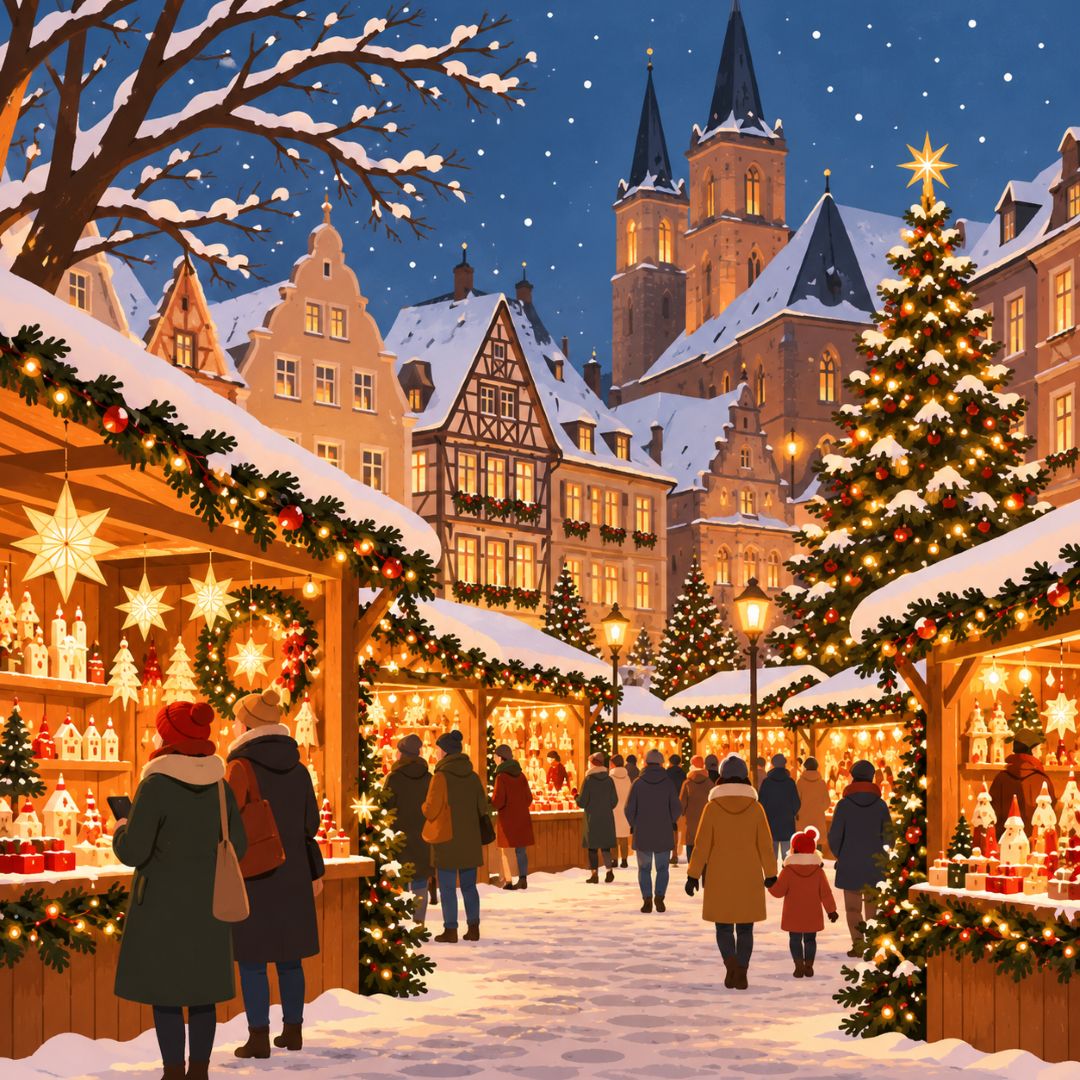
When the first wooden stalls appear in German town squares and the smell of roasted almonds begins to drift through the streets, you know that Christmas is getting closer. German Christmas markets are one of the most familiar sights of the Advent season, but they are about much more than shopping for gifts.
For many people in Germany, a visit to the Weihnachtsmarkt is simply part of December. You meet friends after work, take the children for an afternoon walk, pick up a handmade decoration, or warm your hands around a mug of Gluhwein. Some markets are large and famous, while others consist of only a few dozen stalls in a small historic town.
That mixture of food, crafts, lights, familiar traditions, and ordinary moments is what makes German Christmas markets so special. They are not simply attractions for visitors. They are part of how many communities experience the weeks leading up to Christmas.

What Is a German Christmas Market?
A traditional German Christmas market is a seasonal market held during the weeks before Christmas. In German, it is usually called a Weihnachtsmarkt or, in some regions, a Christkindlmarkt.
The exact character varies from place to place. A historic city may fill an entire central square with wooden stalls, while a smaller town may have a compact market around its church or town hall. Some markets focus heavily on traditional crafts and regional food. Others have concerts, children’s activities, nativity displays, or historical themes.
What they generally share is the feeling of the Advent season: decorated stalls, Christmas lights, seasonal food and drinks, music, and things made or sold specifically for the holidays.
Why Are German Christmas Markets So Popular?
Part of the answer is tradition. Christmas markets have been part of German-speaking Europe for centuries, and many of today’s best-known markets have long histories. But their popularity is not only about history.
A Christmas market gives people a reason to slow down for an hour or two during an otherwise busy season. You might stop for a warm drink, look at wooden ornaments, listen to a choir, or simply walk beneath the lights.
What I especially love is that the experience does not have to be grand to be memorable. A small market in a town square can sometimes feel just as magical as one of the famous markets in a major city.
What Can You Find at a German Christmas Market?
Every market is different, but certain things appear again and again.
Traditional Christmas Decorations
Wooden ornaments, candle holders, Christmas pyramids, nativity figures, glass ornaments, stars, angels, and other seasonal decorations are common sights. Depending on the region, you may also find traditional handicrafts that have been made in Germany for generations.
For many German families, buying one special decoration at the Christmas market can become a small annual tradition. The object itself may be simple, but it can later remind someone of a particular Christmas or a particular town.
Christmas Market Food
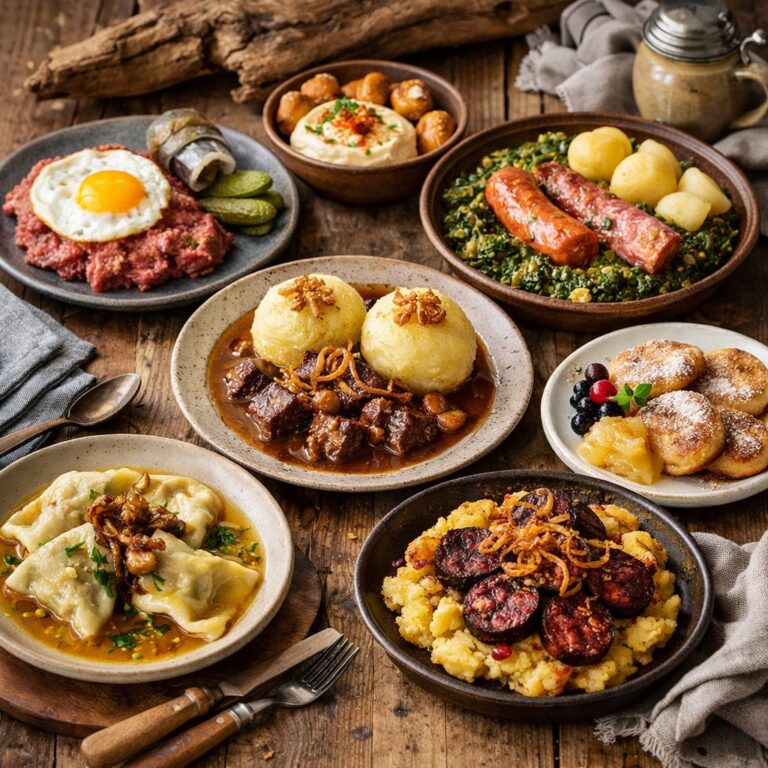
Food is one of the pleasures of a German Christmas market. Depending on the region, visitors may find roasted almonds, sausages, potato pancakes, baked goods, gingerbread, crepes, roasted chestnuts, and many other warm or sweet treats.
Some foods are closely associated with the Christmas season, while others are simply popular street food that tastes particularly good on a cold evening.
Gluhwein and Other Warm Drinks
Gluhwein, the German version of mulled wine, is perhaps the drink most closely associated with Christmas markets. It is served warm and usually prepared with red wine, spices, and citrus flavors.
Non-alcoholic versions are also widely available, often called Kinderpunsch. Hot chocolate, tea, coffee, and other warm drinks make it possible for everyone to enjoy a break from the cold.
When Do German Christmas Markets Open?
This is where things become more interesting than the simple answer you may find in many English-language descriptions.
There is no single nationwide opening date for German Christmas markets. Many traditional markets begin in the second half of November and continue through December, but opening dates vary by city and by market. Some start earlier, while smaller markets may operate for only a weekend or a few selected days.
In 2026, for example, the International Christmas Market in Essen opens on November 13 and runs through December 23. Berlin’s official Christmas market season begins after Totensonntag, with many of its traditional markets opening on November 23. These different schedules show why it is always better to check the dates of an individual market than to assume that every German Christmas market follows the same calendar.
Why Does Totensonntag Matter?
If you have ever wondered why some German Christmas markets seem to wait until late November, you may come across the name Totensonntag.
Totensonntag, also known as Sunday of the Dead or Eternity Sunday, is a Protestant day of remembrance observed on the last Sunday before Advent. In 2026, it falls on November 22.
It is considered a quiet day of remembrance, and German states have laws that protect the character of the day. The exact restrictions differ from state to state, which is one reason many Christmas markets do not operate on Totensonntag.
There is no simple nationwide rule saying that every German Christmas market must wait until after Totensonntag. Some markets open before the day and close for the Sunday, while others begin the following week.
The 2026 schedule in Essen illustrates this well: its Christmas market opens on November 13 but remains closed all day on November 22. Berlin takes a different approach and starts its official Christmas market season after Totensonntag.
For visitors, the important point is simply that late November can look different from one German city to another. The timing reflects local traditions, event planning, and the way the quiet character of Totensonntag is observed.
Christmas Market or Winter Market?
This distinction is useful when looking at German event calendars in October and early November.
You may see names such as Wintermarkt, Winterzauber, Winterdorf, or Winterwelt. These events can look very festive, with lights, decorated wooden huts, warm drinks, food, crafts, and seasonal entertainment.
They are not necessarily traditional Christmas markets.
Some begin as early as October and continue through December or even into January. They often emphasize the winter season rather than Advent itself. Others are pre-Christmas fairs or seasonal events that happen to include Christmas decorations and products.
Berlin is a good example. The city’s official information distinguishes between the Christmas market season and winter markets that begin earlier. The Winterwelt at Potsdamer Platz, for example, starts on October 31, 2026, before Berlin’s traditional Christmas market season.
And then there are traditional autumn fairs such as the Martinimarkt in Neuruppin. In 2026, it takes place from October 30 to November 8 and fills the town with rides, food stalls, sweet treats, and more than a million LED lights. It is a long-established fair rather than a Christmas market, but it can still create a wonderfully festive atmosphere. I still remember taking a ride on the Ferris wheel there and looking out over the brightly lit town below. The lights, the food stalls, and the cool autumn air created a festive feeling that already seemed to hint at the holiday season, even though Advent was still a few weeks away.
Why Do Some German Markets Start So Early?
There are several reasons why the winter season now begins earlier in some German cities.
Winter-themed events can attract visitors for a longer period, especially in larger cities and popular shopping districts. An event that begins in October can also offer ice skating, food, entertainment, and seasonal shopping without presenting itself as the traditional Advent market.
This creates a broader winter-event season alongside the traditional Christmas market season. For visitors from abroad, that distinction can be confusing at first. Once you know the difference, however, German event calendars make much more sense.
Some Christmas Markets Are Famous Around the World
Germany has hundreds of Christmas markets, and a handful have become particularly well known internationally.
Nuremberg Christkindlesmarkt
The Nuremberg Christkindlesmarkt is one of Germany’s best-known Christmas markets. Its traditional red-and-white striped stalls, famous gingerbread, handmade decorations, and opening ceremony with the Nuremberg Christkind have become closely associated with the city’s Christmas identity.
Dresden Striezelmarkt
Dresden’s Striezelmarkt is another historic market with a strong regional identity. The name is connected with Striezel, an old name associated with the city’s traditional Christmas baked goods. The market is especially known for its large Christmas pyramid, traditional crafts, and regional specialties.
Christmas Markets in Major Cities
Berlin, Cologne, Hamburg, Munich, Frankfurt, Stuttgart, and many other cities host several Christmas markets rather than just one. These can range from traditional markets in historic squares to modern events with international food, entertainment, or special themes.
That variety is part of what makes the German Christmas market tradition so interesting. There is no single standard design that every city follows.
Are German Christmas Markets Only for Tourists?
Not at all.
Tourists have certainly made Germany’s Christmas markets famous around the world, but local residents are an important part of the atmosphere. Friends meet there after work. Families stop by on weekends. Children come to see the lights and decorations. People pick up gifts, eat dinner, or simply have a warm drink before heading home.
In smaller towns, the market may feel especially local. You might recognize the people running the stalls or see neighbors meeting for their annual Christmas-market visit.
That everyday quality is one of the reasons the tradition has lasted. A German Christmas market does not have to be a major tourist attraction to be meaningful.
What Makes a German Christmas Market Feel Traditional?
There is no official checklist, but certain details immediately create the familiar atmosphere.
- Wooden market stalls decorated for Christmas
- Warm seasonal food and drinks
- Christmas lights and decorations
- Handmade crafts and traditional ornaments
- Christmas music or live performances
- Regional specialties
- Activities for children
- A central town square, historic street, or other community setting
The combination matters more than any individual element. A few decorated stalls, warm lights, and the smell of something baking can completely change the feeling of a town square on a dark December afternoon.
German Christmas Markets Are Part of Advent
Perhaps the most important thing to understand about German Christmas markets is that they belong to the wider tradition of Advent.
Advent is the period leading up to Christmas, and many German traditions are built around the anticipation of Christmas rather than Christmas Day itself. Advent calendars, Advent wreaths, Christmas cookies, decorated homes, and Christmas markets all become part of the seasonal rhythm.
A Christmas market fits naturally into that period of anticipation. It gives people a place to pause, meet others, enjoy seasonal food, and gradually move into the Christmas spirit.
That may be why the markets can feel so nostalgic even to people who did not grow up with them. The lights, smells, music, and handmade decorations create an atmosphere that is immediately associated with the weeks before Christmas.
When Is the Best Time to Visit a German Christmas Market?
If you are visiting Germany specifically to experience a Christmas market, late November through the first three weeks of December is generally the safest period to consider. By then, most major markets are operating and the cities are fully decorated for the season.
Early December can be particularly atmospheric because the Advent season is underway while Christmas is still approaching. Weekends, however, can become very busy at the best-known markets.
For a quieter experience, a weekday afternoon or early evening can be much more relaxed. Smaller town markets can also offer a very different experience from the major city markets.
A Christmas Tradition That Keeps Changing
German Christmas markets have changed over the years. Modern markets may include international food, new forms of entertainment, sustainability initiatives, and attractions that would not have been part of an older market.
At the same time, many familiar elements remain remarkably consistent: wooden stalls, warm drinks, handmade goods, Christmas decorations, seasonal food, and the simple pleasure of walking through a market after dark.
That balance between old and new is perhaps one reason the tradition remains so appealing. A Christmas market can feel deeply traditional without being frozen in the past.
German Christmas Markets: More Than Shopping
For visitors from the United States and other countries, German Christmas markets can seem like a very picturesque part of the holiday season. And they certainly can be beautiful.
But the real charm is not just in the decorations or the famous names. It is in the way these markets become part of everyday Advent life: a warm drink after work, a bag of roasted almonds for the walk home, a handmade ornament chosen for the Christmas tree, or an evening spent meeting friends beneath the lights.
That is what makes German Christmas markets such a beloved holiday tradition. They turn the weeks before Christmas into something people can experience together, one evening at a time.
Frequently Asked Questions About German Christmas Markets
When do German Christmas markets open?
Many German Christmas markets open in the second half of November and continue through December. However, opening dates vary by city and market. In 2026, some major markets open before Totensonntag on November 22, while others begin afterward.
What is Totensonntag?
Totensonntag is a Protestant day of remembrance observed on the last Sunday before Advent. In 2026, it falls on November 22. German states have different laws protecting the quiet character of the day, which is why many Christmas markets close on that Sunday.
Can Christmas markets open before Totensonntag?
Yes. There is no single nationwide opening date requiring every German Christmas market to wait until after Totensonntag. Some markets open earlier and close on Totensonntag, while others begin afterward.
What is the difference between a Christmas market and a winter market in Germany?
A traditional Christmas market is closely connected with Advent and the weeks before Christmas. Winter markets and winter-themed events may begin earlier, sometimes in October, and can continue beyond Christmas. The names and formats vary from city to city.
What food is served at German Christmas markets?
Popular choices include roasted almonds, sausages, potato pancakes, gingerbread, baked goods, roasted chestnuts, crepes, and other regional specialties. Warm drinks such as Gluhwein, non-alcoholic Kinderpunsch, hot chocolate, and tea are also common.
Are German Christmas markets only for tourists?
No. Christmas markets are also an important part of local Advent life. German residents visit them to meet friends, shop for gifts, eat seasonal food, enjoy the lights, and spend time together during the weeks before Christmas.