
Jaegerschnitzel: A Culinary Journey Across Germany
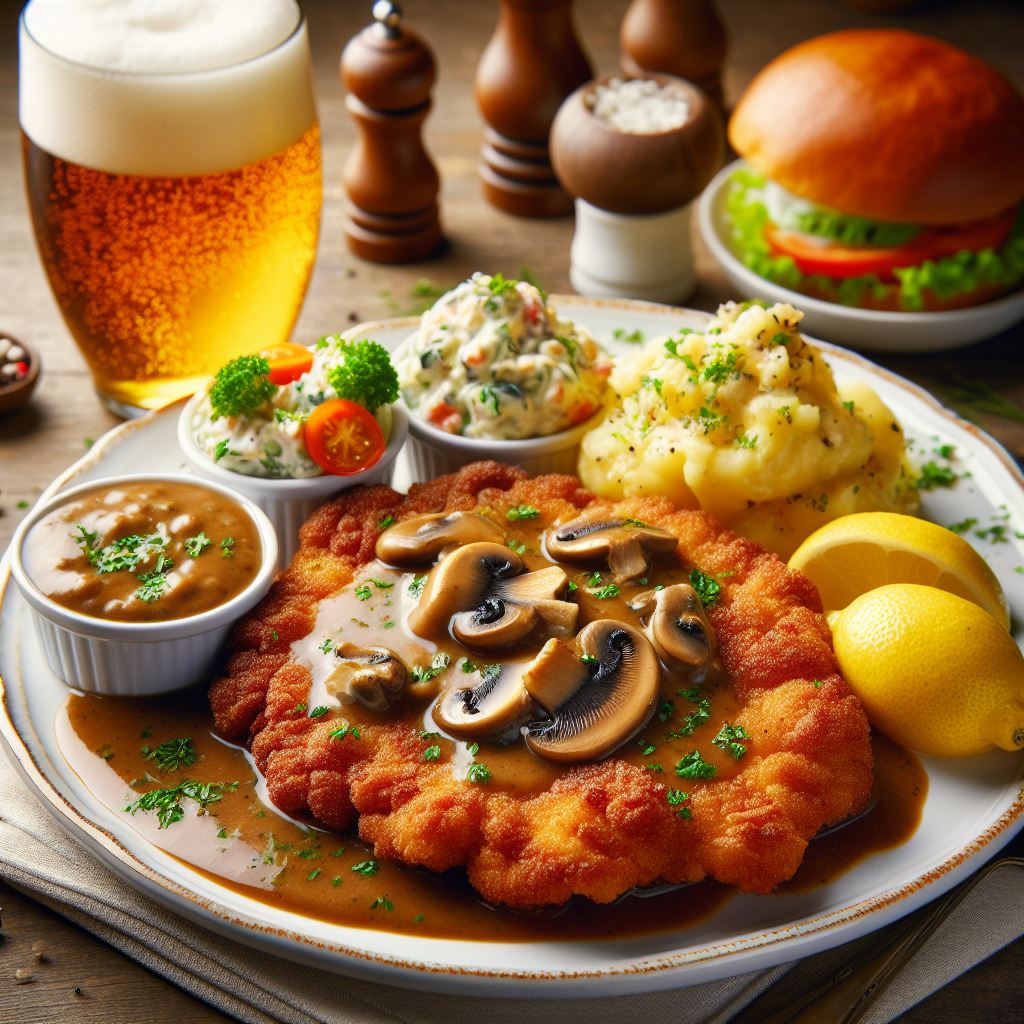
Few German dishes can cause quite as much confusion for an international visitor as Jaegerschnitzel. In many parts of Germany, the name refers to a schnitzel served with a savory mushroom sauce. In eastern Germany, however, the same name can mean something completely different: a thick slice of German sausage, breaded and fried like a schnitzel.
Both versions belong to German food culture, but they reflect different culinary traditions. The contrast became especially memorable during the division of Germany, when the sausage version became a familiar part of everyday cooking in the former East Germany.

What Is Jaegerschnitzel?
The German name Jägerschnitzel literally means “hunter’s schnitzel.” The name is associated with a hearty style of cooking and is commonly connected with mushrooms and a savory sauce.
The version familiar in many parts of Germany consists of a fried schnitzel, often made from pork, served with a mushroom-based sauce. Depending on the recipe, onions, cream, stock, or other ingredients may be added to the sauce.
But there is another interpretation that is particularly associated with eastern Germany. Instead of a meat cutlet, it uses Jagdwurst.
What Is Jagdwurst?
Jagdwurst is a traditional German cooked sausage. It is made from pork and has a characteristic coarse texture created by pieces of meat and fat within the sausage. It is commonly sold as a sausage that can be sliced and eaten cold, for example as a bread topping, but it can also be used in cooked dishes.
For the East German version of Jaegerschnitzel, a thick slice of Jagdwurst is coated in flour, egg, and breadcrumbs and then fried until the outside becomes crisp and golden.
For someone encountering the dish for the first time, this explains the apparent contradiction: there is no traditional meat cutlet underneath the breading. The “schnitzel” is a slice of sausage.
The Jaegerschnitzel with Mushroom Sauce
The version commonly expected in many German restaurants is a breaded or fried schnitzel served with a savory mushroom sauce. Pork is a common choice, while veal can also be used.
The sauce gives the dish much of its character. Mushrooms and onions create a rich, savory accompaniment that works well with the crisp coating of the schnitzel. Potatoes, fries, croquettes, or other traditional side dishes can accompany the meal.
There is no single recipe that defines every Jaegerschnitzel. Family recipes and restaurant versions can differ in the meat, mushrooms, sauce, and side dishes.

For an easy German-style version at home, Knorr Fix Jaegerschnitzel provides a convenient way to prepare the characteristic sauce.
The East German Jaegerschnitzel
The East German version became one of the most recognizable dishes associated with everyday cooking in the former German Democratic Republic, or GDR.
Instead of pork or veal, the dish uses a thick slice of Jagdwurst. The sausage is coated in flour, dipped in beaten egg, covered with breadcrumbs, and fried until golden brown.
The combination was particularly familiar in everyday dining, including school and workplace canteens. It became part of the culinary memory of many people who grew up in the GDR.
The dish also reflects the practical character of everyday cooking at the time. Food availability influenced what people prepared, and familiar ingredients were often used in creative ways. But it would be too simple to describe the dish merely as a substitute created because meat was unavailable. It became a recognizable dish in its own right.
How Is East German Jaegerschnitzel Served?
The classic East German combination is quite different from the mushroom-sauce version.
The breaded Jagdwurst is commonly served with pasta, particularly spiral-shaped noodles, and a tomato-based sauce. The sauce can be made with tomatoes, onions, and ketchup, depending on the recipe.
Ingredients
- 400 g (about 14 oz) Jagdwurst, cut into thick slices
- Flour for coating
- 1 egg
- Breadcrumbs
- Salt and pepper
- Butter or clarified butter for frying
Preparation
- Cut the Jagdwurst into thick slices.
- Lightly coat each slice with flour.
- Dip the slices into beaten egg.
- Cover them with breadcrumbs.
- Heat butter or clarified butter in a frying pan.
- Fry the slices on both sides until the coating is crisp and golden brown.
Serve the fried Jagdwurst with pasta and a tomato-based sauce for a combination strongly associated with the East German version of the dish.
Why Does Jaegerschnitzel Mean Two Different Things?
This is one of the most interesting things about the dish. A German ordering Jaegerschnitzel may have a very specific idea of what should arrive at the table, but that expectation can change depending on where the person grew up.
In many parts of Germany, Jaegerschnitzel suggests schnitzel with mushroom sauce. In eastern Germany, the Jagdwurst version remains immediately recognizable and is still served today.
The difference became a lasting culinary reminder of Germany’s former division. The political border disappeared in 1990, but food traditions do not necessarily disappear at the same time.
Jaegerschnitzel and the Food Culture of the GDR
The East German version is particularly interesting because it was everyday food rather than an elaborate specialty.
Jägerschnitzel with noodles became associated with school meals, workplace canteens, family kitchens, and inexpensive everyday dining. For many people who grew up in the GDR, the dish is therefore connected not only with a particular taste but also with memories of ordinary daily life.
That helps explain why the dish continues to have a place in eastern German food culture today. It represents a period of German history through something as simple as a slice of sausage, breadcrumbs, pasta, and tomato sauce.
Two Versions, One German Food Tradition
There is no need to decide which version is the “real” Jaegerschnitzel. Both have their place in German culinary culture.
The mushroom-sauce version belongs to the broader German schnitzel tradition and is familiar in restaurants throughout the country. The Jagdwurst version tells a more specific story about eastern Germany and the everyday food culture of the GDR.
For me, that contrast is what makes Jaegerschnitzel particularly interesting. A single name can lead to two very different plates, and each one tells us something about the people and history behind German food.
Food often preserves regional differences long after borders have changed. Jaegerschnitzel is a delicious example: depending on where you are in Germany, the same word can still mean something entirely different.
Sources & Further Reading:
MDR Zeitreise – Food and Nutrition in the GDR
MDR SACHSEN – Favorite Canteen Meals and Food Memories
Fleischwirtschaft – Jagdwurst: Definition and Description






One Comment
Comments are closed.