Apples in Germany: German Apple Varieties, Apple Cake and Apfelwein
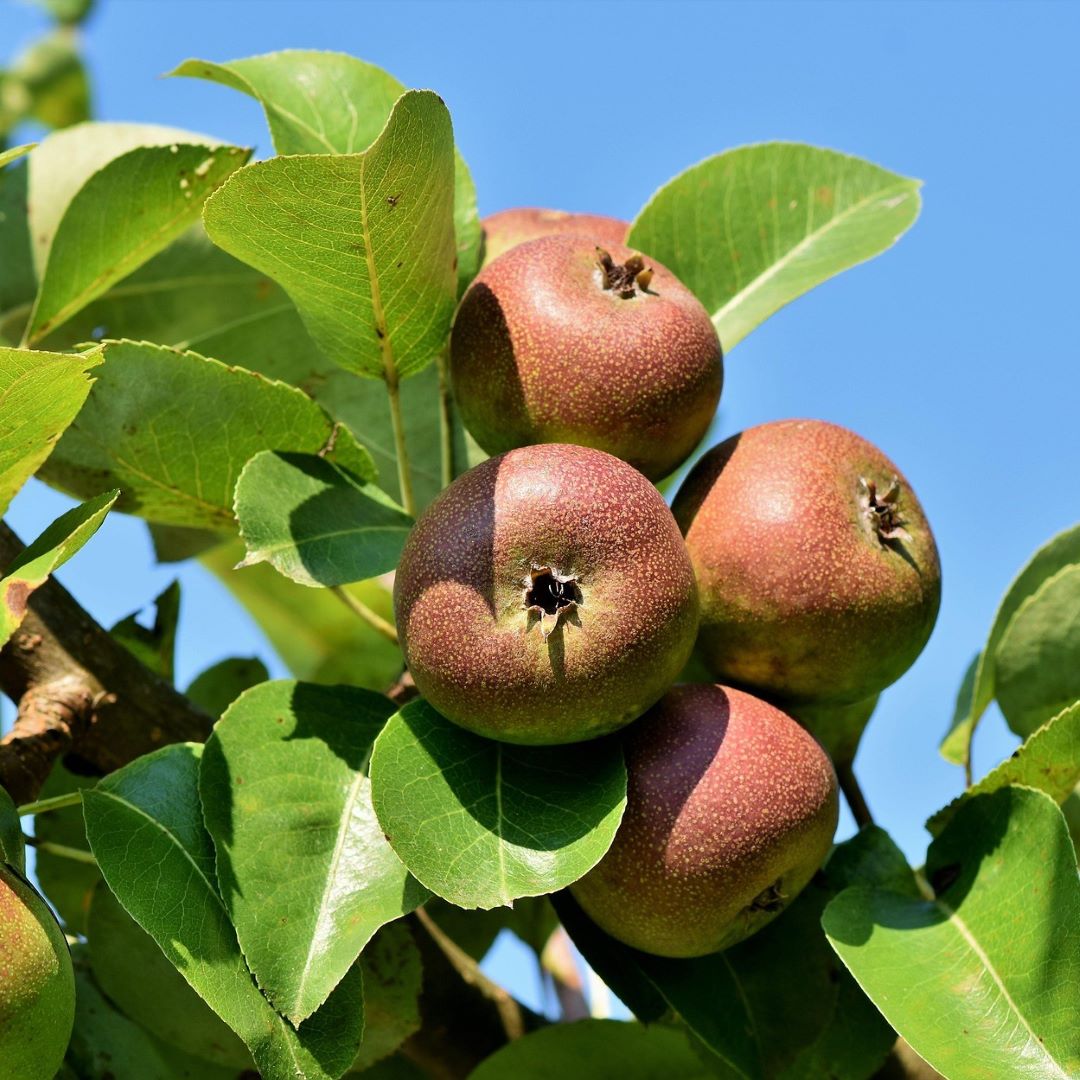
Few fruits are as closely connected with everyday life in Germany as the apple. It grows in large commercial orchards, on traditional Streuobstwiesen, in village gardens and in the backyard of a family home. By late summer and early fall, apples begin appearing at farmers’ markets, farm shops and roadside stands, while gardens can suddenly produce far more fruit than one family could eat fresh.

But the German apple story is about much more than eating a fresh apple. Apples become Apfelkuchen, applesauce, juice, Apfelschorle and, in some regions, Apfelwein. Older varieties are still preserved in gardens and traditional orchards, while modern commercial orchards focus on varieties that can be grown, stored and sold efficiently.
This combination of agriculture, regional traditions and ordinary family life is what makes apples such an interesting part of German food culture.
Quick Facts About Apples in Germany
- Apples are the most important fruit crop in German commercial fruit growing.
- Germany had about 32,700 hectares of apple-growing area in 2025.
- German growers harvested around 1.138 million metric tons of apples in 2025.
- Major growing regions include the Altes Land near Hamburg, the Lake Constance region, the Rhineland, Borthen near Dresden and Werder (Havel).
- Important commercial varieties include Elstar, the Jonagold group, Gala, Braeburn and Pinova.
- Many older regional varieties survive mainly in home gardens and traditional Streuobstwiesen.
- German apple culture also includes apple cake, applesauce, apple juice, Apfelschorle and regional apple wine.
Why Apples Matter in Germany
Apples are part of German food culture in a way that goes well beyond the supermarket fruit aisle. A single apple tree in a garden can provide enough fruit for a family, while larger orchards supply markets throughout Germany and beyond.
The scale of German apple growing is considerable. In 2025, German growers harvested about 1.138 million metric tons of apples from roughly 32,700 hectares. Baden-Württemberg, Lower Saxony and Hamburg together accounted for about two-thirds of the country’s apple-growing area.
At the same time, commercial production represents only part of the picture. Across rural Germany, it is still common to see apple trees in private gardens, on old farm properties and on traditional grassland orchards. The relationship with the apple is therefore both agricultural and personal.
Where Are Apples Grown in Germany?
German apple production is concentrated in several regions with different landscapes and traditions. Some are famous for intensive commercial orchards, while others are particularly associated with traditional fruit growing and regional apple products.
The Altes Land Near Hamburg
The Altes Land, south of the Elbe River near Hamburg, is probably the best-known German fruit-growing region. It is the largest contiguous fruit-growing area in Germany and is particularly famous for apples.
The landscape is easy to recognize: long rows of carefully managed fruit trees, farm shops, narrow roads and villages surrounded by orchards. Apples are an important part of the regional economy, and the area has become closely associated with spring blossoms and the autumn harvest.
The region also illustrates how German apple growing has changed. Modern commercial orchards use smaller, compact trees that are easier to manage and harvest than the large standard trees that were common in earlier generations.
The Lake Constance Region
Another major apple-growing area is the region around Lake Constance in southern Germany. The mild climate and long tradition of fruit growing have made the area one of the country’s best-known apple regions.
Apples from the Lake Constance area are sold fresh, but the region is also strongly connected with juice and other processed fruit products. Traditional orchards and modern commercial plantations exist side by side.
Hesse and the Tradition of Apfelwein
Hesse has a different relationship with apples. Here, the fruit is closely connected with Apfelwein, the traditional German apple wine known locally as Ebbelwei or Stoeffche.
Hessian apple wine culture is not simply about the drink itself. It includes the care of traditional orchards, harvesting, pressing, local taverns, festivals and knowledge passed from one generation to another. In 2022, Hessian apple wine culture was added to Germany’s national inventory of intangible cultural heritage.
That recognition reflects something important about German apples: in some regions, the fruit is part of a complete cultural tradition rather than simply an agricultural product.
Werder (Havel) in Brandenburg
Werder (Havel), southwest of Berlin, is another traditional German fruit-growing area and an important reminder that German apple culture is not limited to northern or southern Germany.
The town and surrounding area have a long history of fruit growing. Apples, cherries and other fruits are cultivated there, and the traditional Baumbluetenfest has helped make Werder famous far beyond Brandenburg.
The region also preserves the connection between commercial orchards, smaller family operations, farm shops, self-picking and traditional fruit products. The city’s own information on regional agriculture describes apples as one of the important crops grown around Werder, while local orchard organizations continue to preserve knowledge about regional varieties.
For anyone interested in the agricultural history of eastern Germany, Werder is particularly interesting. Fruit growing remained important in the region during the GDR period, and many local traditions continued after German reunification.
Other German Apple Regions
The list does not end there. The BZL, Germany’s Federal Information Centre for Agriculture, also identifies Borthen near Dresden and the Rhineland among the country’s important apple-growing regions.
Germany’s geography helps explain this regional variety. Apples grow particularly well in several temperate areas, but local climate, soil, water availability and the choice of varieties all influence what growers can produce successfully.
German Apple Varieties: From Elstar to Old Regional Apples
When people think about German apples today, they are likely to encounter a relatively small selection of familiar commercial varieties. The BZL lists Elstar, the Jonagold group, Gala, Braeburn and Pinova among the leading varieties grown for the German table-apple market.
These varieties have characteristics that make them suitable for modern commercial production. Yield, appearance, storage, transport and consistency are important considerations alongside flavor.
But Germany once had a much greater variety of apples. In the 19th century, around 2,000 varieties were known in Germany. Many old regional varieties gradually disappeared from commercial production as modern orchards favored fewer varieties with stronger economic advantages.
Some of those older varieties have survived in private gardens, traditional orchards and collections. Names such as Goldparmaene, Roter Eiserapfel and Berlepsch are part of this older pomological tradition.
These apples can be very different from the uniform fruit found in supermarkets. Their shapes, colors, harvest times, keeping qualities and flavors can vary considerably. Some are especially suitable for eating fresh, while others are better for cooking, baking, drying or pressing.
Apples in German Home Gardens and Streuobstwiesen
There is another side to German apple culture that is easy to miss when looking only at commercial agriculture: the apple tree in the garden.
For many families, an apple tree is not an agricultural investment. It is simply part of the property. A tree may have been planted by a parent or grandparent and continue producing fruit for decades. When autumn arrives, the question is often not whether there will be enough apples, but what to do with all of them.
Traditional Streuobstwiesen are another important part of this landscape. These are grassland areas with widely spaced, usually high-stem fruit trees. Apples, pears, cherries and plums may grow together rather than in the tightly planted rows typical of modern commercial orchards.
Streuobstwiesen are valued not only for their fruit. They can support a remarkable variety of plants and animals, which is one reason conservation organizations and public programs work to preserve them.
They also help keep older fruit varieties alive. A variety that has disappeared from commercial supermarkets may still survive in a traditional orchard or someone’s garden.
How Germans Use Apples in the Kitchen
Fresh apples are only the beginning. German cooking uses apples in both sweet and savory dishes, and preserving the harvest has always been practical when a tree produces more fruit than a household can eat immediately.
Apples are commonly turned into:
- Applesauce (Apfelmus)
- Apple compote (Apfelkompott)
- Apple cake (Apfelkuchen)
- Apple strudel (Apfelstrudel)
- Apple juice (Apfelsaft)
- Apple spritzer (Apfelschorle)
- Apple wine (Apfelwein)
Apples also appear in savory German dishes. They can accompany pork, sausage or game, and the combination of apple with cabbage, onions or potatoes is familiar in regional cooking.
Perhaps the most universal use, however, is simply baking. Few things are more recognizable as traditional German home baking than an apple cake made when the autumn harvest is coming in.
German Apple Cake (Apfelkuchen)
There is no single official German apple cake recipe. Families and regions have their own versions, ranging from simple tray cakes to yeast-based cakes and rich pastry variations. The following version is a straightforward German-style apple cake that works well with common baking apples.
Ingredients
- 250 g all-purpose flour (about 2 cups)
- 125 g unsalted butter, softened (about 1/2 cup plus 1 tablespoon)
- 150 g granulated sugar (about 3/4 cup)
- 3 large eggs
- 1 1/2 teaspoons baking powder
- 1 teaspoon vanilla extract
- 1 tablespoon lemon juice
- 1 teaspoon finely grated lemon zest
- 4 to 5 medium apples, about 600 to 700 g prepared weight (1.3 to 1.5 lb)
- 1 teaspoon ground cinnamon
- 1 tablespoon sugar for the apples
- 1 tablespoon sliced almonds, optional
- Powdered sugar, optional
Method
- Preheat the oven to 180 C (350 F). Grease a 9-inch (23 cm) springform pan.
- Peel the apples if desired, remove the cores and cut them into thin wedges or slices. Toss them with the lemon juice, cinnamon and 1 tablespoon of sugar.
- Cream the softened butter and sugar until light. Beat in the eggs one at a time, followed by the vanilla and lemon zest.
- Mix the flour and baking powder separately, then gradually stir them into the batter. Do not overmix.
- Spread the batter evenly in the prepared pan and arrange the apple slices over the top.
- Sprinkle with sliced almonds if using.
- Bake for about 40 to 50 minutes, until the cake is golden and a toothpick inserted into the center of the cake portion comes out clean.
- Allow the cake to cool before removing it from the pan. Dust with powdered sugar if desired.
The result is the kind of uncomplicated cake that fits naturally into German home baking: buttery, lightly sweet and dominated by the flavor of the apples rather than by a heavy frosting.
Apfelwein: German Apple Wine
Apfelwein is one of the most distinctive traditional uses of German apples. It is particularly associated with Hesse and the Frankfurt region, where it is traditionally served in a distinctive ribbed glass known as a Geripptes and often poured from a stoneware pitcher called a Bembel.
The drink is generally drier and less sweet than many commercial apple ciders familiar to American consumers. It is part of a regional food culture that includes traditional restaurants, village festivals, orchard maintenance and communal pressing.
Hessian authorities describe this tradition as extending from the management of Streuobstwiesen and the preservation of old varieties to the traditional production and communal enjoyment of apple wine.
A Personal Memory of Apple Wine from the GDR
There is also a more personal side to the history of apples in Germany.
Thomas once heard an older German man, who had grown up in the GDR (German Democratic Republic), recall how apples were handled in his own town. His story was not meant to describe every family or every region of the GDR. It was simply a memory of the place where he grew up.
In his town, people could take apples from their own trees to a local Mosterei, or cider mill. For a fee, the apples could be pressed into juice, which the family could then take home. Some people bottled the juice and stored it in their cellar for the winter.
That kind of storage made practical sense at a time when households generally had fewer choices of beverages than consumers have today. A good apple harvest could therefore become part of the family’s supplies for the colder months rather than simply being eaten during the harvest season.
He also remembered that some people made their own apple wine at home for personal use. Glass fermentation vessels were used, together with airlocks, wine yeast and yeast nutrients. He recalled that the yeast was sometimes prepared separately in an ordinary wine bottle before being added to the apple juice.
These details are best understood as a personal recollection rather than a universal description of life in the GDR. They nevertheless illustrate something important about older German food traditions: people often made practical use of what grew around them, and an apple harvest could be preserved in several different forms.
From Garden Apples to Winter Supplies
Preserving fruit was especially important before today’s year-round supermarket selection became normal. Apples were among the fruits that could be stored for months under suitable conditions, while juice, applesauce, compote and other preparations provided additional ways to use a large harvest.
For families with an apple tree, autumn could therefore become a small annual production season. Apples were picked, sorted and eaten fresh, stored or turned into something that would last longer.
That practical relationship with the harvest is still visible today. A garden tree may provide apples for a cake on Sunday, applesauce for the family and enough surplus fruit to take to a local press or farm shop.
Apfelschorle: A Very German Way to Drink Apple Juice
Another familiar German apple drink is Apfelschorle, a mixture of apple juice and sparkling water.
It is simple, refreshing and deeply familiar in Germany. Apfelschorle is commonly served at home, in restaurants and cafes, and as an everyday alternative to soft drinks. The balance between juice and sparkling water can vary according to personal taste.
For Americans encountering the term for the first time, Apfelschorle is best thought of as a German apple spritzer rather than as a conventional soda. It keeps the flavor of apple juice while adding carbonation and reducing the sweetness.
German apple spritzers are also available as packaged drinks, including products made for the German market.
Apples as Part of German Food Culture
The story of the apple in Germany connects several parts of everyday life that are rarely considered together. There are commercial orchards producing millions of tons of fruit, small family gardens with a single old tree, traditional Streuobstwiesen preserving rare varieties, farm shops selling freshly harvested apples and regional traditions built around juice and apple wine.
The fruit itself has changed, too. Modern commercial varieties dominate the supermarket, while hundreds of older varieties survive in gardens, orchards and collections. In places such as Werder (Havel), the history of fruit growing remains visible in the landscape and in local traditions. In Hesse, apple wine continues to connect orchards, community and regional identity.
And then there is the simplest version of all: an apple picked from a tree in the fall, carried into the kitchen and turned into a cake.
That may be one reason apples remain such an enduring part of German life. They are simultaneously a crop, a garden fruit, a cooking ingredient and a link to regional traditions that have been passed from one generation to the next.
FAQ About Apples in Germany
What is the most popular apple variety in Germany?
Elstar is one of the leading commercial table-apple varieties in Germany. Other major varieties include the Jonagold group, Gala, Braeburn and Pinova. Regional and older varieties are also grown, particularly in gardens and traditional orchards.
Where are apples grown in Germany?
Important German apple-growing regions include the Altes Land near Hamburg, the Lake Constance region, the Rhineland, Borthen near Dresden and Werder (Havel) in Brandenburg.
What is Apfelwein?
Apfelwein is traditional German apple wine, particularly associated with Hesse and the Frankfurt (Main) region. It is generally dry rather than sweet and forms part of a broader regional tradition involving orchards, communal pressing, restaurants and festivals.
What is Apfelschorle?
Apfelschorle is a German apple spritzer made by combining apple juice with sparkling water. It is a common everyday drink in Germany and is usually less sweet than a typical apple-flavored soft drink.
What is a Streuobstwiese?
A Streuobstwiese is a traditional orchard meadow where widely spaced, usually high-stem fruit trees grow on grassland. Apples, pears, cherries and other fruit trees may be found together. These landscapes are valued for both their fruit and their biodiversity.
Are apples important in German cuisine?
Yes. Apples are used in German cooking and baking in many forms, including applesauce, compote, apple cake, apple strudel, juice, Apfelschorle and regional apple wine. Apples can also be paired with savory foods such as cabbage, pork and game.
Sources and Further Reading
Federal Information Centre for Agriculture (BZL): Apples.
Background information on apples in Germany, including growing regions, varieties and production. Accessed October 12, 2026.
Read more at landwirtschaft.de
Federal Information Centre for Agriculture (BZL): Five varieties dominate German apple production.
Information on the most important commercial apple varieties and the development of apple cultivation in Germany. Accessed October 12, 2026.
Read more at landwirtschaft.de
Federal Information Centre for Agriculture (BZL): Old apple and potato varieties for the garden.
Background on traditional varieties and their preservation in private gardens. Accessed October 12, 2026.
Read more at landwirtschaft.de
Federal Information Centre for Agriculture (BZL): Biodiversity in orchards.
Information on traditional orchards, biodiversity and the ecological value of fruit-growing landscapes. Accessed October 12, 2026.
Read more at landwirtschaft.de
Last updated: October 12, 2026.