
German Mustard Guide: Types, Brands & How to Use Senf
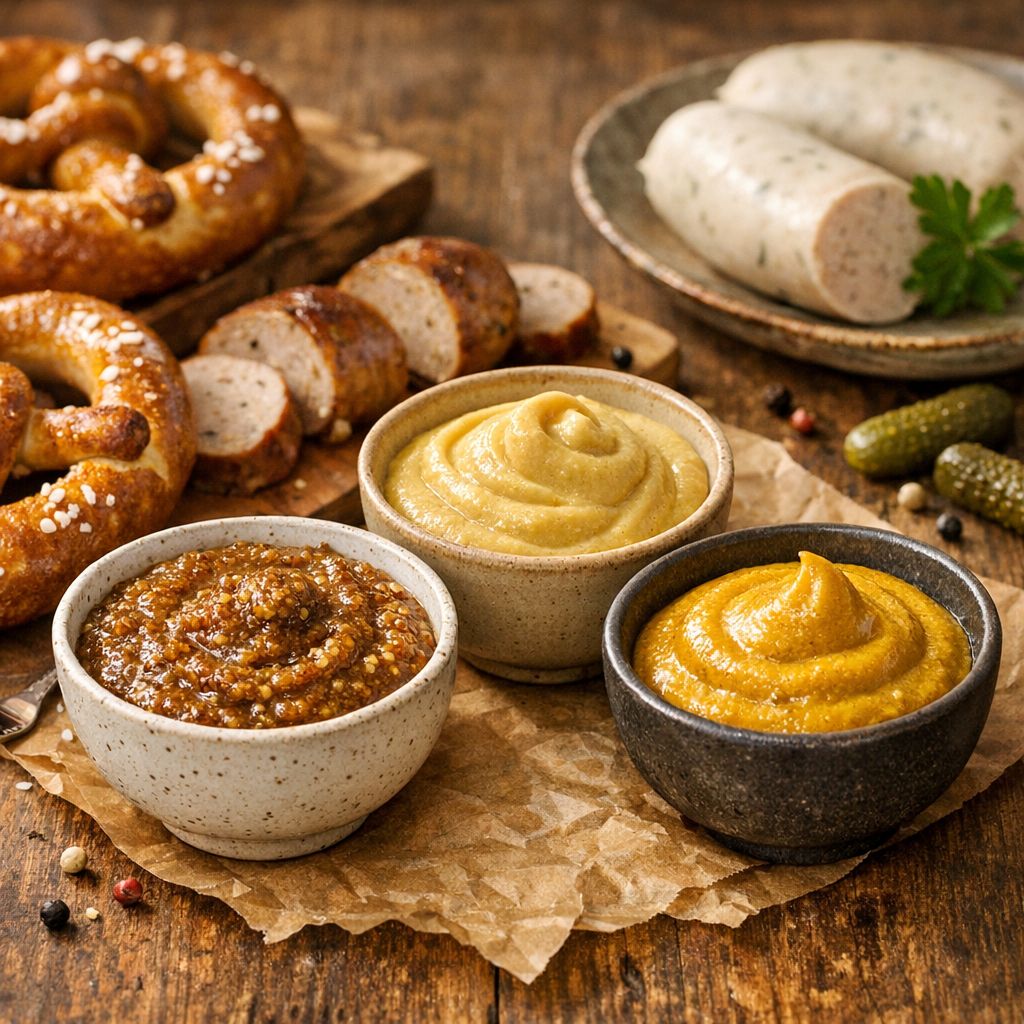
German mustard is not just a condiment — it is a small but unmistakable part of German food culture. It sits quietly beside sausages, cold cuts, bread, and hearty meals, yet it carries a surprising amount of regional identity. For international readers, that is exactly what makes it so interesting: German mustard is familiar enough to understand at first glance, but layered enough to reward a closer look.
If you are used to American mustard, the difference becomes clear almost immediately. American mustard comes in many varieties too, but classic yellow mustard is generally mild, tangy, and smooth. German mustard can be mild, medium-hot, sweet, sharp, or grainy, depending on the style and region. It is not one flavor, but a whole family of styles — each with its own place at the table.
What Is German Mustard?
German mustard, or Senf, is made from mustard seeds combined with an acidic ingredient such as vinegar, water, salt, and, depending on the recipe, spices or other ingredients. The basic formula sounds simple, but the result can vary dramatically depending on the mustard seeds, preparation, recipe, region, and intended use.
That variety is part of the appeal. In Germany, mustard is not treated as a one-size-fits-all condiment. A mild German mustard may suit a sandwich or cold cuts. A sharper version works naturally with grilled meat and sausage. A sweet mustard has a much more specific traditional role.
In broad terms, the main German mustard styles can be understood like this:
| Type | Flavor | Typical pairing |
|---|---|---|
| Mittelscharfer Senf | Balanced, moderately sharp | Bratwurst, bread, cold cuts |
| Scharfer Senf | Sharp, pungent, more intense | Grilled meat, sausages, hearty dishes |
| Süßer Senf | Sweet, smooth, mild | Weisswurst and Bavarian specialties |
The Main Types of German Mustard
Mittelscharfer Senf
Mittelscharfer Senf is one of the classic everyday styles in Germany. It sits between mild and very sharp mustard, making it an easy choice for a wide range of foods. It works with sausages, sandwiches, cold cuts, roast meats, and simple bread.
If you want one mustard that can do almost everything, this is a sensible place to begin.
Scharfer Senf
Scharfer Senf is the bolder side of the category. It has more bite and a more pronounced pungency, making it especially appealing with rich meats and grilled sausages.
Dusseldorf has a particularly strong mustard tradition, and sharper mustard styles are closely associated with the city’s culinary identity. That does not mean every sharp German mustard is a Dusseldorf mustard, but the connection between the city and strong mustard is an important part of German food history.
Süßer Senf
Sweet mustard is one of the most distinctive styles in German food culture. It is especially associated with Bavaria and is traditionally served with Weisswurst.
Compared with sharper varieties, sweet mustard is smoother, sweeter, and gentler on the palate. For many international readers, it is the most surprising introduction to German mustard because it shows that mustard does not have to be hot or strongly acidic. It can also be rounded, sweet, and deeply regional.
Why Mustard Became a German Staple
Mustard has been used in European cooking for centuries, long before modern condiment brands appeared on supermarket shelves. In Germany, its lasting popularity is closely connected to everyday cooking: mustard keeps well, adds strong flavor to simple foods, and works particularly well with meat, sausage, bread, and cold dishes.
Over time, mustard production also became associated with particular cities and regions. Düsseldorf developed a notable mustard-making tradition, while Bavaria became strongly associated with sweet mustard served alongside Weisswurst. In eastern Germany, Bautzner became an especially recognizable mustard name and remains closely connected with the food culture of the region.
That regional connection is one of the reasons German mustard is more interesting than the word “mustard” might suggest. The condiment itself is simple, but the way Germans use it can tell you something about where a food tradition comes from.
German Mustard and Regional Food Culture
One of the things I have always liked about German mustard is how quickly it can tell you something about the food around it. The mustard is rarely the main attraction, yet the choice of mustard often makes sense only when you understand the dish.
Bavarian sweet mustard belongs naturally beside Weisswurst. A sharper mustard makes sense with grilled sausage or rich meat. Bautzner has a particularly strong connection with eastern German food culture. And Dusseldorf has its own long-standing mustard tradition.
If you are interested in the broader world of German sausages and how regional traditions shape what appears on the plate, my German Sausage Guide is a useful companion to this article.
German Mustard Brands: Which One Should You Choose?
If you are shopping for German mustard brands, the easiest way to choose is by flavor and food tradition. Three names are particularly useful starting points because each represents a different side of German mustard culture.
Löwensenf
If you prefer strong and spicy mustard, Löwensenf is a natural place to start. The brand has roots going back to 1903 and became closely associated with Düsseldorf, where its mustard-making tradition developed into one of the city’s best-known culinary specialties.
Its stronger varieties are a good choice for people who want noticeable mustard heat rather than a background condiment.
Händlmaier
For traditional Bavarian dishes, Händlmaier is the classic name to know. The Regensburg-based brand is especially associated with sweet mustard, making it a natural partner for Weisswurst and other Bavarian specialties.
If you want to experience German mustard in a distinctly Bavarian way, this is the style I would try first.
Bautzner
If you want an everyday option with a strong regional identity, Bautzner is an excellent choice. Its medium-hot mustard is particularly associated with eastern Germany and has become one of the country’s best-known everyday mustard styles.
For me, Bautzner is also a reminder that German food culture is much bigger than the familiar Bavarian image often presented abroad.
Quick buying guide
- New to German mustard: Start with Bautzner for a balanced, medium-hot everyday style.
- Like strong, spicy flavors: Try Löwensenf.
- Want Bavarian tradition: Choose Händlmaier sweet mustard for Weisswurst and Bavarian specialties.
That simple comparison turns the category into a practical buying guide without suggesting that one mustard is universally “the best.” The right choice depends on what you like to eat.
What Do Germans Eat Mustard With?
Mustard is deeply woven into everyday German eating habits. It is not reserved for special occasions. It shows up in casual meals, street food, sandwiches, and traditional dishes alike.
Bratwurst
Bratwurst and mustard are one of the most familiar combinations in Germany. A medium or spicy mustard works especially well here because its acidity and pungency balance the richness of the sausage.
Weisswurst
Weisswurst is traditionally served with sweet mustard, especially in Bavaria. It is one of the most recognizable pairings in German cuisine and an essential reference point when talking about Oktoberfest and Bavarian food culture.
Leberkase
Leberkase is often eaten with mustard as well, either in a roll or alongside bread. Depending on taste and regional preference, medium or sweet mustard may be used.
Sandwiches and bread
German mustard is also common on sandwiches and bread with cold cuts. It adds a lot of flavor with very little effort, which fits the practical side of German everyday cooking.
German Mustard vs American Mustard
For international readers, the comparison between German mustard vs American mustard is useful, but it is worth avoiding an overly simple comparison. Both countries have several mustard styles, so there is no single flavor that represents every American or German mustard.
Flavor
Classic American yellow mustard is generally mild, tangy, and straightforward. German mustard covers a wider range, from mild and balanced to distinctly pungent or sweet.
Ingredients
Both German and American mustards can be based on mustard seeds, vinegar or another acid, water, and salt. The exact balance varies considerably by recipe and brand, which is one reason the finished flavors can be so different.
Heat
German mustard can range from mild to quite sharp. The level of pungency depends partly on the mustard seeds and how they are processed. Some German varieties therefore have considerably more bite than the classic yellow mustard many Americans know.
Texture
American mustard is often smooth and consistent, although many other American styles exist. German mustard can also be smooth, but some varieties have a more rustic or grainy texture.
In short, the most useful distinction is not simply “German versus American.” German mustard is notable for the range of styles and the strong connection between certain mustards, dishes, and regions.
Why Is Dusseldorf So Famous for Mustard?
Düsseldorf has a long-standing mustard-making tradition and is one of the German cities most strongly associated with mustard. The city’s historical mustard culture includes Düsseldorfer Mostert, a traditional mustard style with protected regional status in the European Union.
The connection is not just historical branding. Mustard production became an established part of Düsseldorf’s food culture, and the city continues to present mustard as part of its culinary identity.
That is why you will often see Düsseldorf mentioned when talking about strong German mustard. It is a genuine regional food tradition, rather than simply a modern marketing label.
Why Bautzner Mustard Matters
Bautzner represents a very different part of Germany’s mustard story. The brand is strongly associated with eastern Germany and with everyday mustard rather than the international image of Bavarian cuisine.
The mustard’s regional popularity is part of what makes it interesting. It shows how food brands can become tied to local identity and remain familiar across generations.
I particularly like having Bautzner in this conversation because it gives a more complete picture of German food culture. German mustard is not just about Bavaria, beer gardens, and Weisswurst. Eastern Germany has its own recognizable mustard tradition too.
How to Choose Your First German Mustard
If you have never tried German mustard before, there is no need to make the choice complicated.
- Choose Bautzner if you want a balanced, medium-hot mustard that works with everyday foods.
- Choose Löwensenf if you prefer a stronger, sharper mustard with more bite.
- Choose Händlmaier if you want to experience the sweet Bavarian style traditionally paired with Weisswurst.
If you already know which German foods you enjoy, the choice becomes even easier. Sausage lovers may want something sharper, while anyone planning a traditional Bavarian meal should consider sweet mustard.
Top 3 German Mustards to Try
If you are building a small German pantry, these three styles make a useful introduction to the category:
| Mustard style | Good starting choice | Best for |
|---|---|---|
| Spicy mustard | Löwensenf | Strong flavors, sausages, grilled meats |
| Sweet mustard | Händlmaier | Weisswurst and Bavarian dishes |
| Everyday mustard | Bautzner | Bratwurst, bread, cold cuts, everyday meals |
Final Thoughts
German mustard is more than a condiment. It is part of the way Germany eats, from everyday sandwiches to regional specialties and classic sausage dishes. It can be mild, sweet, or sharp, but the most interesting part is how closely particular styles are connected to the foods and regions where they are traditionally enjoyed.
I think that is what makes German mustard worth trying rather than simply treating it as another condiment. Once you know the difference between a medium-hot everyday mustard, a sharp Dusseldorf-style tradition, and sweet Bavarian mustard, the labels on the shelf suddenly tell you much more.
If you are looking for the best German mustard for your own table, start with the flavor you want most: Löwensenf for a sharper experience, Händlmaier for sweet Bavarian tradition, or Bautzner for a balanced everyday style.
You can also browse the Bautzner mustard selection and the wider German mustard selection at GermanBuy.
Sources and Further Reading
NDR: Senf – Sorten und Herstellung
Bautzner: Senfwissen
Löwensenf: Official Brand Information
.





3 Comments
Comments are closed.