
German Sausage: A Culinary Map of Flavor, Region, and Ritual
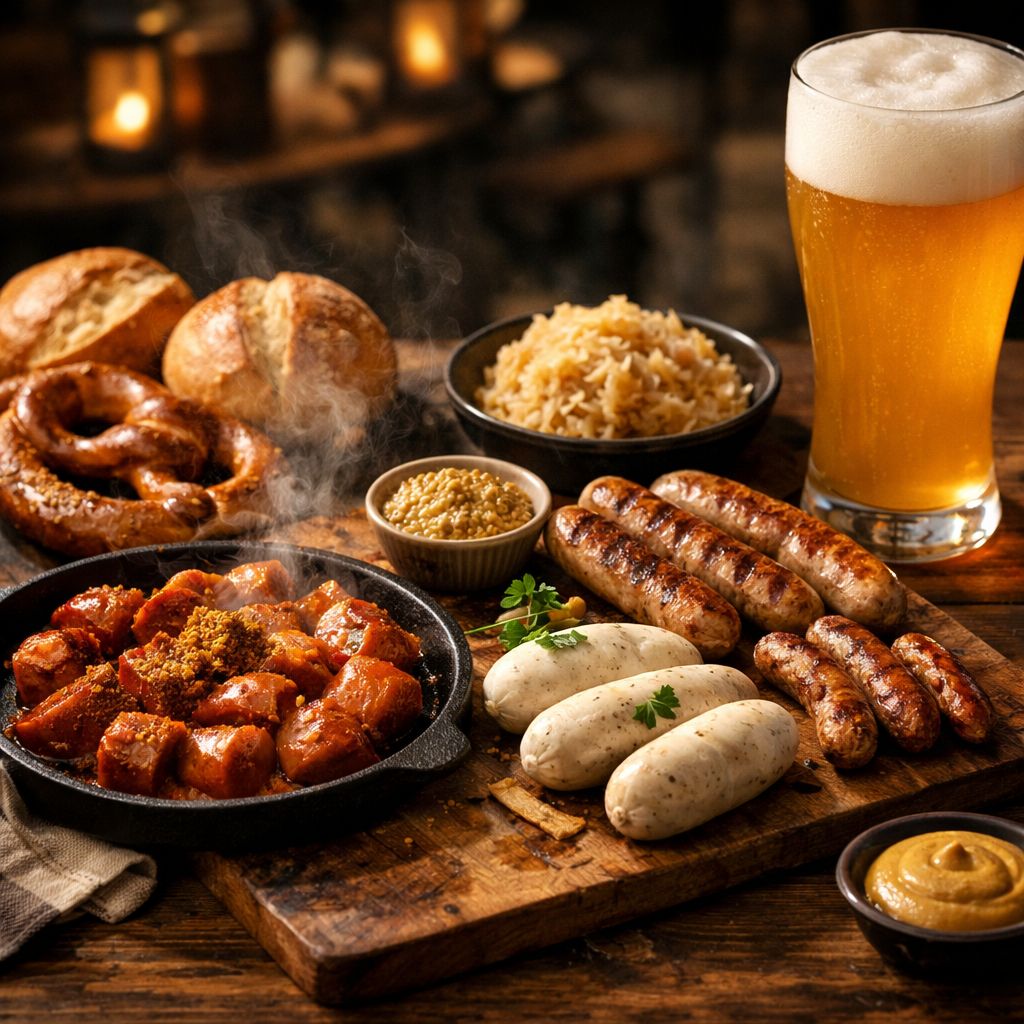
There are few foods as instantly, unmistakably German as sausage. Yet to call it merely a staple would miss the point entirely. In Germany, sausage is not just something you eat; it is something you inherit, debate, slice, grill, spread, and serve according to traditions that can be as regional as they are personal.
From the smoky snap of a Bratwurst at a summer market to the delicate texture of a Bavarian Weisswurst eaten as part of a traditional morning meal, German sausage is a living expression of place, tradition, and everyday pleasure.
I have always found sausage to be one of the easiest ways to understand German food culture. It appears at lunch counters, in butcher shops, on breakfast tables, at beer gardens, and in paper trays on city streets. It can be rustic or refined, humble or iconic, quick or ceremonial. That range is exactly what makes German sausage so interesting.
Popular German Sausages at a Glance
- Bratwurst – the grilled classic, with many regional variations
- Currywurst – sliced sausage served with a curry-seasoned tomato sauce, especially associated with Berlin
- Weisswurst – a pale Bavarian sausage traditionally made with veal and pork back fat
- Bockwurst – a mild, lightly smoked sausage often served hot with mustard
- Frankfurter and Wiener sausages – thin, smooth sausages with a long tradition in German-speaking food culture
- Nuremberg Rostbratwurst – small, thin bratwursts from Nuremberg with protected regional status
- Leberwurst – a savory, spreadable liver sausage commonly enjoyed on bread
- Teewurst – a finely textured, smoky sausage traditionally served as a spread
What Makes German Sausage Different?
German sausage stands out because it is shaped by regional recipes, preparation methods, and long-established food traditions. Some varieties are closely associated with a particular city or region, while others are found throughout the country in slightly different forms.
That means a German sausage is rarely just “sausage.” It can be grilled, boiled, steamed, cooked, smoked, cured, or spread on bread. Pork is common, but beef and veal also play important roles depending on the variety.
Seasoning is part of the identity, too. Marjoram, pepper, nutmeg, garlic, mustard, and other spices can change considerably from one regional recipe to another. The result is not one standardized German sausage, but a remarkably broad family of foods.
Types of German Sausage
1. Bratwurst: The Grilled Classic
For many people, Bratwurst is the first sausage that comes to mind when they think of Germany. The word itself covers a family of sausages rather than one single recipe. Depending on the regional style, Bratwurst can be made from pork, veal, beef, or combinations of meats.
Regional versions give Bratwurst much of its character. Thuringian Rostbratwurst is traditionally associated with Thuringia and has a distinctive seasoning profile. Nuremberg Rostbratwurst is much smaller and thinner, while Franconian Bratwurst is known for its rustic character and frequent use of marjoram.
For a straightforward serving, I would choose a good mustard, a fresh bread roll, and perhaps sauerkraut or potato salad. The sausage should remain the focus rather than disappear beneath a pile of toppings.
GermanBuy also carries traditional German mustard and other classic accompaniments that work naturally with grilled sausages:
If you want to look more closely at how two of Germany’s best-known sausage dishes differ, I also wrote about Bratwurst vs. Currywurst, including the different roles the sausage and sauce play in each dish.
2. Weisswurst: Bavaria’s Morning Ritual
Weisswurst is one of the most distinctive sausages in Germany. Pale and delicate rather than browned and heavily grilled, it is traditionally associated with Bavaria and is made primarily from veal and pork back fat.
The classic Bavarian combination is Weisswurst with sweet mustard and a pretzel. Traditionally, the sausage was eaten before noon, a custom that became closely associated with the Bavarian Weisswurstfruehstueck, or white sausage breakfast.
The famous noon rule is best understood today as a tradition rather than an absolute modern requirement. Weisswurst can certainly be encountered later in the day. What matters more is understanding the cultural setting in which this sausage developed.
There is also a small practical detail that often surprises newcomers: the casing is traditionally not eaten. Diners may peel the sausage or remove the meat from the casing while eating.
For me, Weisswurst is a good example of why German sausage is about more than ingredients. The food itself is only part of the experience; the time, place, mustard, pretzel, and local custom all belong to the tradition.
3. Currywurst: Berlin’s Street-Food Icon
If Bratwurst belongs to the grill, Currywurst belongs to the street. It is one of Germany’s best-known casual dishes: sausage cut into bite-sized pieces and covered with a seasoned, curry-flavored tomato sauce. In Berlin, Currywurst has become an important part of the city’s culinary identity.
The dish emerged in Berlin in the postwar period and quickly became a favorite at snack stands and casual restaurants. Unlike Bratwurst served simply with mustard, the sauce is an essential part of Currywurst. Without that characteristic tomato-based curry sauce, you are really dealing with a different sausage dish.
Berlin-style Currywurst is commonly served with fries, although bread rolls and other accompaniments can also appear. The combination of savory sausage, sweet and tangy tomato sauce, curry seasoning, and crispy fries is very different from the restrained simplicity of a Bratwurst with mustard.
That contrast is worth remembering. Bratwurst is a sausage category with many regional forms; Currywurst is a prepared dish in which the sauce is central to the identity of the food.
That is also why Currywurst should not automatically be described as simply “Bratwurst with curry.” Different sausages can be used for Currywurst, and recipes vary from one stand or region to another. Berlin’s version is particularly famous, but Currywurst is enjoyed far beyond the capital.
4. Bockwurst: A Mild German Classic
Bockwurst is milder and smoother than many grilled German sausages. It is commonly lightly smoked and served hot, often with mustard and bread or a simple side dish.
It is an excellent example of the everyday side of German sausage culture. Bockwurst does not need a large presentation or elaborate toppings. Its appeal comes from its mild flavor, smooth texture, and versatility.
It is also worth noting that Bockwurst is not simply another name for Bratwurst. The two belong to different sausage traditions and are normally prepared and served differently.
5. Frankfurter and Wiener: Familiar Names with a Complicated History
Frankfurter and Wiener sausages are particularly interesting because their names can be confusing outside Germany and Austria.
In everyday German usage, Wiener commonly refers to a thin, smooth sausage that is heated rather than grilled. In parts of the English-speaking world, similar sausages are often described as frankfurters or wieners. The terminology reflects a long history of sausage-making traditions crossing regional and national borders.
For an American reader, the important point is simple: a German Wiener is not the same eating experience as a typical grilled Bratwurst. It is slimmer, smoother, and usually served hot without the pronounced grilled exterior of a sausage cooked over an open flame.
Names alone can therefore be misleading. German sausage culture is full of regional terms, and the same English word does not always describe exactly the same product that a German customer would have in mind.
6. Nuremberg Rostbratwurst: Small Sausages, Strong Identity
Nuremberg Rostbratwurst is one of the most recognizable regional Bratwurst varieties. These sausages are notably small and thin, traditionally seasoned with marjoram and associated with the city of Nuremberg.
The name is more than a regional nickname. Nuremberger Bratwurst and Nuremberger Rostbratwurst have protected geographical status within the European Union, reflecting the connection between the product and its defined regional tradition.
They are often served several at a time rather than as one large sausage. That makes the eating experience quite different from a substantial German Bratwurst in a bread roll.
7. Leberwurst: The Spreadable Side of German Sausage
German sausage culture is not limited to sausages served hot. Leberwurst is one of the best-known examples of a sausage that is commonly eaten cold and spread on bread.
It is rich, savory, and usually soft enough to spread easily. Recipes vary considerably, and the balance of liver, meat, fat, and seasoning depends on the particular variety.
Leberwurst is especially at home on a German bread table, where it can appear alongside sliced bread, rolls, pickles, cheese, mustard, or other cold foods.
8. Teewurst: A Sausage Made for Spreading
Teewurst is another cold, spreadable German sausage. It has a fine texture and a characteristic smoky, savory flavor, often with a slight tang.
The name can be misleading to English speakers. Teewurst is not a sausage made from tea. The name is associated with the traditional idea of serving it during an afternoon meal or snack with bread and tea.
Today, Teewurst belongs to the broader world of German cold cuts and spreads. It is particularly interesting for anyone who wants to understand the quieter, everyday side of German food rather than focusing only on grilled sausages.
How Germans Actually Eat Sausage
Understanding German sausage means understanding when and how it is eaten.
- Lunch and street food: Bratwurst, Currywurst, Bockwurst, and other hot sausage dishes
- Breakfast: cold cuts and spreadable sausages, with Weisswurst traditionally associated with a Bavarian morning meal
- Evening meals: bread, cheese, sausage, pickles, mustard, and other simple cold foods
- Markets and festivals: grilled sausages served hot in a roll or alongside traditional sides
The accompaniments matter almost as much as the sausage itself. Mustard, fresh bread or rolls, sauerkraut, potato salad, pickles, and pretzels all have their place depending on the sausage and the region.
Beer can certainly be part of the experience, especially at beer gardens, festivals, and outdoor gatherings, but it is not an obligatory partner for German sausage. Sausage is just as much at home with a simple family meal or a quick lunch.
What I find particularly appealing is the lack of unnecessary complication. A good German sausage does not need to be buried under layers of toppings. Often, a roll, a little mustard, and a properly prepared sausage are enough.
If you are interested in the condiment that so often accompanies German sausage, my German Mustard Guide takes a closer look at the different styles, flavors, and traditions behind German mustard.
Why Regional Origin Matters So Much
Germany’s sausage traditions are closely connected to geography. Different regions developed their own recipes, preferred seasonings, preparation methods, and serving customs.
That is why it makes sense to talk about German sausages in the plural. A Bavarian Weisswurst, a Thuringian Rostbratwurst, a Nuremberg Rostbratwurst, and a Berlin Currywurst are not variations of one identical food. They represent different culinary traditions.
Some regional sausage names have even received European geographical protection. Nuremberger and Thuringian Rostbratwurst are among the German meat products recognized in the EU’s system of protected geographical indications.
This regional identity is one of the reasons German sausage remains so interesting. You can travel only a few hundred miles and encounter a noticeably different sausage tradition.
German Sausage vs. American Sausage
The comparison is often made, but the difference is not simply a matter of seasoning.
German sausage tends to be strongly connected to regional recipes, traditional preparation methods, and specific occasions for eating it. In the United States, sausage is often more flexible in how it is categorized, prepared, and served.
That does not mean one food culture is better than the other. The traditions simply developed differently.
For an American who knows sausage mainly through breakfast links, Italian sausage, hot dogs, or larger grilled sausages, German sausage can therefore be surprisingly diverse. The biggest difference is often not the meat itself but the combination of texture, seasoning, preparation, regional identity, and serving tradition.
Which German Sausages Should You Try First?
If you are new to German sausage, I would start with five very different experiences rather than choosing five versions of the same thing:
- Bratwurst – the approachable grilled classic
- Currywurst – the essential German street-food experience
- Weisswurst – a distinctly Bavarian tradition
- Nuremberg Rostbratwurst – a small regional sausage with a strong identity
- Leberwurst or Teewurst – an introduction to the cold, spreadable side of German sausage culture
Together, these varieties show something important: German sausage is not one flavor profile. It can be smoky, mild, savory, delicate, spicy, creamy, grilled, boiled, or spreadable.
How to Choose Authentic German Sausage Online
If you are shopping for German sausage outside Germany, the first thing I would look at is not the picture on the package but the product information.
- Look for the German product name. Names such as Bratwurst, Weisswurst, Bockwurst, Leberwurst, and Teewurst tell you something about the type of sausage you are buying.
- Check the regional identity. A product named after a specific German region or city should be recognizable as that regional style rather than simply using the location as decoration.
- Read the ingredients. The meat, seasonings, and preparation details help explain the flavor and texture you can expect.
- Pay attention to preparation. A sausage intended to be grilled is a different product experience from one intended to be heated or spread on bread.
- Consider the accompaniments. Mustard, sauerkraut, pretzels, bread, and potato salad can make a familiar sausage taste much closer to the way it is traditionally enjoyed in Germany.
At GermanBuy, our German food selection is intended for customers who want genuine products from Germany rather than generic products that simply use German-looking packaging or names. When choosing a sausage, I think that distinction matters.
German sausage is at its best when the product, preparation, and tradition all make sense together.
German Sausage Is More Than Bratwurst
Bratwurst may be the best-known German sausage internationally, but it is only the beginning.
There are sausages designed for the grill, sausages meant to be heated gently, sausages served with curry sauce, sausages eaten with a pretzel in Bavaria, and sausages spread onto bread at the evening table. Some are closely tied to one region, while others have become everyday foods across Germany.
That variety is what makes German sausage such a useful window into German food culture. It shows how much local traditions can shape something as apparently simple as a sausage.
Quick Guide to German Sausage
| Sausage | Style | Typical Experience |
|---|---|---|
| Bratwurst | Grilled | Classic, savory, regional |
| Currywurst | Sliced with sauce | Berlin street food, tomato and curry flavors |
| Weisswurst | Cooked, pale sausage | Bavarian tradition, sweet mustard and pretzel |
| Bockwurst | Cooked or heated | Mild, smooth, lightly smoky |
| Frankfurter / Wiener | Thin, smooth sausage | Simple, familiar, usually served hot |
| Nuremberg Rostbratwurst | Small grilled sausage | Regional Nuremberg specialty |
| Leberwurst | Spreadable | Rich and savory, traditionally served on bread |
| Teewurst | Spreadable | Fine, smoky, savory, slightly tangy |
Final Bite
German sausage endures because it is both everyday food and cultural shorthand. It can be eaten quickly or as part of a traditional meal, on a city street or around a family table. It can be regional, seasonal, simple, or surprisingly refined.
What makes it memorable is not simply the sausage itself. It is the combination of recipe, place, preparation, and the small traditions that surround it.
If you are discovering German food for the first time, sausage is one of the best places to begin. Start with a Bratwurst, try a Currywurst, experience Weisswurst in its Bavarian context, and then move into the many regional and spreadable varieties. Before long, you will realize that “German sausage” is not one food at all. It is an entire culinary map.
Sources and Further Reading
For additional background on German regional sausage traditions and protected geographical names, see the official information from visitBerlin: Berlin’s Currywurst







5 Comments
Comments are closed.