Guide to German Non-Alcoholic Beverages
German Non-Alcoholic Beverages: From Morning Coffee to Evening Tea
When people think about drinks in Germany, beer and wine probably come to mind first. But honestly, some of the drinks I reach for most often do not contain any alcohol at all.
My day usually starts with coffee. I need that first cup in the morning to properly wake up. During the day, I often reach for sparkling mineral water, or Sprudel as we commonly call it. And in the evening, I like to slow things down with a cup of tea. Peppermint tea is one of my favorites, sometimes with a paper-thin slice of fresh ginger.
Coffee, sparkling mineral water, juice, and tea are all familiar parts of everyday drinking in Germany.
That probably says quite a lot about German drinking habits. You do not need an alcoholic drink to enjoy a good drink in Germany. From an early-morning coffee to a cold glass of mineral water and a relaxing tea before bed, there is plenty of variety.
Coffee: The Drink That Gets Germany Moving
Germany is a serious coffee country. Coffee is part of everyday life, whether it is prepared at home, enjoyed at work, served in a cafe, or brought to the table during a relaxed afternoon with cake.
And there is something very familiar about the German morning coffee ritual.
For me, that first cup has a very simple purpose: it tells my brain that the day has started.
German coffee drinkers have plenty of choices, from classic ground coffee and filter coffee to whole beans, espresso-based drinks, and instant coffee. The way coffee is prepared has changed over the years, but coffee itself remains firmly rooted in everyday German life.
Kaffee und Kuchen
One of the most charming German coffee traditions is Kaffee und Kuchen — coffee and cake.
It is not necessarily a formal event. Sometimes it simply means sitting down in the afternoon with a cup of coffee and a piece of cake.
Depending on the season and region, the cake might be an apple cake, cheesecake, plum cake, Black Forest cake, or another homemade favorite.
The important part is the pause.
For a few minutes, the coffee is not just something you drink. It becomes part of a social moment.
Mineral Water: Why Germans Love Their Sprudel
If there is one German drinking habit that visitors often notice, it is the love of sparkling mineral water.
Ask for water in a German restaurant and you will often be asked whether you want it still or sparkling. In German, you may hear still, medium, or classic, depending on how much carbonation the water contains.
I am firmly on the sparkling side.
There is something wonderfully refreshing about a cold glass of mineral water with plenty of bubbles. The carbonation gives it a little bite and makes it feel very different from ordinary still water.
Germany also has an enormous variety of mineral waters. Different sources have different mineral compositions, which means that two bottles of mineral water can actually taste surprisingly different.
And then there is the word Sprudel.
In everyday German, Sprudel is often used for sparkling mineral water. The exact terminology varies somewhat by region, but if you ask for a Sprudel, people generally know what you mean.
Apfelschorle: One of Germany’s Favorite Refreshers
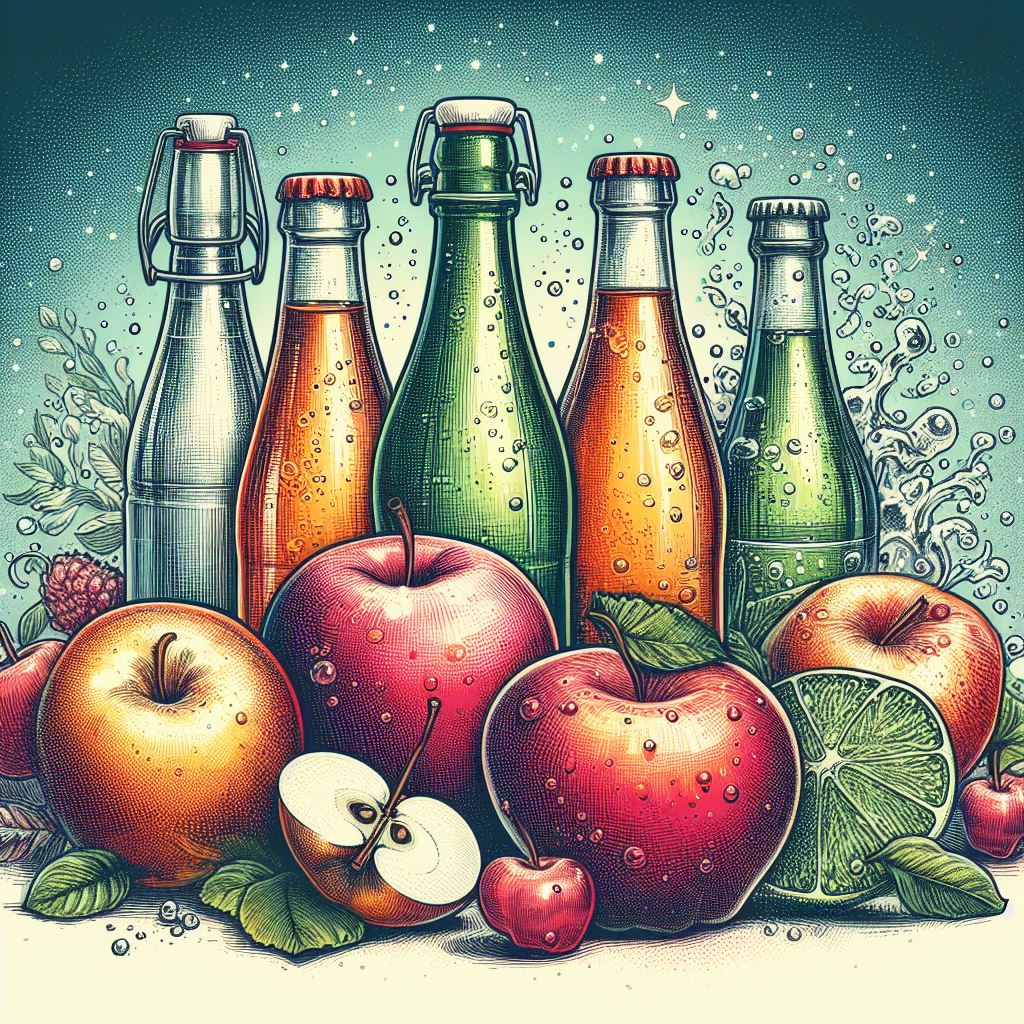
If you want to understand German soft drinks, you should know Apfelschorle.
It is simply apple juice mixed with sparkling mineral water. That sounds almost too simple, but it works remarkably well.
The apple juice provides sweetness and fruit flavor, while the sparkling water makes the drink lighter and more refreshing.
Apfelschorle is popular with adults as well as children, and it is an easy choice when you want something more interesting than plain water without choosing a heavily sweetened soft drink.
There are plenty of other fruit juice spritzers too. Orange, grape, cherry, and other fruit flavors can all be turned into a refreshing Schorle.
What Exactly Is a Schorle?
The word Schorle is worth remembering because you will encounter it in many German restaurants, cafes, and homes.
At its simplest, a Schorle is a drink mixed with sparkling water. One of the best-known versions is Apfelschorle, but the idea works with many different juices.
The beauty of a Schorle is its flexibility. You can make it more juice-heavy or more sparkling-water-heavy depending on how sweet and intense you want it.
For a hot summer day, it is hard to beat a cold fruit spritzer.
Fruit Juice and Fruit Drinks
German supermarkets have a large selection of fruit juices and fruit-based drinks.
Apple juice and orange juice are familiar choices, but you will also find grape juice, multivitamin juice, and many combinations of different fruits.
German shoppers also encounter terms such as Fruchtsaft, Fruchtnektar, and Fruchtsaftgetraenk. They are not simply different names for exactly the same thing.
Fruchtsaft means fruit juice, while Fruchtnektar is a different type of fruit drink made from fruit juice or fruit pulp combined with water and, depending on the fruit and product, other ingredients. Fruchtsaftgetraenk describes another category of fruit-based beverage.
For an American shopper, the terminology may take a little getting used to. But once you know the basic words, the German beverage aisle becomes much easier to navigate.
Tea: A Different Way to Slow Down
Germany is also a country of tea drinkers, although tea culture varies considerably by region.
Black tea, fruit teas, herbal teas, and peppermint tea are all familiar choices. In northern Germany, tea has an especially strong cultural presence, while herbal and fruit teas are common throughout the country.
For me, tea belongs at the other end of the day.
A cup of peppermint tea in the evening is one of the simplest ways I know to slow down. Sometimes I add a very thin slice of fresh ginger. Just enough to give the tea a little warmth without overpowering the peppermint.
It is a very different experience from my morning coffee.
And perhaps that is exactly why I like it.
Kakao: More Than Just Milk
Hot cocoa, or Kakao, is another familiar German drink, especially during the colder months.
For many Germans, the word brings back memories of childhood: warm milk, cocoa, and perhaps a little sweetness.
Adults can enjoy it too, of course. Hot cocoa can be a comforting drink on a cold afternoon, especially when served alongside a piece of cake or a sweet pastry. If you would like to try a traditional German cocoa drink at home, Kaba Choco Drink is one of the German products available from GermanBuy.
Eiskaffee Is Not Quite What Americans Expect
German Eiskaffee is another drink that can cause a little confusion for American visitors.
In Germany, Eiskaffee traditionally means chilled coffee served with vanilla ice cream, often topped with whipped cream.
So if you order an Eiskaffee on a warm afternoon, you are not simply getting a glass of cold coffee over ice cubes.
You are getting something much closer to a coffee dessert.
And I certainly would not complain about that.
Non-Alcoholic Punch and Seasonal Drinks
Germany also has a long tradition of mixed seasonal drinks.
Bowle is generally associated with a chilled fruit-based punch, while Punsch is traditionally served warm. Both can be prepared in non-alcoholic versions, making them suitable for family gatherings and anyone who prefers not to drink alcohol.
One particularly well-known seasonal drink is Maibowle, traditionally associated with the fresh flavor of woodruff, or Waldmeister.
During the colder months, warm fruit punches and other non-alcoholic seasonal drinks are also popular at Christmas markets and family celebrations.
Modern German Soft Drinks
Traditional drinks are only part of the picture.
Germany also has a lively selection of modern soft drinks, including cola drinks, fruit sodas, iced teas, energy drinks, and more unusual beverages. GermanBuy also carries a selection of German beverages and soft drinks for readers who want to try some of these products themselves.
One example is CLUB-MATE, a carbonated mate drink that has become particularly recognizable among younger adults and fans of alternative soft drinks. It is made using yerba mate from South America and has a distinctive, slightly bitter flavor with a noticeable caffeine kick.
It is certainly not a drink that tastes like traditional German tea.
And that is precisely what makes it interesting.
There Is No Single German Drink
Perhaps that is the most important thing to understand about non-alcoholic drinks in Germany.
There is no single drink that represents the country.
There is coffee in the morning, mineral water throughout the day, juice and Schorle with meals, tea in the evening, hot cocoa in winter, and countless regional and personal preferences in between.
Some people prefer still water. Others want as much carbonation as possible. Some drink strong black coffee, while others prefer milk and sugar. One person may love herbal tea while another reaches for fruit tea every evening.
Just like German food, German drinks are much more varied than the stereotypes suggest.
My Favorite German Drinks?
If I had to describe my own routine, it would be very simple.
Coffee in the morning to wake me up.
Cold sparkling mineral water during the day.
And peppermint tea in the evening, sometimes with that almost ridiculously thin slice of fresh ginger.
Nothing particularly exotic.
But perhaps that is the point.
The best everyday drinks do not have to be complicated. They simply have to be something you enjoy reaching for again and again.
Trying German Drinks for Yourself
If you are curious about German beverages, I would start with the everyday classics rather than looking for something unusual.
- Try a German coffee to experience the country’s everyday coffee culture.
- Try sparkling mineral water and see whether you prefer classic, medium, or still.
- Give Apfelschorle a chance if you like apple juice but want something lighter and more refreshing.
- Try a German herbal or fruit tea in the evening.
- For something different, look for a modern German soft drink such as CLUB-MATE or one of the other German beverages available from GermanBuy.
These simple drinks tell you quite a lot about everyday life in Germany.
From Morning Coffee to Evening Tea
When you look beyond beer and wine, Germany has a surprisingly rich drinking culture.
Some drinks are tied to a particular time of day. Others belong to a season or a social occasion. Some are regional specialties, while others are simply the things people keep in the refrigerator at home.
And that is what I like about German beverages.
You do not have to wait for a special occasion to enjoy them.
Sometimes all you need is a good cup of coffee in the morning, a cold glass of sparkling water during the day, and a quiet cup of peppermint tea when the evening finally arrives.