Worcester Sauce: A Flavorful Journey
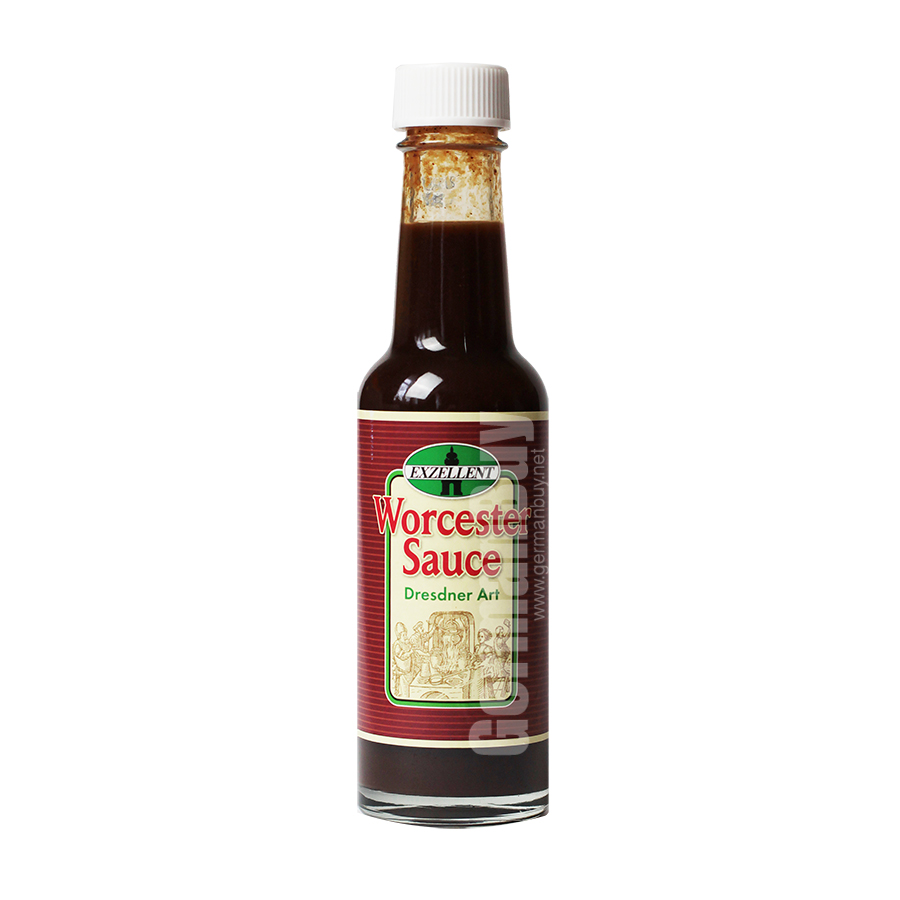
Worcester Sauce is one of those condiments that can look quite familiar while still having a surprisingly complicated history. The name is closely associated with Worcestershire in England, but Germany has its own long tradition of Worcester Sauce, including the distinctive Dresdner Art style. I find that particularly interesting because this German version became part of everyday cooking and remains available in Germany today.
What Is Worcester Sauce?
Worcester Sauce, also commonly called Worcestershire Sauce, is a dark, thin, strongly seasoned condiment with a characteristic combination of acidity, sweetness, spice, and savory depth. It is normally used in relatively small amounts to add flavor rather than as a sauce served on its own.
The original British style is associated with Lea & Perrins and the city of Worcester in England. German Worcester sauces developed their own character, however, and Worcester Sauce Dresdner Art became particularly associated with German food culture.
That distinction is worth making because Worcestershire sauce is not a legally protected product name. Different manufacturers have developed their own recipes, and the ingredients and flavor can therefore vary considerably between products. The German tradition includes several distinct styles as well.
The Story Behind Worcestershire Sauce
The history of the original Worcestershire sauce is surrounded by a popular story involving John Wheeley Lea and William Henry Perrins, who operated a chemist and manufacturing business in Worcester in the nineteenth century.
According to the well-known account, a sauce based on an Indian recipe was initially considered too strong to use. The mixture was stored and later found to have developed a much more rounded flavor. Lea & Perrins subsequently produced and sold the sauce commercially.
The story has become part of the folklore surrounding Worcestershire sauce, although some details of the traditional account have been questioned over the years. What is clear is that Lea & Perrins established the famous Worcestershire sauce in Worcester during the nineteenth century, and the product became internationally known.
Why German Worcester Sauce Is Different
German Worcester sauces are not simply copies of the British original. German manufacturers developed their own formulations, and Worcester Sauce Dresdner Art became particularly associated with Dresden and Saxony.
The flavor is typically savory, tangy, mildly sweet, and spicy, with a distinctive seasoning that works well in both traditional and modern German cooking. Depending on the product, the recipe can include ingredients such as vinegar, sugar, spices, vegetables, and other flavoring components.
There is therefore no single universal recipe for Worcester Sauce. The exact ingredients depend on the manufacturer and the style of sauce.
Worcester Sauce Dresdner Art and East German Food Culture
The name Dresdner Art means “Dresden style.” It refers to a German tradition of Worcester-style sauce that became particularly familiar in Saxony and eastern Germany.
During the GDR era, Worcester sauce was produced industrially in East Germany, including by VEB Exzellent Dresden. Historical sources document two different products with different formulations: a sharper Worcestersauce and a sweeter (Dresdner) Worcestershiresauce. Because of shortages in the supply system, both varieties were not necessarily available to consumers at all times.
For many people who grew up in the former German Democratic Republic, however, the sauce was not an exotic imported condiment. It was a familiar part of everyday eating. In restaurants, when the supply situation allowed it, a bottle of Worcester Sauce could simply be part of the table setting.
A Conversation on a Train and a Taste of East Germany
I was reminded of just how strong that connection could be during a trip through Germany. I once got into a conversation on an ICE train with an older man from eastern Germany, and when Worcester Sauce Dresdner Art came up, he immediately started talking about the dishes he remembered from his younger years.
This was not something I read in a book or found in an archive. It was a real conversation with someone who had lived through that period himself. His memories were personal, detailed, and very much connected with the way people actually ate in East German restaurants.
He remembered Worcester Sauce Dresdner Art being on the tables of many HO restaurants and Konsum restaurants, whenever the supply situation made it possible. To him, it was simply part of the normal restaurant experience.
Two dishes stood out in particular: Würzfleisch and Steak au four.
Worcester Sauce and Würzfleisch
Würzfleisch is a traditional German dish based on a mild, light-colored meat ragout. In eastern Germany, it became a familiar restaurant and home-style dish and is closely related to the broader Central European tradition of dishes such as Ragout fin. Worcestershire-style sauce is also documented as a traditional accompaniment to dishes such as Würzfleisch and Ragout fin.
According to the man’s memory, Worcester Sauce was simply part of the experience. When Würzfleisch was served, the familiar bottle was there on the table, and adding Worcester Sauce was a normal part of eating the dish.
That makes culinary sense as well. The mild, creamy character of Würzfleisch provides a soft base, while the concentrated Worcester Sauce adds acidity, spice, and savory depth.
Würzfleisch itself has not disappeared with the GDR. It can still be found in parts of eastern Germany, particularly in traditional restaurants and regional cooking, although it is certainly less familiar in some parts of Germany than it once was.
Steak au Four: A Classic East German Combination
The same conversation brought up another dish that has a strong connection with East German restaurant culture: Steak au four.
Despite the French-sounding name, Steak au four became a familiar dish in East Germany. A typical version consisted of a pork steak topped with Würzfleisch and finished with melted cheese. It was commonly served with a lemon wedge.
According to the man’s memory, the final step belonged to the diner. First came the lemon, squeezed over the hot dish. Then came the Worcester Sauce, poured over the hot cheese and Würzfleisch.
He remembered the combination very clearly. Without the Worcester Sauce, he said, the dish simply did not feel complete. For him, it was part of what made a restaurant meal such as Steak au four feel special.
That kind of memory is difficult to capture in a general description of a recipe. It shows how a condiment can become part of the ritual surrounding a dish, not merely one ingredient among many.
Another East German Favorite: Karlsbader Schnitte
The same man also remembered Karlsbader Schnitte, another dish that became familiar in East German cuisine. Versions varied, but the basic idea was simple: bread or a slice of sausage was topped with pineapple and cheese and then baked until the cheese melted.
He remembered Worcester Sauce being added at the table, where its savory and slightly acidic character contrasted nicely with the sweetness of the pineapple and the richness of the melted cheese.
That combination illustrates something interesting about East German cooking. Some of these dishes used ingredients and flavor combinations that might seem unusual at first, but they became familiar through restaurant menus and home cooking. Worcester Sauce was one of the seasonings that helped bring those flavors together.
Worcester Sauce in German Everyday Cooking
Beyond these regional dishes, Worcester Sauce is useful in many kinds of everyday cooking. It is normally used in small quantities, but its concentrated flavor can make a noticeable difference.
- Soups and stews: A few drops can add extra depth to hearty soups and broths.
- Sauces and gravies: It can round out savory sauces for meat and vegetables.
- Meat dishes: Worcester Sauce works well in marinades and seasoning mixtures for beef, pork, and other meats.
- Salads and dressings: A small amount can add acidity and seasoning to homemade dressings.
- Egg dishes: It can add another layer of savory flavor to egg-based dishes.
- Cocktails: Worcester Sauce is also a familiar ingredient in drinks such as the Bloody Mary.
The important thing is not to use too much. Worcester Sauce has a concentrated flavor, so a small amount is usually enough.
British Worcestershire Sauce and German Worcester Sauce
Although the names are closely related, British Worcestershire Sauce and German Worcester Sauce should not automatically be treated as identical products.
The British original has its own traditional recipe and history, while German versions developed according to local tastes and culinary traditions. Their flavor profiles can overlap, but the exact ingredients and proportions vary from one product to another.
This is also why it is worth looking at the specific product rather than assuming that every Worcester Sauce tastes the same. The country of origin, manufacturer, and recipe all matter.
A German Tradition That Survived
One of the things I find most interesting about Worcester Sauce Dresdner Art is that its story did not end with the GDR. The political system disappeared, but the food traditions that people had grown up with did not simply disappear with it.
Würzfleisch is still prepared today. Steak au four is still known, particularly in eastern Germany. And Worcester Sauce Dresdner Art is still available today, although modern products can have different formulations from the sauces produced during the GDR era.
That continuity is important. It is easy to look at East German food only as nostalgia, but some of these dishes and products have remained part of German culinary life because people simply continued to enjoy them.
For me, that is one of the most interesting things about food history. A product can have a complicated past, but its place in everyday life is often much simpler: people liked it, used it, and kept buying it.
Worcester Sauce Dresdner Art Today
Worcester Sauce Dresdner Art remains available today as a German-style Worcester sauce. The familiar flavor still works well with traditional dishes as well as soups, sauces, marinades, and other savory foods.
For anyone interested in German food culture, it is an especially interesting product because it connects several different stories: the international history of Worcestershire sauce, the development of German versions, the food culture of Saxony and eastern Germany, and dishes that are still known today.
You can find Exzellent Worcester Sauce Dresdner Art at GermanBuy if you would like to try the German version for yourself.
More Than Just a Few Drops
Worcester Sauce may look like a small bottle of dark seasoning, but its history reaches across countries, generations, and very different food traditions.
The British Worcestershire tradition gave the sauce its international identity. Germany developed its own versions, and Worcester Sauce Dresdner Art became particularly familiar in Saxony and eastern Germany. For people who grew up with dishes such as Würzfleisch, Steak au four, or Karlsbader Schnitte, the sauce can carry something more personal than flavor alone.
And that is perhaps the most interesting part of its story. Worcester Sauce Dresdner Art is not simply a German variation of a famous British condiment. It has become part of German food culture in its own right, and it is still available today.
Sources and further reading:
German Wikipedia: Worcestershiresauce
Lea & Perrins: Worcestershire Sauce