German Honey Cake and Lebkuchen: The History of Honey, Spices, and Gingerbread
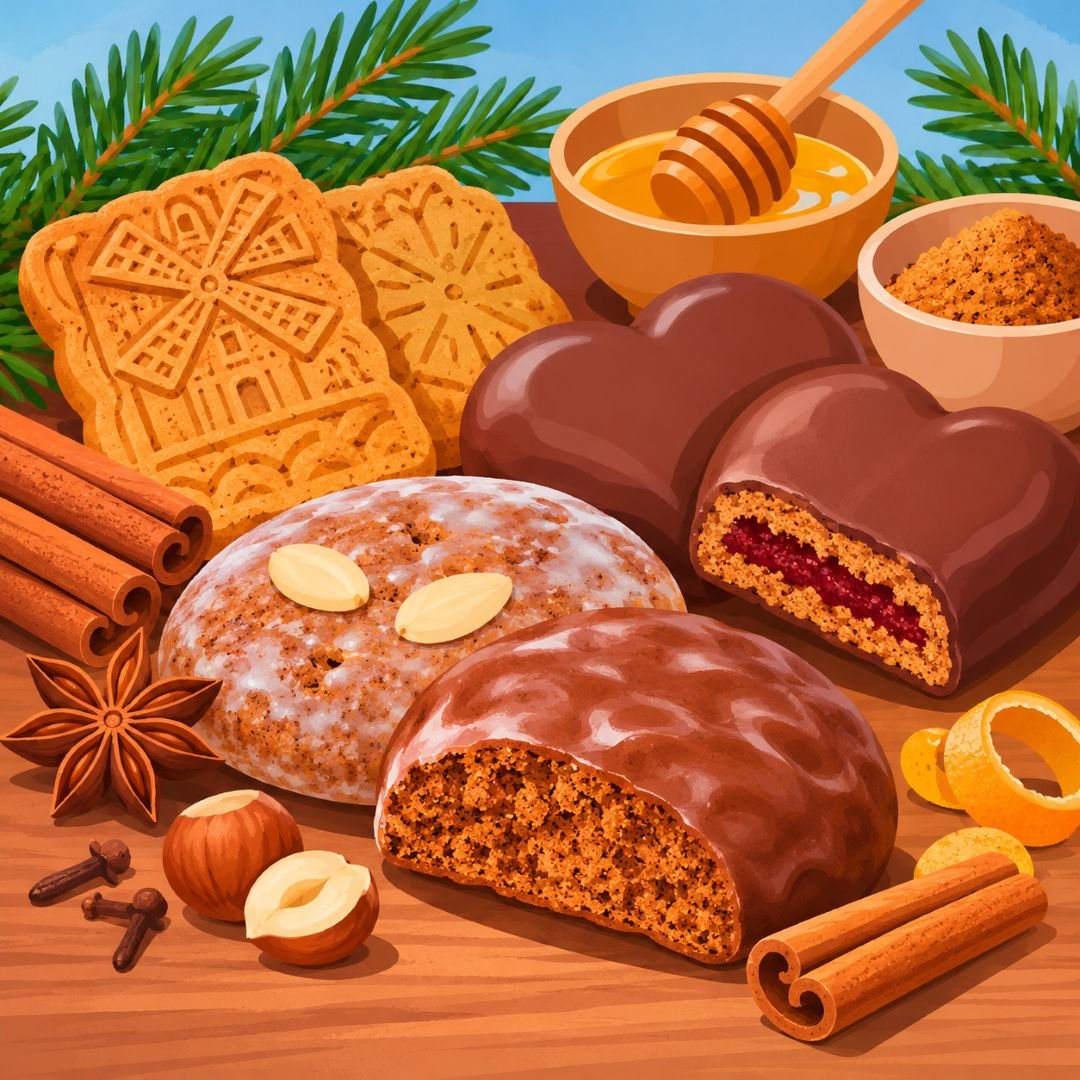
Few things remind me of the festive season in Germany quite like the smell of cinnamon, cloves, honey, and freshly baked Lebkuchen. These spiced treats are part of the Christmas season here, but their story goes back much further than Christmas markets and decorated cookie tins. It reaches into ancient honey baking, medieval monastery kitchens, international spice trading, and the regional traditions that have shaped German baking over many centuries.
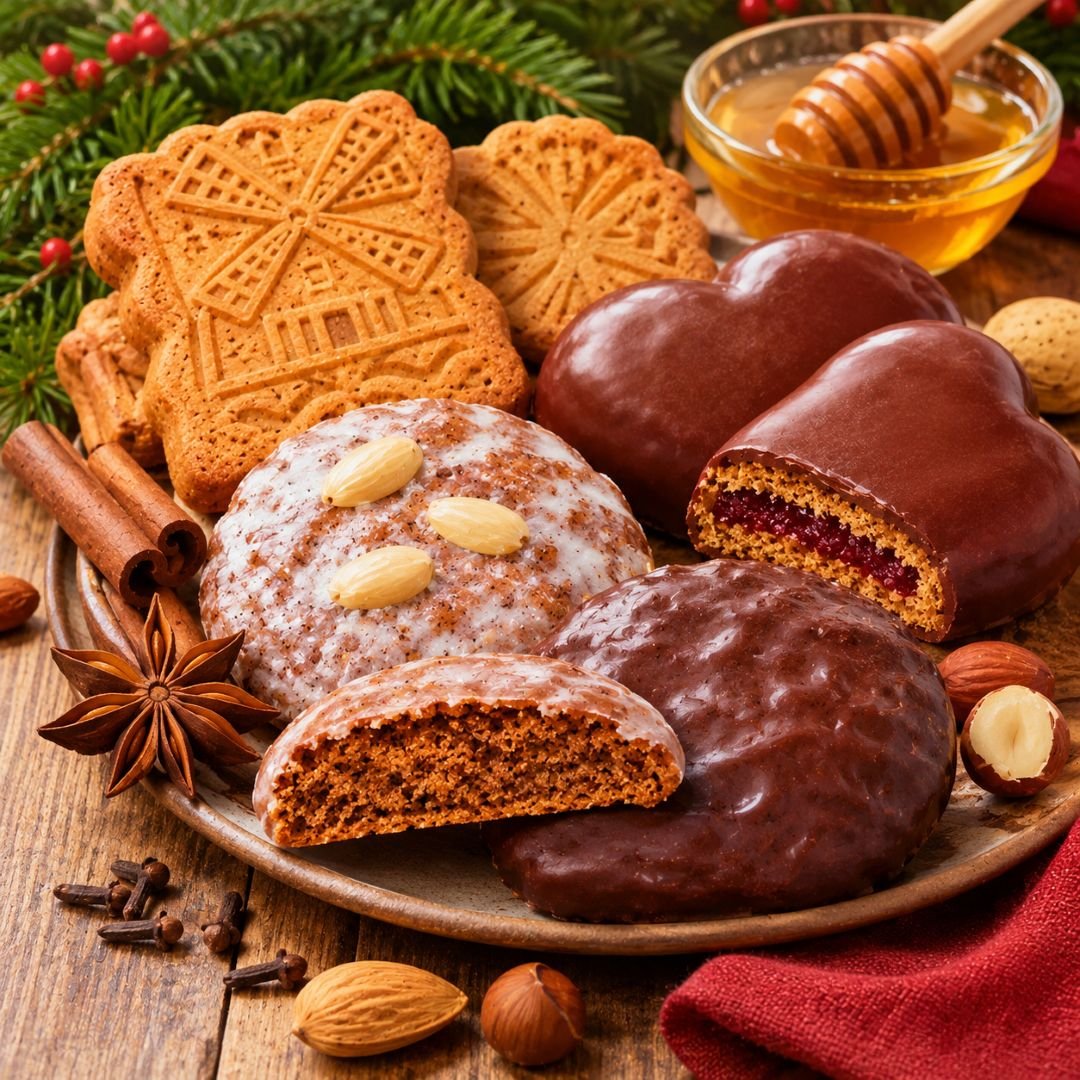
For readers in the United States, Canada, the United Kingdom, and Australia, German Lebkuchen is often described as gingerbread. That is understandable, but the two are not quite the same. Germany has developed its own distinctive varieties, from the famous Nuremberg Lebkuchen to Saxon Pfefferkuchen. There is also the broader tradition of honey cake, known in German as Honigkuchen. Each name tells a slightly different part of the story.
In This Article
- Honey Cake: A Tradition Older Than German Lebkuchen
- How Medieval Monasteries Helped Shape Lebkuchen
- Nuremberg: Germany’s Famous Lebkuchen City
- Why German Gingerbread Is Also Called Pfefferkuchen
- Pulsnitz: Saxony’s Traditional Pfefferkuchen Town
- Honey Cake, Lebkuchen, and Pfefferkuchen: What’s the Difference?
- Lebkuchen vs. Spekulatius
- German Lebkuchen vs. British and American Gingerbread
- Why Lebkuchen Became a Christmas Tradition
- A Sweet Piece of German Baking History
- Frequently Asked Questions
Honey Cake: A Tradition Older Than German Lebkuchen
Long before German Lebkuchen became a Christmas favorite, people in ancient civilizations were already using honey to sweeten baked foods. Honey was one of the most important sweeteners available in the ancient world. It was valued for its taste and used in food preparation, celebrations, and religious offerings.
Ancient Egyptians prepared honey-sweetened cakes, while the Greeks and Romans also knew different forms of honey-based pastries and sweet offerings. These early cakes were not Lebkuchen as we know it today. They did not necessarily contain the combination of flour, nuts, and imported spices that later became characteristic of European gingerbread.
Honey was especially important in times and places where refined sugar was expensive or difficult to obtain. As baking knowledge spread across Europe, recipes and techniques developed, and honey remained a familiar ingredient in sweet doughs.
Over the centuries, these traditions took different directions. German Honigkuchen and Lebkuchen belong to this wider history of honey-sweetened baking, but they eventually developed into distinct types of baked goods.
How Medieval Monasteries Helped Shape Lebkuchen
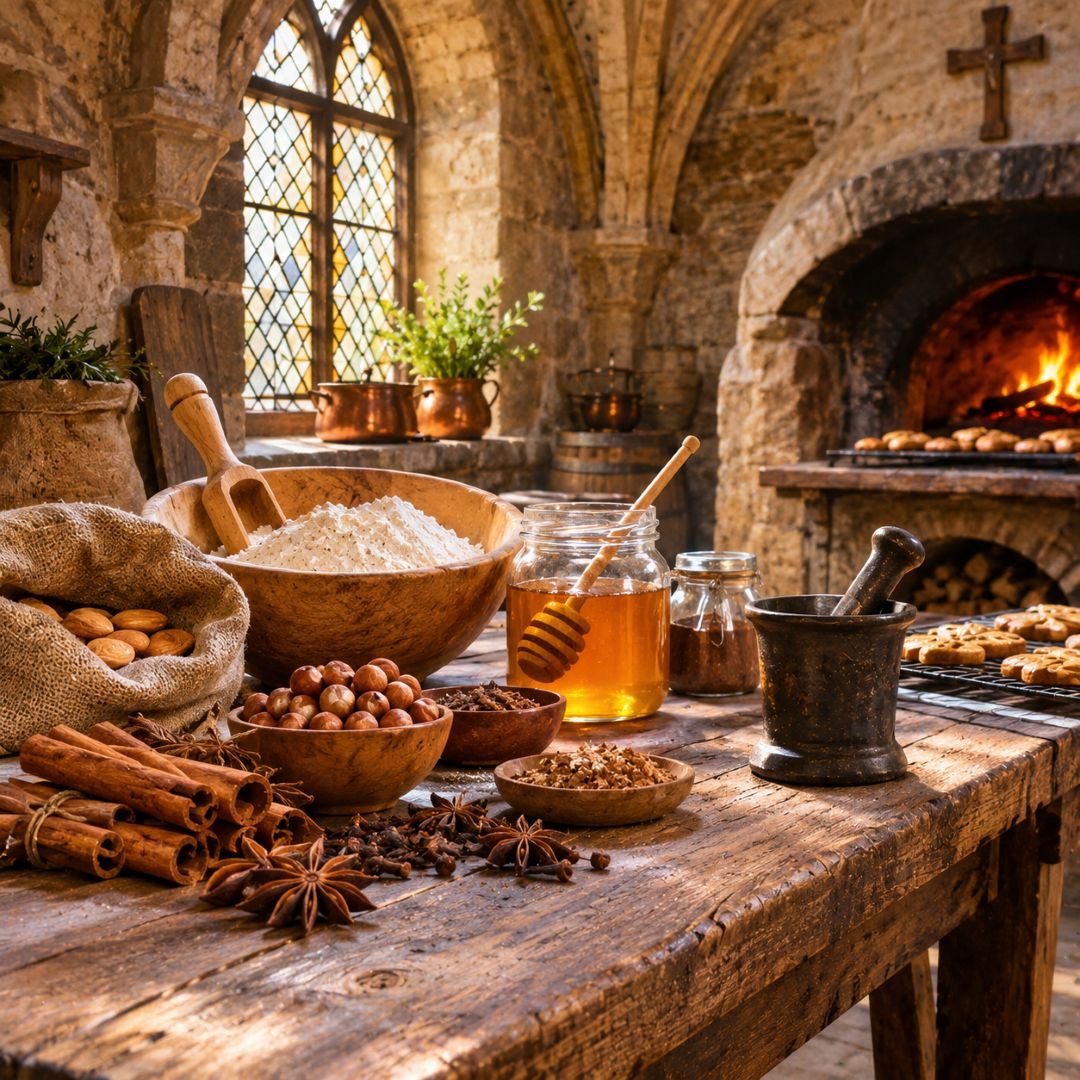
During the Middle Ages, monasteries were important centers of food production and craftsmanship. Baking was one of the practical skills maintained and developed by religious communities. Honey from local beekeeping provided a valuable sweetener for cakes and pastries, particularly when refined sugar was still beyond the reach of many households.
Spices added another dimension. Trade routes brought cinnamon, cloves, ginger, nutmeg, cardamom, and other aromatic ingredients into Central Europe. These spices were valuable goods, transported over long distances and used in cooking as well as baking.
Bringing honey and these spices together helped shape the richly flavored baked goods that would become associated with German Lebkuchen.
According to the German confectionery industry, monastery bakeries were producing wafer-based gingerbread on a considerable scale as early as the tenth century. The thin wafers, known in German as Oblaten, provided a practical base for sticky gingerbread dough. They remain an important feature of many traditional Lebkuchen varieties today.
There was no single moment when someone invented modern German Lebkuchen. It developed gradually, shaped by baking knowledge, available ingredients, trade, and regional craftsmanship.
Traditional recipes also made use of particular raising agents. One of them is Pottasche, known in English as potash. It is still used in certain German honey cake and gingerbread recipes, especially for high-sugar doughs that benefit from resting before baking.
If you look through the baking section of a German supermarket in the weeks before Christmas, you will often find small packets of Pottasche alongside baking powder, vanilla sugar, and other seasonal baking ingredients. For German home bakers, it is a familiar part of preparing certain traditional doughs. You can also find Pottasche for traditional German baking.
Nuremberg: Germany’s Famous Lebkuchen City
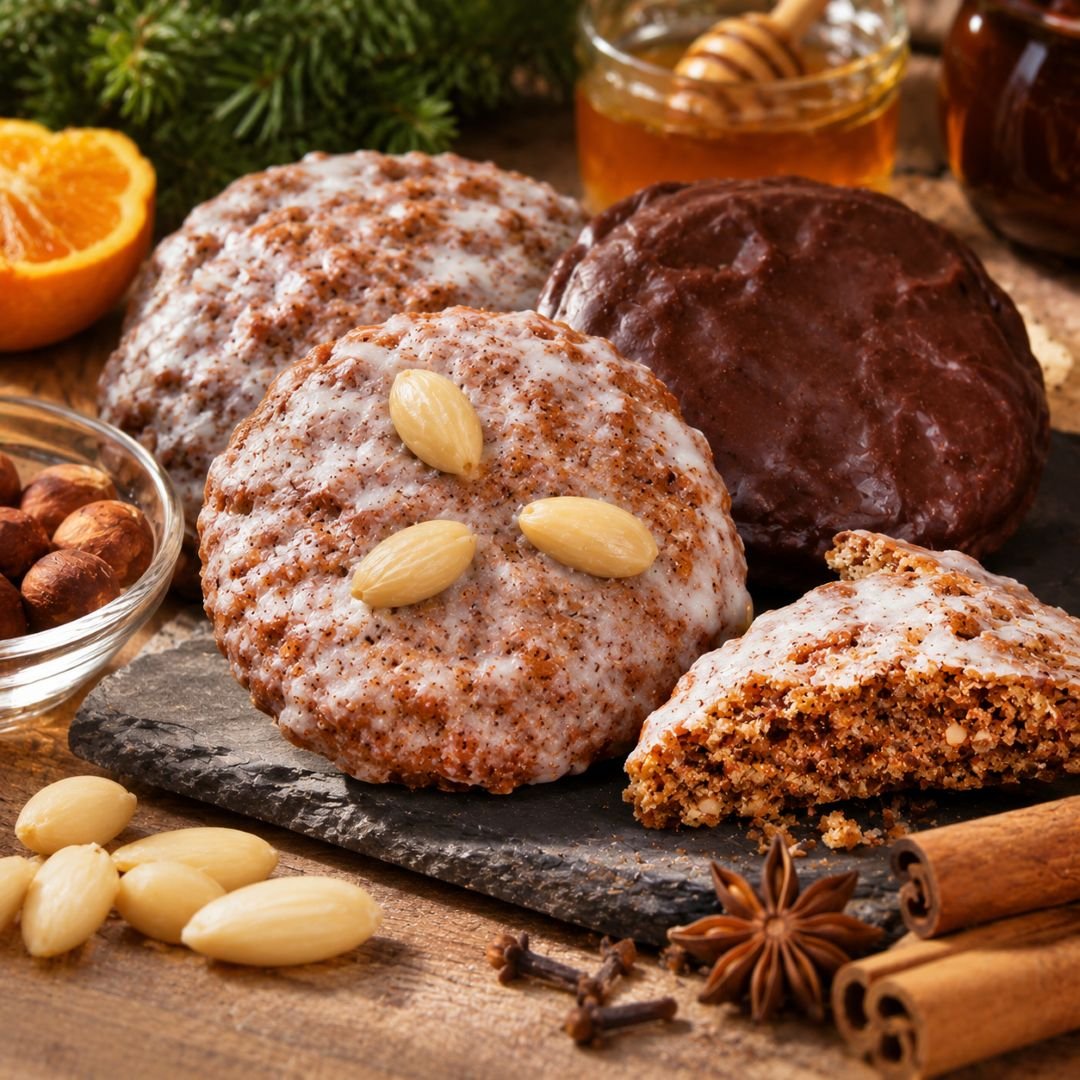
When people outside Germany think of traditional German gingerbread, Nuremberg is often the first place that comes to mind. The Franconian city has been closely associated with Lebkuchen for centuries, and there are good historical reasons for that.
Nuremberg was well positioned along important commercial routes used to transport valuable spices. The surrounding forests also provided access to honey from local beekeeping. Honey and spices, two essential ingredients for early Lebkuchen, were therefore available to the city’s bakers.
Historical records show that Lebkuchen baking had already become a specialized occupation in medieval Nuremberg. A city account from 1395 mentions a Lebküchner, a craftsman specializing in this type of baked good.
In 1643, the city council approved the establishment of a separate guild for Nuremberg’s Lebkuchen bakers. The trade had developed into an established craft with its own standards and traditions.
The name Nürnberger Lebkuchen is now protected as a Protected Geographical Indication (PGI) within the European Union. To be sold under this regional name, the gingerbread must be produced in Nuremberg. This protection has been in place since 1996.
What Makes Nuremberg Lebkuchen Special?
Nuremberg is particularly famous for its nut-rich varieties, especially Elisenlebkuchen. These traditional gingerbreads are known for their generous proportion of almonds and hazelnuts. Depending on the variety, they contain relatively little flour and are often baked on thin Oblaten wafers.
Some are finished with a sugar glaze, others with chocolate, while some are left without an additional coating. Their texture is generally soft and moist rather than crisp like an ordinary cookie.
Personally, I have always preferred soft Lebkuchen with a milk chocolate coating. I also have a real soft spot for filled gingerbread hearts. That combination of soft gingerbread, sweet filling, and chocolate is hard to beat, especially during the Christmas season.
Elisenlebkuchen is one of the best-known varieties of German gingerbread, but it is only one part of a much wider tradition.
Why German Gingerbread Is Also Called Pfefferkuchen
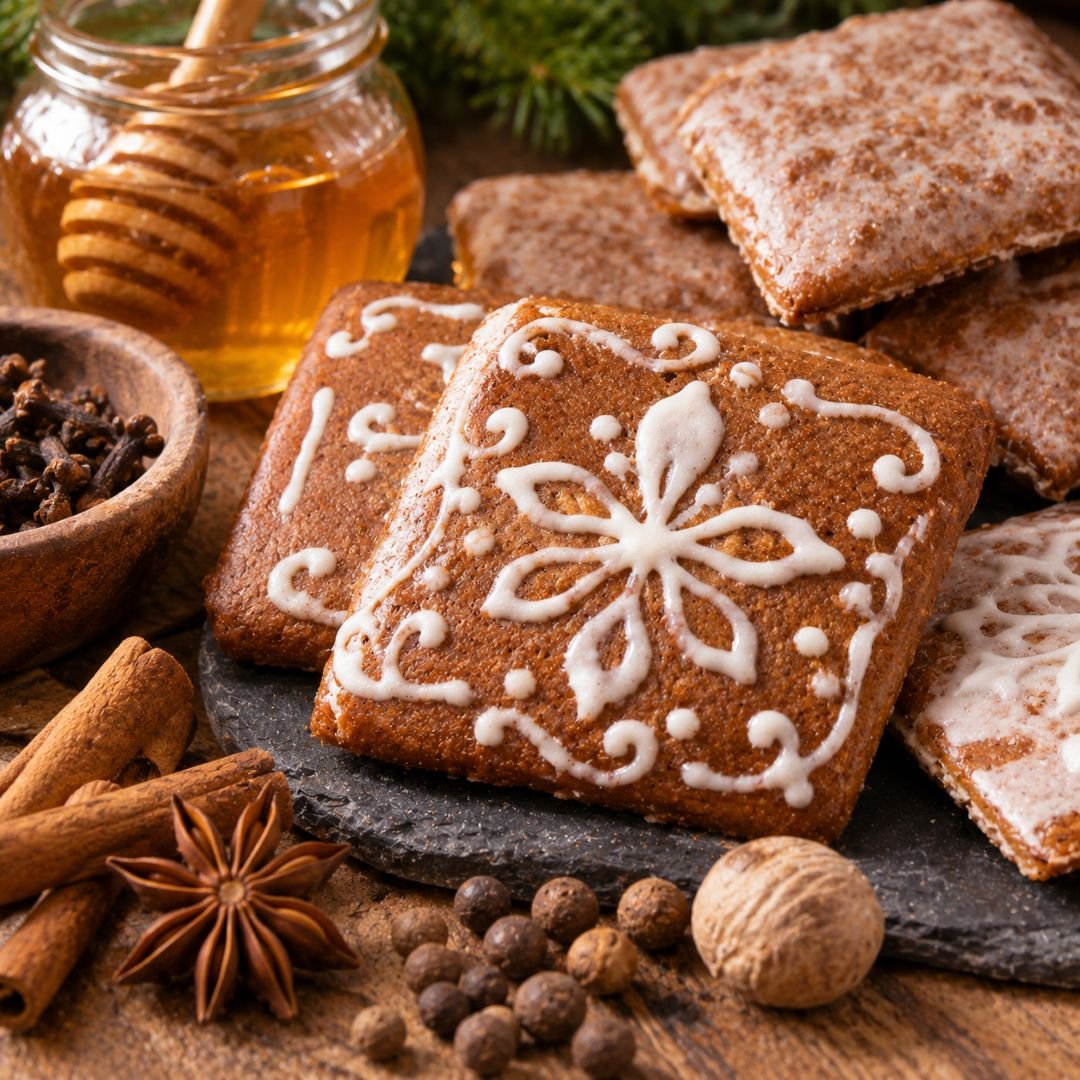
Another traditional German name for spiced honey cake is Pfefferkuchen. Literally translated, it means pepper cake. If you expect black pepper to be one of its main ingredients, however, the name can be a little misleading.
The explanation lies in historical language. In medieval German usage, the word Pfeffer was sometimes used more broadly for valuable imported spices. It could refer to the aromatic ingredients that traveled long distances before reaching European markets.
Cinnamon, cloves, ginger, cardamom, and other spices were expensive and highly valued. The name Pfefferkuchen reflects this historical association with imported seasonings.
Traditional Pfefferkuchen does not necessarily contain black pepper. Its characteristic flavor comes from the particular combination of spices used in the recipe.
The name has survived in regional German baking traditions, especially in Saxony, where Pfefferkuchen remains an important part of local food culture.
Pulsnitz: Saxony’s Traditional Pfefferkuchen Town
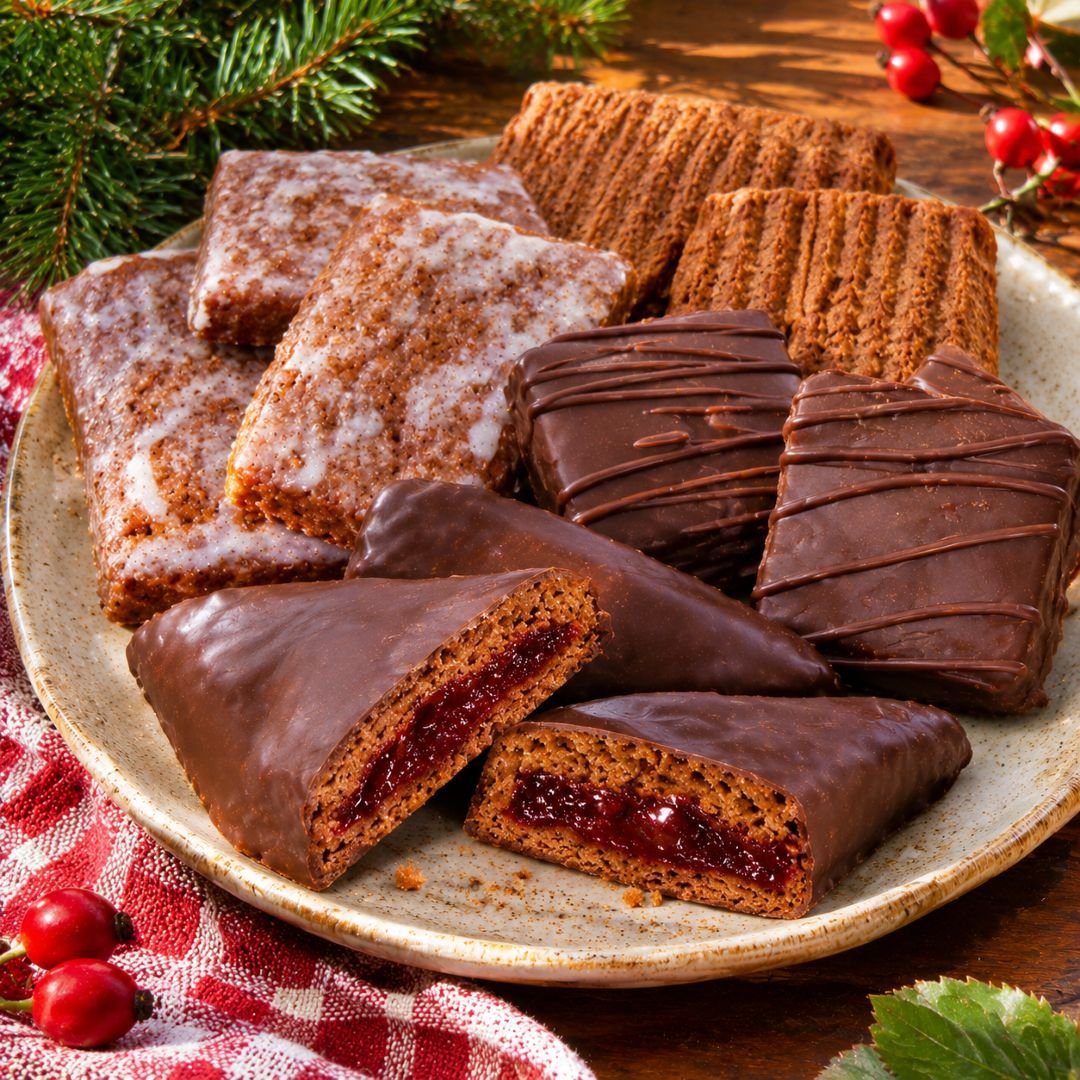
Another place with a particularly strong gingerbread tradition is Pulsnitz, a small town in Saxony known as the Pfefferkuchenstadt, or City of Gingerbread.
The documented history of Pulsnitzer Pfefferkuchen reaches back to 1558. In that year, local bakers received a privilege allowing them to bake Pfefferkuchen not only for their own households but also for sale.
The tradition became more firmly established during the seventeenth century. In 1654, the term Pfefferküchler was documented in connection with the local baking trade.
A particularly important figure in the town’s baking history was Tobias Thomas. After traveling and training in Thorn, now Torun in Poland, he brought new baking ideas and recipes back to Pulsnitz around 1745. His experience helped strengthen the local Pfefferkuchen trade and encouraged the development of specialized bakeries.
One detail I particularly like about Pulsnitz is that its Pfefferkuchen are not just a Christmas specialty. The town’s traditional bakeries produce them throughout the year. Gingerbread is part of the town’s identity, not simply something brought out for a few weeks in December.
Some varieties are filled, while others are decorated with icing or shaped into hearts and other traditional forms. Each bakery has its own recipes and characteristic flavors. It is a good example of a regional German baking tradition that is still very much alive.
Honey Cake, Lebkuchen, and Pfefferkuchen: What’s the Difference?
These names are sometimes used interchangeably, but they do not always describe exactly the same product. German baking includes several related types of honey-sweetened and spiced dough, each with its own regional characteristics.
Honey Cake (Honigkuchen)
Honey cake is a broad description for baked goods in which honey plays an important role as a sweetener. Different countries and regions have their own versions. The texture can range from soft and cake-like to firm and cookie-like.
In Germany, Honigkuchen can refer to traditional honey-based cakes and spiced baked goods. Not every honey cake is automatically a Lebkuchen, though. The recipe, preparation, and regional naming conventions all make a difference.
Lebkuchen
Lebkuchen is a distinctive German tradition of spiced baked goods. Traditional recipes may combine honey or other sweeteners with flour, almonds, hazelnuts, and aromatic spices. Some varieties are soft and moist, while others are firmer or designed to be decorated.
Lebkuchen is especially associated with the Christmas season, although its baking traditions and regional varieties extend beyond the holiday period.
Pfefferkuchen
Pfefferkuchen is a traditional name for spiced gingerbread. In some regions, particularly Saxony, the term remains an important part of local baking identity. Pulsnitzer Pfefferkuchen is one of the best-known examples.
Depending on the region and recipe, Pfefferkuchen and Lebkuchen can describe very similar products.
A Quick Comparison
| Type of Baking | Origin and Tradition | Typical Characteristics |
|---|---|---|
| German Honey Cake (Honigkuchen) | German and wider European baking traditions | Honey-sweetened dough; texture and spices vary by recipe |
| German Lebkuchen | Germany, especially Nuremberg and Franconia | Spiced dough, often containing nuts, honey, or other sweeteners |
| Pfefferkuchen | German regional tradition, especially Saxony | Spiced gingerbread, often made with honey or syrup |
| Spekulatius | Netherlands and the Rhineland | Thin, crisp spiced cookies with decorative patterns |
| British Gingerbread | United Kingdom | Different regional recipes using spices, honey, treacle, or other sweeteners |
| American Gingerbread | United States | Often darker and softer, with molasses and warming spices |
German Lebkuchen vs. Spekulatius: Two Different Christmas Traditions
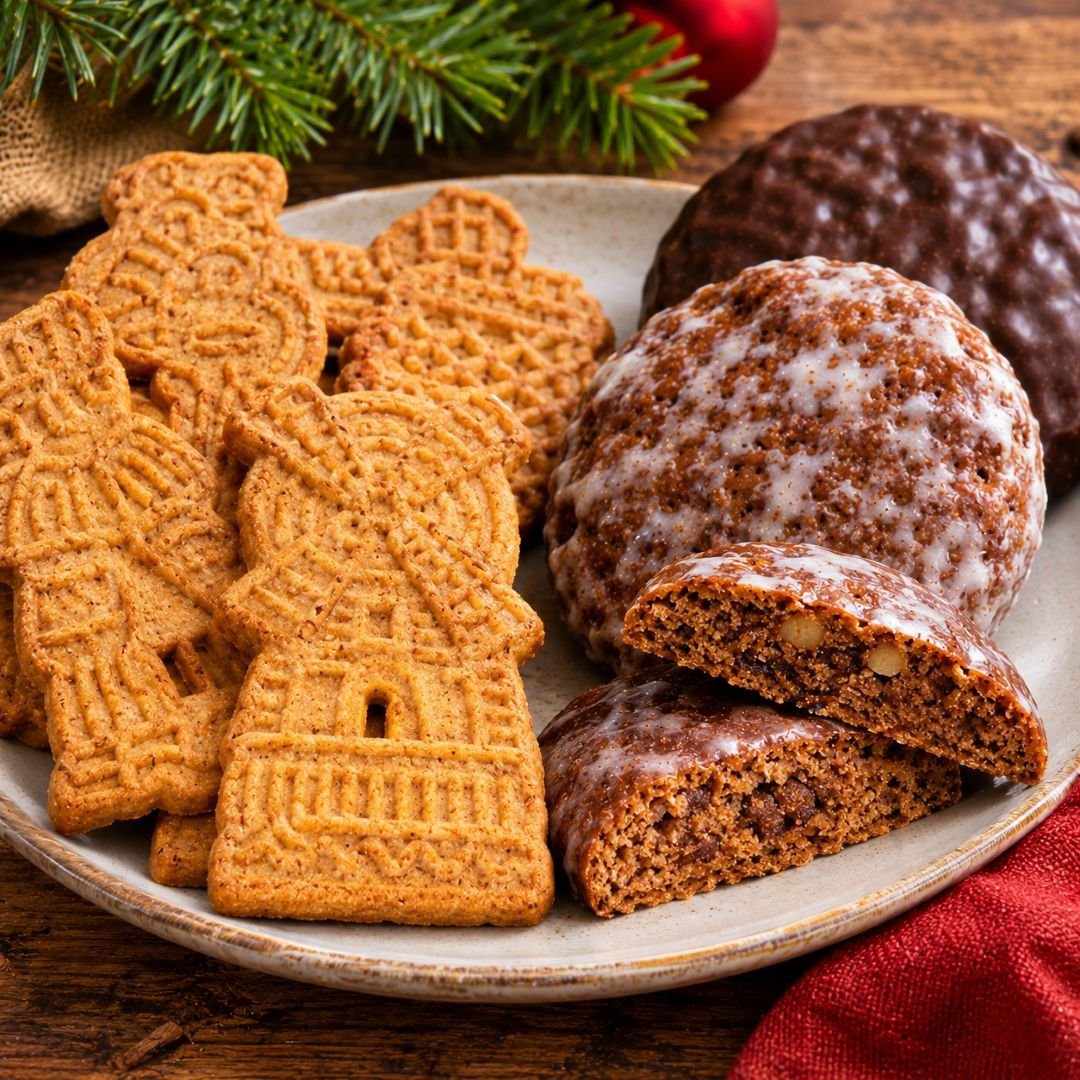
Another familiar sight during the German Christmas season is Spekulatius. In supermarkets and bakeries, these cookies are often displayed right alongside Lebkuchen. Although both can feature familiar Christmas spices, their doughs and textures set them apart.
Spekulatius is a thin, crisp cookie made from a firm dough. Its most recognizable feature is the decorative pattern pressed into the surface using carved wooden molds or other shaped baking forms.
Traditional designs often show figures and scenes associated with Saint Nicholas, historical life, or everyday activities. The embossed patterns are part of what makes these cookies so recognizable.
Spekulatius is particularly associated with the Netherlands and the Rhineland. From these areas, the tradition spread into other parts of Germany.
Unlike soft Lebkuchen, Spekulatius is generally a crisp biscuit with a buttery character. Depending on the variety, its flavor may include cinnamon, cloves, nutmeg, and cardamom.
Both have become familiar parts of German Christmas baking, but if you bite into them, the difference is immediately clear: one is usually soft and moist, the other thin and crisp.
German Lebkuchen vs. British and American Gingerbread: How Are They Related?
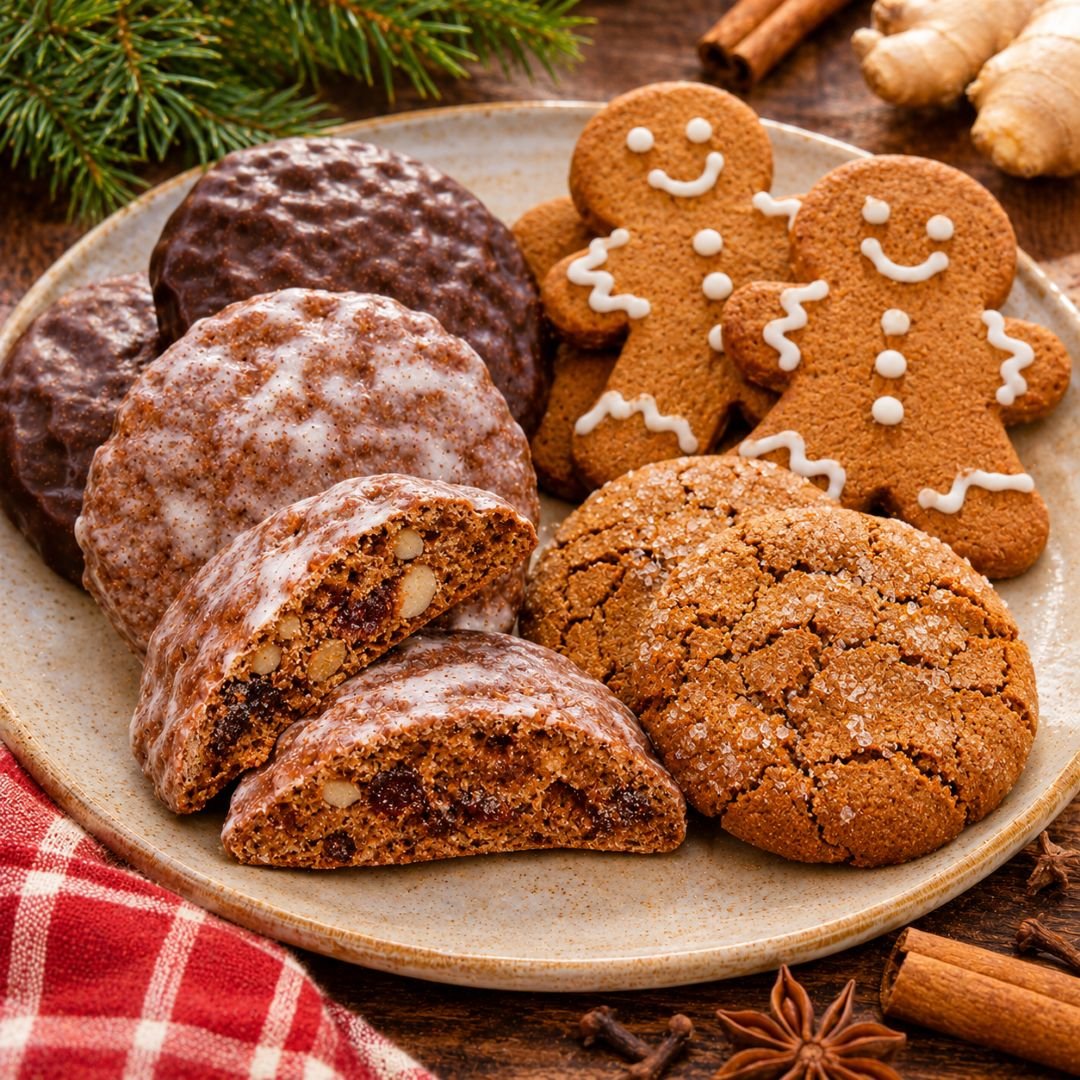
For readers in the United States, Canada, the United Kingdom, and Australia, gingerbread may be the most familiar way to describe German Lebkuchen. The traditions are related, but each country has developed its own recipes and preferences.
Honey and spices appear in different forms of European gingerbread, although the ingredients and textures have changed considerably over time. The history of British gingerbread offers an interesting example.
Early English Gingerbread Was Made With Honey
One of the earliest surviving English gingerbread recipes, written down in the fifteenth century, did not actually contain ginger. Instead, it used breadcrumbs mixed with boiled honey, saffron, and pepper. The resulting paste was shaped into a square and decorated with additional spices and cloves.
It is quite different from the gingerbread biscuits many people know today. The name itself has a longer and more varied history than its modern flavor might suggest.
Treacle in Britain and Molasses in North America
Over time, English gingerbread recipes changed. As sugar production and trade expanded, alternative sweeteners became more widely available. Treacle, a thick syrup produced during sugar refining, gradually became an important ingredient in British gingerbread.
It gave baked goods a darker color and a rich, distinctive flavor. Molasses also became common in North American gingerbread recipes, particularly in traditional cakes and cookies.
For readers in the UK, treacle is a familiar baking ingredient. In the United States and Canada, molasses is more commonly used in traditional gingerbread recipes. Both are associated with darker, richly flavored varieties, although their production and characteristics differ.
German Lebkuchen followed its own regional development. Honey remained an important traditional ingredient, while modern recipes also came to use sugar syrups and other sweeteners.
So while a British gingerbread biscuit, an American gingerbread cake, and a German Lebkuchen may share some ingredients, they are not interchangeable. Their taste, texture, and preparation reflect different baking traditions.
German Gingerbread Spices
Another characteristic feature of German Lebkuchen is its aromatic spice blend. Cinnamon, cloves, coriander, cardamom, nutmeg, anise, and other spices can contribute to its distinctive flavor.
Many German home bakers use a prepared Lebkuchen spice blend to achieve this familiar taste. A German gingerbread spice blend is a convenient way to bring these traditional flavors into spiced cakes, cookies, and other seasonal baked goods.
Why Lebkuchen Became a Christmas Tradition
Today, it is difficult to imagine a German Christmas market without Lebkuchen. Decorated gingerbread hearts, chocolate-coated cookies, and beautifully packaged assortments are familiar sights throughout the Advent season.
In Germany, the Christmas baking season seems to start earlier every year. By late August or September, the first Lebkuchen, Spekulatius, and other Christmas treats often appear on supermarket shelves. Sometimes it is still warm outside, and summer hardly feels over. Yet there they are: the first unmistakable signs that Christmas is getting closer.
Lebkuchen was not originally created exclusively as Christmas baking. Its association with special occasions developed over time. In earlier centuries, spices were expensive and difficult to obtain, so richly spiced baked goods were considered special treats rather than everyday food. They were suitable for celebrations, markets, religious festivals, and other important occasions.
As Christmas markets and seasonal traditions developed, Lebkuchen became closely associated with the festive period. Its distinctive aromas, decorative shapes, and rich ingredients made it a natural part of the season.
Some traditional honey-rich doughs also benefit from being prepared in advance. Resting periods can help the dough develop its characteristics before baking, which is why advance preparation remains part of certain traditional recipes.
Today, Lebkuchen is enjoyed alongside Stollen, Spekulatius, Christmas cookies, and many other seasonal treats. For me, soft Lebkuchen with milk chocolate and filled gingerbread hearts are among the things that make the German Christmas season feel complete.
A Sweet Piece of German Baking History
When I look at a traditional Lebkuchen, I see more than just a Christmas cookie. Its history connects ancient honey-sweetened baking with medieval European trade, monastery kitchens, specialist craftsmen, and the regional traditions of German towns such as Nuremberg and Pulsnitz.
Over the centuries, simple ingredients and valuable spices developed into a remarkable variety of regional specialties. Some Lebkuchen are soft and nut-rich, others are firm and richly spiced, and some are decorated or filled according to recipes passed down through generations.
Honey cake, Lebkuchen, Pfefferkuchen, and gingerbread may not all mean exactly the same thing, but they share a fascinating place in the history of European baking.
And perhaps that is what makes these traditional treats so special. They bring together centuries of craftsmanship and cultural exchange – and, at least for me, the simple pleasure of a soft, chocolate-coated Lebkuchen enjoyed during the Christmas season.
Frequently Asked Questions About German Honey Cake and Lebkuchen
What is German honey cake called?
German honey cake is called Honigkuchen. Depending on the recipe and region, it may refer to a honey-sweetened cake or a spiced baked good. Lebkuchen is a distinct German tradition of spiced gingerbread, often made with honey or other sweeteners.
Is Lebkuchen the same as gingerbread?
Not exactly. Lebkuchen is a traditional German type of spiced baked good, while gingerbread is a broader term used for related pastries in several countries. Their ingredients, textures, and regional traditions can differ considerably.
Why is German gingerbread called Pfefferkuchen?
The historical German word Pfeffer was sometimes used more broadly for imported spices. Pfefferkuchen therefore refers to spiced gingerbread and does not necessarily contain black pepper.
Where did German Lebkuchen originate?
German Lebkuchen developed over centuries from earlier European honey and spice baking traditions. Franconian monasteries played an important role in its development, while Nuremberg became one of its most important historical centers. Specialist Lebkuchen bakers are documented in the city in 1395.
What makes Nuremberg Lebkuchen special?
Nuremberg Lebkuchen is a regional German gingerbread specialty. Particularly famous are Elisenlebkuchen, which contain a generous proportion of nuts and are traditionally baked on thin wafers called Oblaten. The regional name has been protected as a Protected Geographical Indication in the European Union since 1996.
What is the difference between Lebkuchen and Spekulatius?
Lebkuchen is generally softer and often contains honey, nuts, and spices. Spekulatius is a thin, crisp spiced cookie with characteristic embossed patterns made using decorative baking molds.
Is German Lebkuchen only eaten at Christmas?
Lebkuchen is strongly associated with Christmas in Germany, but not every variety is seasonal. Pulsnitzer Pfefferkuchen, for example, is traditionally produced and sold throughout the year.
What is the difference between German Lebkuchen and American gingerbread?
German Lebkuchen often contains honey, nuts, and a complex blend of spices. American gingerbread frequently uses molasses and is often baked as a soft cake or cookie. Both traditions share a history of spiced baking but have developed distinct regional recipes.
What is Pottasche used for in German baking?
Pottasche, known as potash in English, is a traditional raising agent used in certain German baked goods, especially honey cake and gingerbread. It is particularly suitable for high-sugar doughs and recipes that require a resting period before baking.
Image note: The images in this article are for illustrative purposes. They help visualize the history, baking traditions and regional specialties discussed in the text. They are not intended to represent authentic historical photographs or exact depictions of specific products.