East German Jagerschnitzel Recipe – Breaded Sausage with Tomato Sauce and Pasta
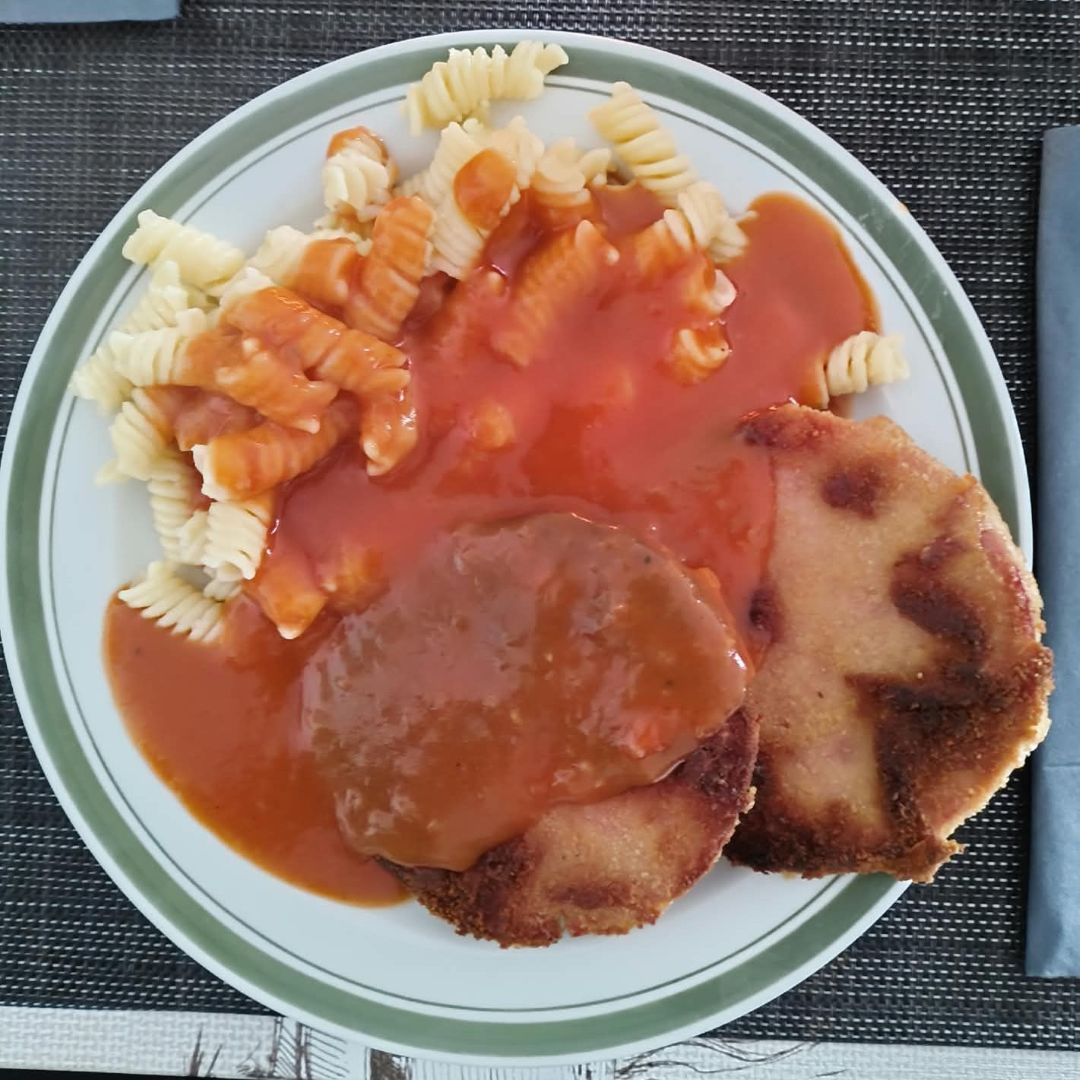
Some German dishes are instantly recognizable to anyone who grew up with them. East German Jagerschnitzel is one of those meals. It is made with thick slices of Jagdwurst, coated in flour, egg and breadcrumbs, then fried until golden brown. Served with spiral pasta and a simple homemade tomato sauce, it is a hearty dish that has been part of everyday cooking in eastern Germany for generations. Outside Germany, the combination might be unfamiliar, but once you try it, you will understand why it remains such a beloved classic. Here, I am sharing my version of this traditional East German meal, including the homemade tomato sauce and practical alternatives for anyone who cannot find German Jagdwurst.
What Is East German Jagerschnitzel?
There is something worth knowing before you start cooking: Jagerschnitzel means two quite different things in Germany.
In western Germany, the name usually refers to a conventional pork schnitzel, sometimes veal, served with a savory mushroom sauce. The sauce typically contains mushrooms, often in a creamy gravy, and the dish is commonly accompanied by potatoes, fries or croquettes.
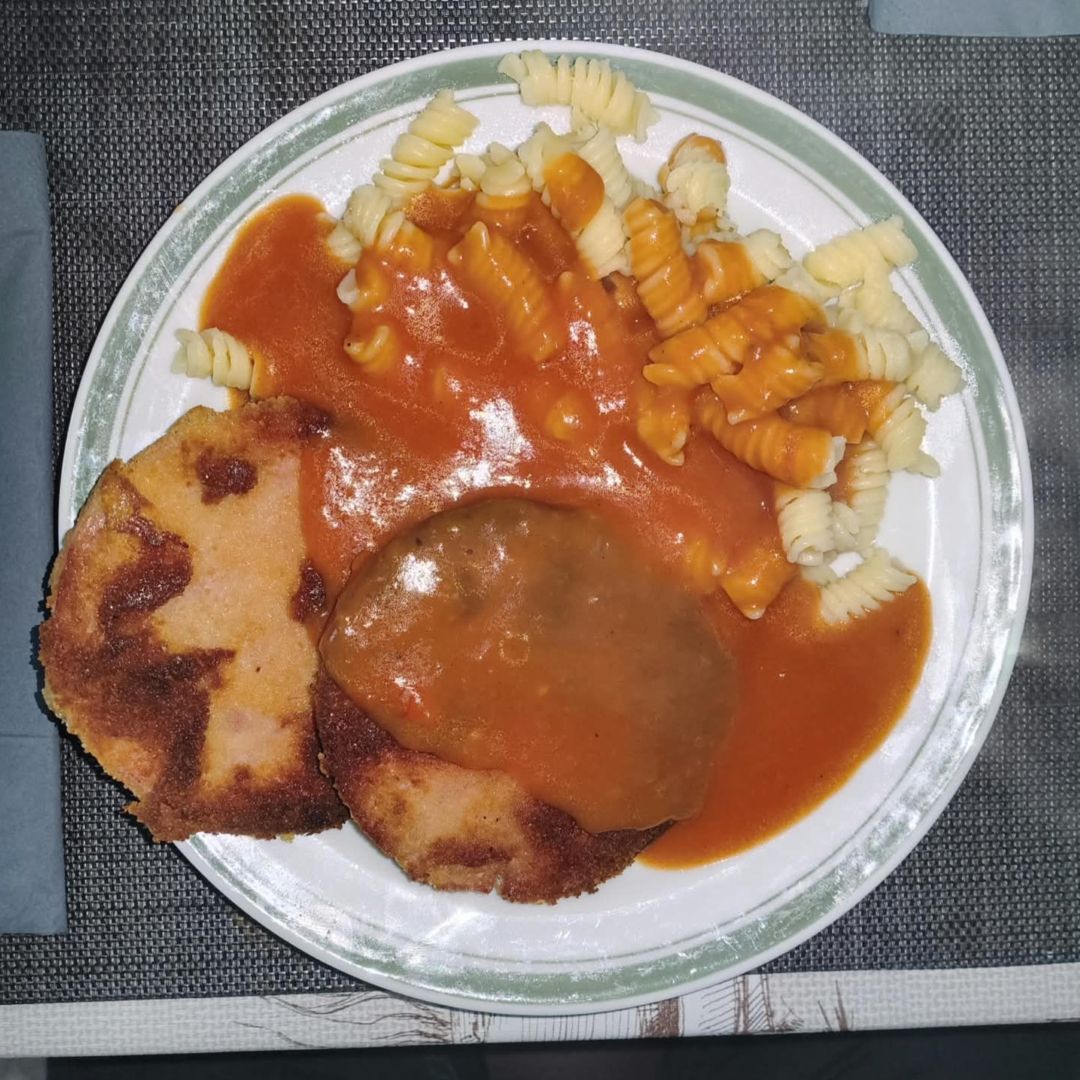
In eastern Germany, the traditional version is quite different. Instead of a cutlet of meat, it is made with Jagdwurst, a German cooked sausage. Thick slices are breaded in the familiar sequence of flour, beaten egg and breadcrumbs, then fried in a pan. The finished Jagerschnitzel is traditionally served with spiral pasta and tomato sauce.
The original German spelling is Jägerschnitzel. For this recipe, I use the spelling Jagerschnitzel without the umlaut, making it easier for English-speaking readers to search for and type.
If you would like to learn more about the two German interpretations, I have already written about their differences in Jagerschnitzel: A Culinary Journey Across Germany. You can also find this East German specialty among the dishes featured in German Regional Dishes Tourists Often Miss.
A Classic of East German Home Cooking
For many people who grew up in the former German Democratic Republic (GDR), Jagerschnitzel with pasta and tomato sauce is more than just a recipe. It is a familiar part of everyday food culture.
The dish was popular in school cafeterias, workplace canteens and family kitchens. It was filling, straightforward to prepare and made with ingredients that were widely familiar. Jagdwurst provided an affordable alternative to a conventional meat schnitzel, while pasta and tomato sauce made the meal complete.
What makes this combination so recognizable is its simplicity. There is no elaborate sauce, no complicated preparation and no need for expensive ingredients. The sausage is breaded and fried, the pasta is cooked, and the tomato sauce brings everything together.
In many eastern German households, this is still a familiar meal today. Recipes and small preparation details may differ from one family to another, but the essential combination of breaded Jagdwurst, Spirelli and tomato sauce remains unmistakable.
East German Jagerschnitzel Recipe
This is my version of the classic dish, prepared with breaded Jagdwurst, spiral pasta and a simple homemade tomato sauce. The quantities below are designed for four servings. The sauce can easily be adjusted to suit your taste.
Recipe at a Glance
- Servings: 4
- Preparation time: 20 minutes
- Cooking time: 25 minutes
- Total time: Approximately 45 minutes
- Difficulty: Easy
- Course: Main course
- Cuisine: East German / German
Ingredients
For the Jagerschnitzel
- 600–700 g German Jagdwurst (approximately 1.3–1.5 lb), preferably in one piece
- 2 large eggs
- 60 g all-purpose flour (approximately 1/2 cup)
- 120 g breadcrumbs (approximately 1 cup)
- Vegetable oil or clarified butter, for frying
For the Homemade Tomato Sauce
- 1 small onion, very finely chopped
- 200 g ketchup (approximately 3/4 cup plus 1 tablespoon) or tomato paste as an alternative
- 250–350 ml water or vegetable broth (approximately 1–1 1/2 cups)
- 1 tablespoon butter or vegetable oil, for the roux
- 1 tablespoon all-purpose flour, for the roux
- Salt and black pepper, to taste
- Alternatively, ready-made gravy thickener (German Soßenbinder), according to the package instructions
For the Pasta
- 400 g Spirelli or fusilli pasta (approximately 14 oz)
- Water for cooking
- Salt, for the pasta water
How to Make East German Jagerschnitzel
Step 1: Cut the Jagdwurst into Slices
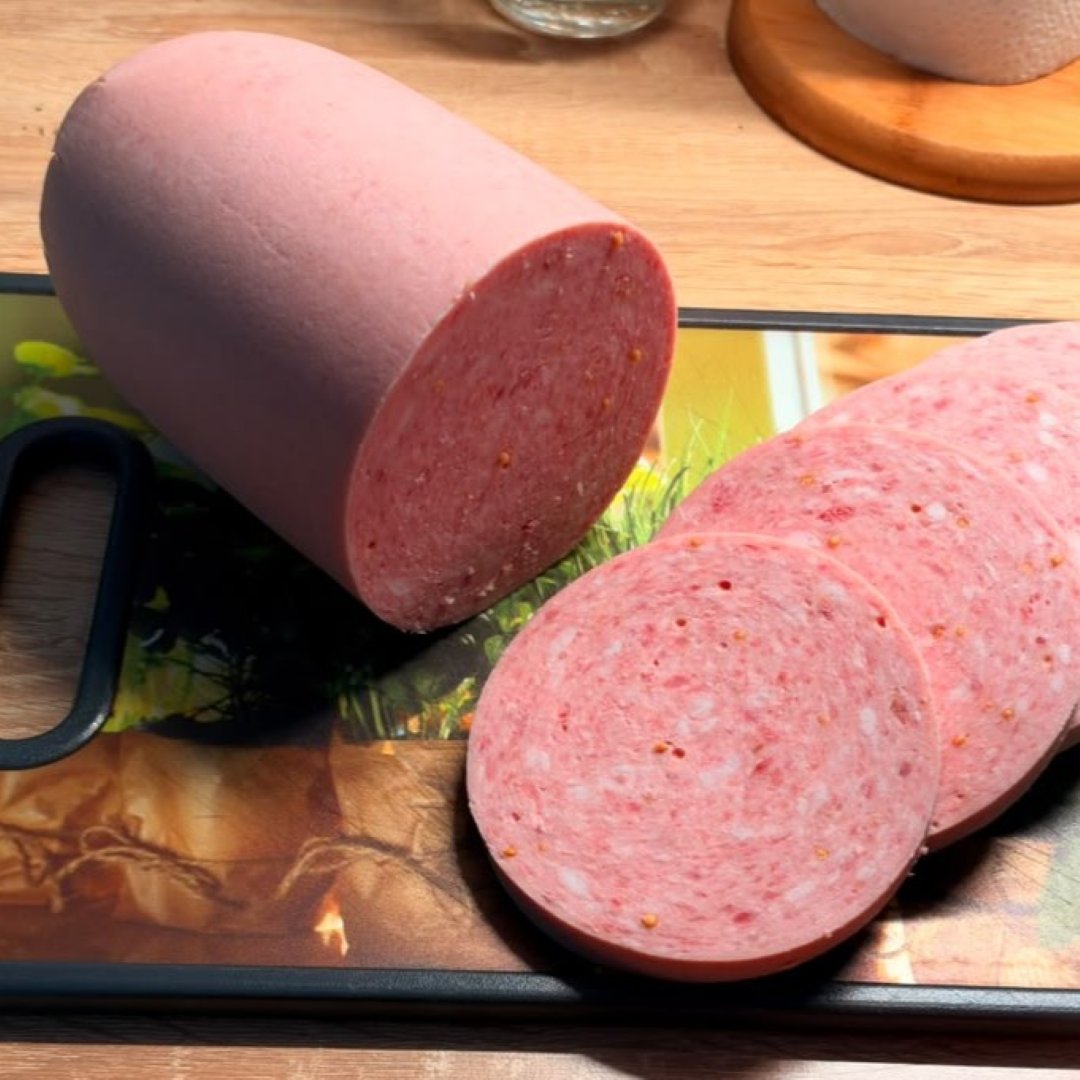
Start with a piece of German Jagdwurst. If it has an outer casing, remove it if necessary. Cut the sausage into slices approximately 1.5 cm (about 5/8 inch) thick.
This thickness is important. The slices should be substantial enough to handle easily during breading and frying. Very thin sandwich slices are not suitable because they can bend or tear when dipped into the egg and breadcrumbs.
Step 2: Prepare the Breading Station
For the traditional German breading method, you need three shallow plates or dishes. In Germany, this arrangement is known as a Panierstraße, which literally means a breading station.
- Put the flour in the first plate.
- Beat the eggs in the second plate until smooth.
- Place the breadcrumbs in the third plate.
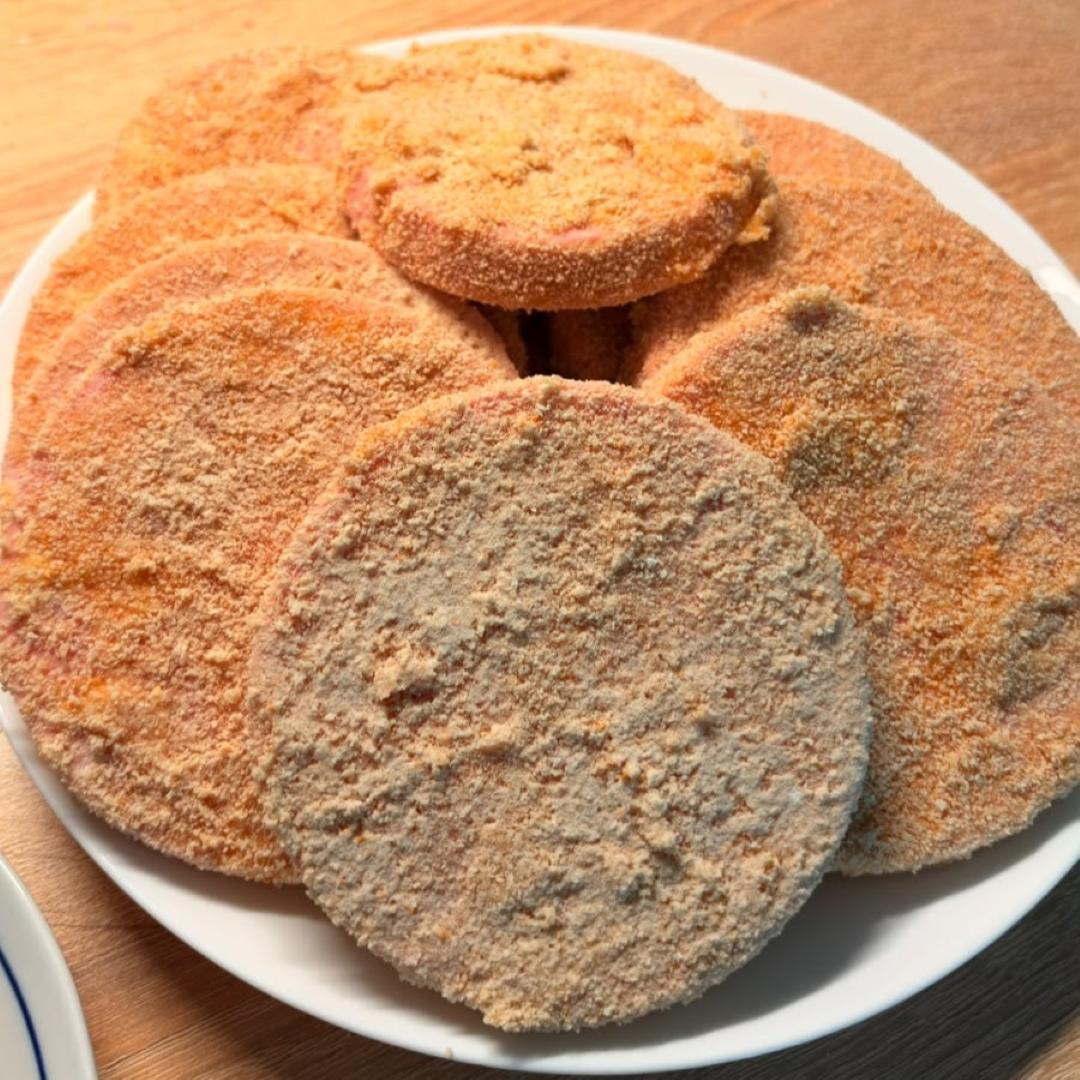
Take each slice of Jagdwurst and coat it first in flour. Shake off any excess, then dip it into the beaten egg, covering both sides. Finally, press it gently into the breadcrumbs until the entire surface is evenly coated.
Repeat the process with all the sausage slices. Place the breaded pieces on a plate or cutting board until you are ready to fry them.
Step 3: Make the Homemade Tomato Sauce
The tomato sauce is an essential part of East German Jagerschnitzel. It is not an elaborate pasta sauce but a simple, homemade sauce with a pleasant tomato flavor and finely chopped onions.
There are two easy ways to prepare its tomato base: ketchup or tomato paste. Both can be used, depending on your preference and what you have available.
- Peel the onion and chop it very finely.
- Heat a little butter or vegetable oil in a saucepan and gently sauté the onion until translucent.
- Add the ketchup or tomato paste and stir well.
- Gradually add water or vegetable broth, stirring until the sauce reaches the desired consistency.
- Season with salt and black pepper to taste.
- To thicken the sauce, prepare a small roux by melting the butter, stirring in the flour and cooking briefly without browning it. Gradually stir the roux into the sauce.
- Alternatively, use ready-made German gravy thickener (Soßenbinder) according to the package instructions.
- Let the sauce simmer gently for a few minutes, stirring occasionally. Adjust the consistency and seasoning if necessary.
My tip: Ketchup is particularly convenient because it already contains tomato seasoning and a certain sweetness. Tomato paste produces a more concentrated tomato flavor, so you may need to adjust the seasoning and liquid accordingly. The finished sauce should be smooth enough to coat the pasta without being overly thick.
Step 4: Cook the Spiral Pasta
Bring a large pot of salted water to a boil. Add the Spirelli and cook according to the package instructions until tender but still slightly firm to the bite.
Drain the pasta thoroughly and keep it warm while you finish preparing the Jagerschnitzel.
If German Spirelli is not available where you live, ordinary fusilli is an excellent substitute. Both have a spiral shape that works particularly well with the tomato sauce.
Step 5: Fry the Breaded Jagdwurst
Heat a generous amount of vegetable oil or clarified butter in a large frying pan over medium heat.
Carefully place the breaded Jagdwurst slices in the hot pan. Depending on the size of your frying pan, you may need to work in batches. Avoid overcrowding the pan so that the coating can become evenly golden brown.
Fry the slices on both sides until the breadcrumbs are crisp and golden and the sausage is heated through. Since Jagdwurst is already a cooked sausage, the aim is to heat the inside while creating a nicely browned, crunchy coating.
Remove the finished slices from the pan and let any excess oil drain briefly on a plate lined with paper towels.
Step 6: Serve Your East German Jagerschnitzel
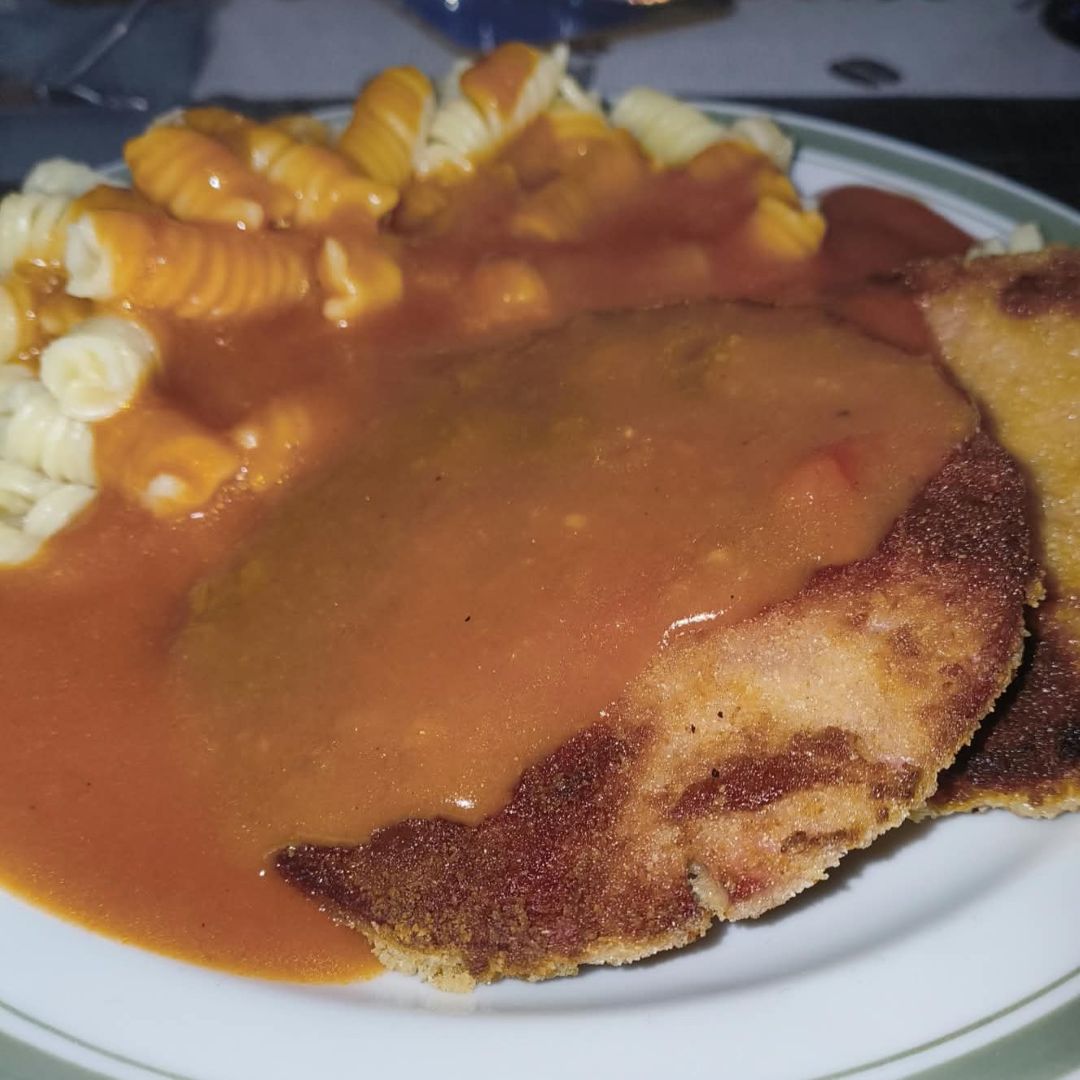
Arrange the spiral pasta on each plate and add a generous portion of tomato sauce. Place the freshly fried Jagerschnitzel alongside the pasta or partly over it.
I recommend keeping at least some of the breaded surface uncovered. This helps preserve the crispy coating and gives you a nice contrast between the golden sausage, soft pasta and tomato sauce.
Where to Find Jagdwurst in the United States
Finding authentic German Jagdwurst can be the biggest challenge when preparing this recipe outside Germany. Regular American supermarkets do not always carry it, but there are several alternatives that work well enough for a homemade version.
Jagdwurst is a German cooked sausage with a relatively firm texture and small pieces of meat distributed throughout the sausage mixture. For Jagerschnitzel, it is best purchased as a whole piece or a large deli cut so that you can slice it thickly.
What Can You Use Instead of Jagdwurst?
German Bologna
German Bologna is one of the best alternatives to look for in the United States. It is particularly suitable when sold as a whole sausage or in a large piece at a German deli or European butcher. Its texture and seasoning can be closer to German Jagdwurst than ordinary American sandwich bologna.
Beef Bologna or Garlic Bologna
If German Bologna is unavailable, beef Bologna or Garlic Bologna can also work. Garlic Bologna has a more pronounced seasoning that may remind you of the flavor of some German Jagdwurst varieties.
Keep in mind that ordinary American Bologna is often softer and more finely textured than German Jagdwurst. The result will not be exactly the same, but it can still make a good homemade Jagerschnitzel.
Mortadella Without Pistachios
Mortadella is another useful option. It has a smooth, cooked sausage texture with small pieces of fat throughout, making it suitable for breading and frying. Choose a variety without pistachios and ask the deli counter for thick slices.
Kielbasa or Polish Sausage
Kielbasa can be considered if the other options are unavailable. However, many varieties are smoked and have a stronger flavor than German Jagdwurst. The finished dish will therefore taste noticeably different from the East German original.
What to Ask for at an American Deli Counter
One important tip: avoid the usual thin, prepackaged Bologna slices intended for sandwiches. They are generally too thin and soft for this recipe.
Instead, ask for a whole sausage or thick-cut deli slices approximately 5/8 inch thick (around 1.5 cm). You can say:
“Could I get this sausage cut into thick slices, about five-eighths of an inch thick? I need them for breading and frying.”
That should make it much easier to get the right thickness for your Jagerschnitzel.
Can You Make East German Jagerschnitzel in Australia?
Yes. German Jagdwurst may not be available in every Australian supermarket, but there are some useful local alternatives.
Depending on the region, cooked luncheon sausages may be sold under names such as Devon, Strasburg, Fritz or Polony. These products vary in seasoning and texture, so they are not identical to German Jagdwurst. Nevertheless, a firm variety can work as a substitute.
As in the United States, I recommend buying a whole sausage or asking the deli counter for thick slices approximately 1.5 cm (5/8 inch) thick. This makes the sausage much easier to bread and fry without it falling apart.
Mortadella without pistachios is another option if you cannot find a suitable local sausage.
Tips for the Best Homemade Jagerschnitzel
- Choose the right thickness. Jagdwurst slices around 1.5 cm (5/8 inch) thick are ideal for breading and frying.
- Follow the correct breading order. Always use flour first, then beaten egg and finally breadcrumbs.
- Use medium heat. This helps the coating turn golden brown without becoming too dark.
- Do not overcrowd the pan. Frying in batches makes it easier to achieve an evenly crisp coating.
- Adjust the tomato sauce. Ketchup and tomato paste are both suitable bases. Add water or broth gradually to get the consistency you prefer.
- Keep the sauce and breaded sausage separate until serving. This helps the coating stay crisp.
- Use fusilli if necessary. It is an excellent substitute for traditional German Spirelli.
What Goes Well with East German Jagerschnitzel?
The traditional combination is breaded Jagdwurst with spiral pasta and tomato sauce. It is the version I recommend if you want to experience the familiar East German dish.
However, you can also serve the Jagerschnitzel with other sides. Boiled potatoes, mashed potatoes or rice work well if you prefer something different. A simple green salad or vegetables such as peas, broccoli or cauliflower can round out the meal.
For a classic East German-style plate, though, I would stick with Spirelli and tomato sauce.
Frequently Asked Questions
Is East German Jagerschnitzel made with pork?
Traditional Jagdwurst is generally a pork-based cooked sausage. It is sliced, breaded and fried rather than prepared from a conventional cut of pork like a regular schnitzel.
Why is East German Jagerschnitzel made with sausage?
The eastern German version uses Jagdwurst as its main ingredient. The sausage is cut into thick slices and prepared in the style of a breaded schnitzel. This practical and satisfying preparation became a familiar part of everyday East German cooking.
What is the difference between East and West German Jagerschnitzel?
The East German version is made with breaded and fried Jagdwurst and is traditionally served with tomato sauce and pasta. The West German version generally consists of a conventional pork or veal schnitzel with mushroom sauce, often accompanied by potatoes or another potato side dish.
How thick should the Jagdwurst slices be?
A thickness of approximately 1.5 cm (5/8 inch) works very well. The slices are substantial enough to handle during breading and frying while remaining easy to eat.
Can I use American Bologna instead of Jagdwurst?
Yes. A firm German-style Bologna, beef Bologna or Garlic Bologna can be used. The important thing is to buy it in a whole piece or request thick deli slices rather than using thin sandwich slices.
Can I prepare the tomato sauce in advance?
Yes. The sauce can be prepared ahead of time and gently reheated before serving. If it becomes too thick, simply stir in a little water or broth.
Which pasta is best for Jagerschnitzel?
Spirelli is the traditional choice. Fusilli is an excellent alternative because it has a similar spiral shape and holds the tomato sauce well.
A Taste of East German Home Cooking
What I like about this dish is its simplicity. You do not need expensive ingredients or complicated cooking techniques to prepare a satisfying meal. A good piece of Jagdwurst, a little flour, eggs, breadcrumbs, pasta and a homemade tomato sauce are all it takes.
For many people from eastern Germany, Jagerschnitzel with Spirelli and tomato sauce is a familiar taste from childhood. It is one of those everyday dishes that has remained popular long after the GDR disappeared. Families still prepare it at home, and it continues to bring back memories of a very particular part of German food culture.
If you have never tried it, I hope you give my version a chance. It may be different from the schnitzel you know, but that is exactly what makes it worth trying.
Guten Appetit!