German Christmas Cookies: Why Baking Becomes a December Tradition
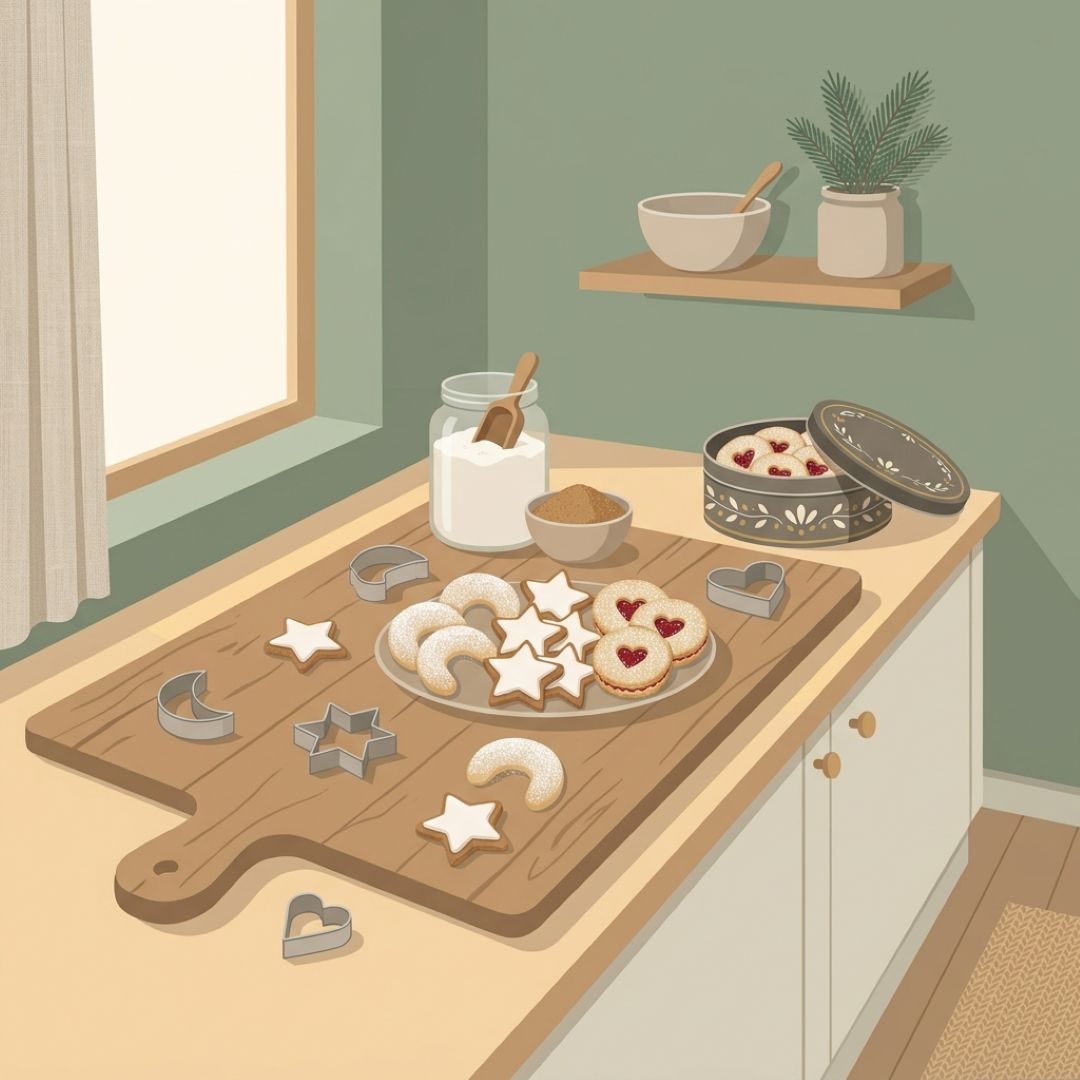
In Germany, Christmas cookies are not just something you bake a few days before Christmas. They belong to the entire Advent season.
These small cookies are usually called Plätzchen, and in many German homes, baking them becomes a little December ritual. One weekend might be set aside for mixing dough and cutting shapes. Another brings a different recipe. Before long, the kitchen smells of cinnamon, vanilla, butter, chocolate, and toasted nuts.
And there is rarely just one kind.
A German cookie plate might hold Zimtsterne, Vanillekipferl, Spitzbuben, Butterplätzchen, or other family favorites. The finished cookies often go into tins, where several varieties wait to be brought out during Advent.
That is what makes German Christmas cookie baking so special to me. It is not only about the cookies. It is about the time spent making them, sharing them, and slowly filling the house with the feeling that Christmas is getting closer.
What Are German Plätzchen?
The German word Plätzchen describes the small cookies traditionally associated with Christmas and the Advent season. The selection varies from family to family and from region to region, so there is no single recipe that defines them all.
Some are made from buttery dough and decorated with icing or sugar. Others contain ground nuts, cinnamon, jam, chocolate, or spices. Some are rolled and cut into shapes, while others are formed by hand or piped onto a baking sheet.
That variety is part of the fun.
In Germany, a family may have a few recipes that appear every year without fail. Another household might try something new each December. Both approaches fit comfortably into the tradition.
Why Do Germans Bake Christmas Cookies During Advent?
Advent is the period leading up to Christmas, and German Christmas traditions often stretch across those weeks rather than concentrating everything into Christmas Eve.
That is why Plätzchen can start appearing in kitchens well before December 24.
Many families bake during the first weeks of Advent and then enjoy the cookies gradually. They may appear on a plate when friends visit, next to coffee on a Sunday afternoon, or after dinner when everyone wants something sweet.
Children can also take part. They can help roll out dough, press cookie cutters into it, decorate finished cookies, or simply keep watch near the oven.
The baking itself becomes part of the Christmas season.
It Is Rarely Just One Kind of Cookie
If you are used to baking one favorite Christmas cookie recipe, the German approach can look wonderfully excessive.
One batch is often not enough.
Zimtsterne bring cinnamon and a soft, nutty texture. Vanillekipferl are delicate crescent-shaped cookies with a sweet vanilla coating. Spitzbuben pair buttery cookie dough with jam. Butterplätzchen offer a simpler option that works especially well for decorating.
There are many more possibilities, including Spritzgebäck, Kokosmakronen, Pfeffernüsse, and different regional specialties.
The exact combination depends on the household. Some families have a short list of absolute favorites. Others enjoy filling several tins with as many varieties as they can manage.
That is one reason German Christmas cookies make such a good family project. Everyone can have a favorite.
The Christmas Cookie Tin
One of the most charming parts of the tradition comes after the baking.
The cookies need somewhere to go.
Many German households use cookie tins to store their Plätzchen. Once several batches have cooled, the tins gradually fill with different shapes, colors, textures, and flavors.
Opening one during Advent can feel like opening a small Christmas collection. There might be a powdered crescent beside a jam-filled cookie, a cinnamon star next to a chocolate-dipped piece, and one slightly broken cookie that somehow disappears first.
These tins also make sharing easy. A selection can be placed on a plate when guests arrive or packed up as a small homemade gift for friends, neighbors, or family members.
Plätzchen Baking Is a Social Event
This is the part that can be easy to miss when you think of Christmas cookies only as a finished dessert.
The real tradition happens in the kitchen.
A family gathers around the counter. Someone measures flour. Someone else works the butter and sugar together. Kids reach for the cookie cutters, while another person clears space for the next baking sheet.
The kitchen gets busy, but nobody minds.
There is usually a little tasting along the way, too. A corner of dough disappears. One cookie comes out of the oven and gets sampled while it is still warm. Someone decides that the icing needs a little more sugar.
None of this has to look perfect. That is part of the charm.
Plätzchen baking gives people something to do together while the Christmas season slowly unfolds around them.
German Christmas Cookies Are Meant to Be Enjoyed Before Christmas
Another difference that may surprise international readers is the timing.
These cookies do not have to wait for Christmas Eve.
They belong to Advent, so families can enjoy them throughout December. A plate of Plätzchen fits naturally beside an Advent wreath, a cup of coffee, or a Sunday afternoon visit.
That makes the cookies part of the countdown itself.
Instead of preparing everything for one big day, you get small moments of Christmas throughout the weeks leading up to it.
A Simple German Plätzchen Checklist
If you want to bring a little of this German Advent tradition into your own home, you do not need to bake ten different kinds of cookies. Start small and make the experience enjoyable.
- Choose two or three recipes. Pick different styles, such as a cinnamon cookie, a vanilla cookie, and a jam-filled cookie.
- Plan a baking day. Invite family or friends and make the preparation part of the event.
- Let everyone have a job. Mixing, rolling, cutting, decorating, and arranging all count.
- Use a cookie tin. Store the finished cookies in separate layers or keep different varieties in their own containers.
- Save some for Advent. You do not need to wait until Christmas Eve to enjoy them.
- Share a few. A small selection of homemade cookies makes a thoughtful seasonal gift.
- Keep one family favorite. A recipe that returns every year can become part of your own Christmas tradition.
Which German Christmas Cookies Should You Try First?
If you are new to German Plätzchen, three classic styles make a nice starting point.
Zimtsterne
Zimtsterne are cinnamon stars with a characteristic white icing. They have a rich, nutty flavor and look beautiful on a Christmas cookie plate.
Vanillekipferl
Vanillekipferl are small crescent-shaped cookies with a delicate texture and a sweet vanilla coating. They are especially recognizable for their curved shape.
Spitzbuben
Spitzbuben are traditionally made from two pieces of cookie dough with a layer of jam between them. The small cutout in the top cookie lets the colorful filling show through.
Of course, these are only three possibilities. German families have many other favorites, and recipes often vary from one household to the next.
You Do Not Need a Perfect Kitchen
One thing I especially like about the idea of a German Plätzchen afternoon is that it does not require a picture-perfect kitchen or professional baking skills.
The table can get covered with flour. The icing may not look completely even. A few cookies may come out in slightly different shapes.
That is okay.
The point is to make something together and enjoy the season while you do it.
If you are baking with children, the process may become even more important than the final result. Cookie cutters, sprinkles, icing, and a little freedom can turn an ordinary afternoon into a Christmas memory.
Want to Try German Plätzchen at Home?
If this tradition sounds like something you would enjoy, start with a small selection rather than trying to recreate an entire German bakery in one afternoon.
Choose a few recipes, put on some Christmas music, make coffee or another warm drink, and invite someone to join you in the kitchen.
Mary’s free recipe e-book is another easy place to start if you are looking for more German-inspired holiday baking ideas. It can help turn the idea of German Christmas cookies into something you can actually make and share at home.
The recipes matter, of course. But the bigger idea is even simpler: German Christmas baking is not only about having cookies on the table.
It is about making time for the people around it.
A Little Taste of German Advent
By December, a German kitchen can become a very sweet place.
There may be a tin of cookies on the counter, crumbs on the table, icing drying on a tray, and another batch waiting to go into the oven. Outside, the days are short and cold. Inside, the Advent season is slowly gathering momentum.
That is the beauty of Plätzchen.
You do not need to wait for Christmas Day to enjoy them. You bake them during Advent, share them with people you love, and let each batch become part of the countdown.
Maybe that is why German Christmas cookies have always felt like more than just cookies. They are little pieces of the season, made one batch at a time.
Warm Christmas wishes,
Mary