Homemade Spaetzle Recipe: A Traditional German Delight
Homemade Spaetzle are one of those German dishes that look simple but have a character all their own. Made from a soft egg-based dough and cooked directly in boiling water, these small, irregular noodles are tender, slightly chewy, and excellent at soaking up sauces and gravy.
Known as Spatzle or Spätzle in German, they are especially associated with Swabian cuisine in southwestern Germany. Today, they are enjoyed far beyond their traditional home and make a wonderful side dish for roasts, Rouladen, creamy sauces, and many other hearty meals.
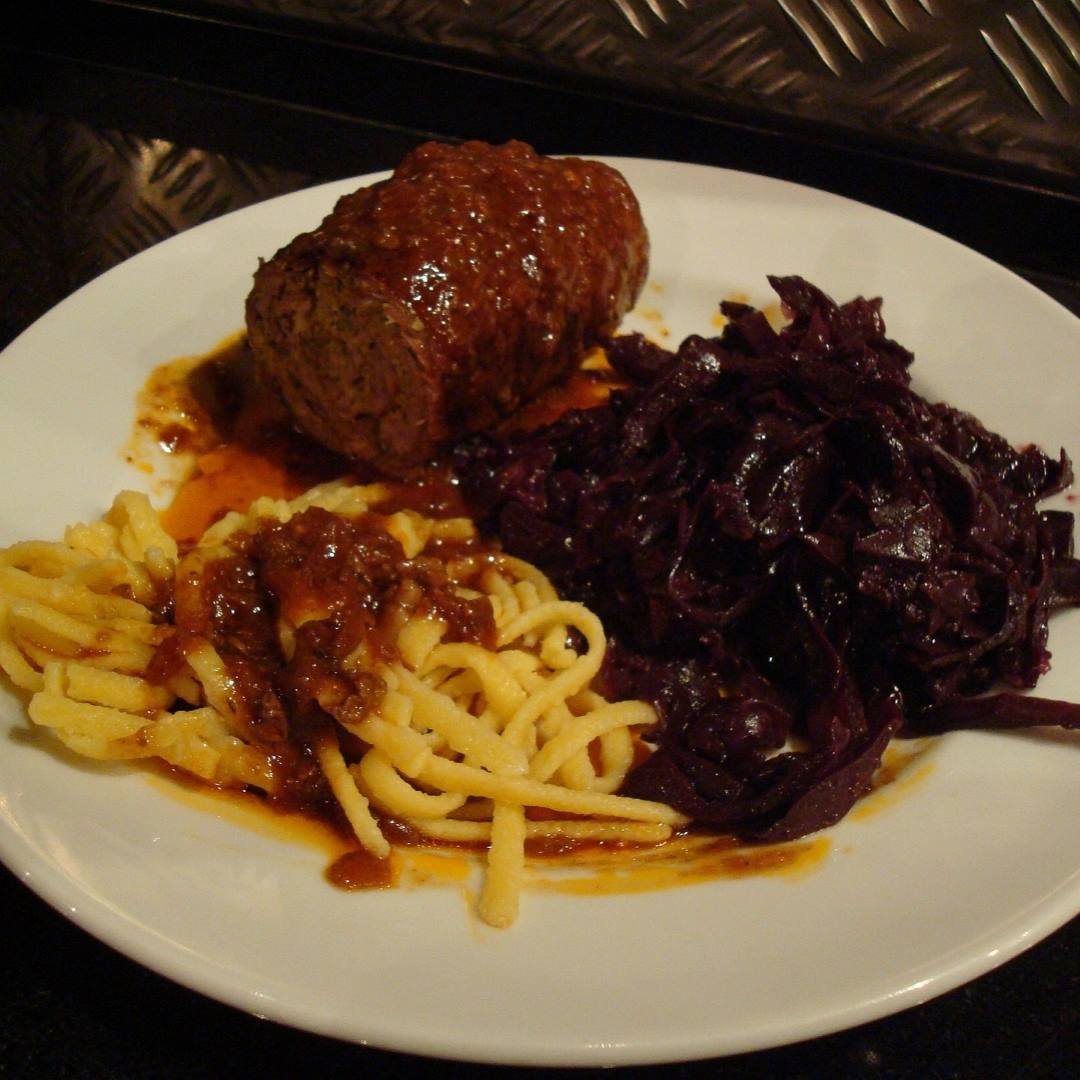
Homemade Spaetzle served with Rouladen and red cabbage.
What Are Spaetzle?
Spaetzle are soft German egg noodles made from a simple dough of flour, eggs, liquid, and salt. Unlike dried pasta, the dough is shaped and dropped directly into boiling water, so the noodles are cooked fresh.
Their appearance is deliberately irregular. Depending on the method used, Spaetzle can be short and rounded, thin and noodle-like, or somewhat larger and more uneven. This homemade character is part of their appeal.
They are particularly associated with Swabia and the state of Baden-Wuerttemberg, where Spaetzle have long been an important part of regional cooking. They are also widely enjoyed in neighboring parts of southern Germany.
Homemade Spaetzle Recipe
Ingredients
- 2 cups (240 g) all-purpose flour
- 4 large eggs
- 1/2 cup (120 ml) milk
- 1 teaspoon salt
- 1/4 teaspoon ground nutmeg, optional
- Butter, optional, for finishing
The amount of liquid can vary slightly depending on the flour and the size of the eggs. The finished dough should be soft and elastic but thick enough to hold together as it is pressed or scraped into the boiling water.
What You Need to Make Spaetzle
A traditional Spaetzle maker is convenient, but it is not essential. Depending on the method you prefer, you can use:
- A Spaetzle maker or Spaetzle press
- A large-holed colander
- A potato ricer with suitable large holes
- A sturdy cutting board and knife or dough scraper
- A large pot for boiling the Spaetzle
- A slotted spoon or skimmer
The cutting-board method takes a little more practice, but it is one of the traditional ways to shape Spaetzle by hand.
How to Make Homemade Spaetzle
1. Prepare the Dough
Place the flour, salt, and nutmeg, if using, in a large mixing bowl. Add the eggs and milk and mix thoroughly with a wooden spoon or sturdy whisk.
Continue mixing until the dough becomes smooth, elastic, and noticeably sticky. Traditional Spaetzle dough is much softer and wetter than a typical pasta dough, so do not add large amounts of extra flour simply because it looks too soft.
2. Let the Dough Rest Briefly
Allowing the dough to rest for about 10 to 15 minutes can make it easier to work with. This also gives the flour time to absorb some of the liquid.
3. Bring the Water to a Boil
Bring a large pot of well-salted water to a gentle boil. Avoid filling the pot too much because the water needs to remain hot when the dough is added.
4. Shape the Spaetzle
Place a portion of dough into your Spaetzle maker and press it directly over the boiling water. Small pieces of dough will drop into the water and cook immediately.
If you are using a colander, press the dough through the larger holes with a spatula or dough scraper. With the traditional cutting-board method, spread some dough onto a wet board and use a knife or scraper to push thin strips directly into the boiling water.
5. Cook Until the Spaetzle Rise
The Spaetzle will initially sink and then rise toward the surface as they cook. Once they have floated and have cooked for another short moment, remove them with a slotted spoon or skimmer.
Cooking time will depend on the size and thickness of the Spaetzle, so it is better to judge them by their texture than by a strict number of minutes.
6. Drain and Serve
Transfer the cooked Spaetzle to a bowl or colander and allow them to drain well. They can be served immediately or briefly tossed with a little butter to keep them separate and add flavor.
How to Make Spaetzle Without a Spaetzle Maker
You do not need special German kitchen equipment to make good homemade Spaetzle. A large-holed colander is one practical alternative, although the dough should be worked in manageable portions.
Another traditional approach uses a wet cutting board. The dough is spread across the board, and small pieces are scraped directly into the simmering water with a knife or dough scraper. This method produces the irregular shapes that many people associate with handmade Spaetzle.
A potato ricer can also work if the holes are large enough. The important thing is to avoid forcing the dough through openings that are too small, as this can produce very thin noodles with a different texture.
Why Is Spaetzle Dough So Soft?
If you are used to making Italian pasta, the consistency of Spaetzle dough may seem unusual. It is intentionally much softer.
The dough needs to be soft enough to be pressed or scraped into small pieces and dropped directly into the boiling water. That is what gives Spaetzle their characteristic soft, tender texture.
For this reason, adding too much flour can actually make homemade Spaetzle less enjoyable. A sticky dough is normal.
A Classic Combination: Rouladen, Spaetzle, and Red Cabbage
One of the most satisfying ways to serve Spaetzle is alongside German Rouladen and red cabbage. The tender beef rolls are usually served with a rich gravy, while the Spaetzle provide the perfect vehicle for soaking up the sauce.
GermanBuy also offers Knorr Fix for Roulades for preparing a traditional-style Rouladen dish at home.
For another familiar German flavor, mustard is often used in Rouladen as part of the filling. A traditional Bautzner mustard can be used for this purpose.
Other Ways to Serve Spaetzle
Spaetzle are much more versatile than their classic combination with Rouladen might suggest. Their soft texture makes them especially good with sauces and gravies.
- With roast meat: Serve Spaetzle with roast beef, pork, or other braised meats and their gravy.
- With creamy mushroom sauce: A rich mushroom sauce makes a simple meat-free meal.
- With cheese: Spaetzle can be turned into Kaesespaetzle, a popular comfort food made with melted cheese and often topped with fried onions.
- With vegetables: Toss freshly cooked Spaetzle with sauteed vegetables and herbs for a simple meal.
- With gravy: Their irregular surface makes them particularly good at holding onto sauces.
What Is Kaesespaetzle?
Kaesespaetzle is one of the best-known variations of the dish. The cooked Spaetzle are layered or tossed with melted cheese and commonly finished with golden fried onions.
The result is rich, comforting, and very filling. It is often compared with macaroni and cheese because of the combination of soft noodles and melted cheese, but the texture and preparation are distinctly different.
Tips for Better Homemade Spaetzle
- Do not make the dough too firm: Spaetzle dough should be soft and sticky.
- Keep the water at a steady boil: The water should be hot enough to cook the dough as soon as it enters the pot.
- Work in batches: Adding too much dough at once can lower the water temperature and make the Spaetzle stick together.
- Use plenty of water: A large pot gives the Spaetzle room to cook properly.
- Serve them soon: Freshly cooked Spaetzle have an especially pleasant texture.
- Butter helps: If you are not serving them immediately, tossing the cooked Spaetzle with a little butter can help prevent sticking.
Are Spaetzle Pasta?
Spaetzle are often described as German pasta or egg noodles because that gives people unfamiliar with the dish an easy point of reference. However, they are made and shaped differently from conventional dried pasta.
Instead of rolling and cutting a firm dough into uniform pieces, Spaetzle are made from a soft batter-like dough that is pressed, scraped, or pushed into boiling water. Their irregular shape and tender texture are part of what makes them distinctive.
A Taste of Swabian Cooking
For anyone interested in German regional cuisine, Spaetzle are a good example of how simple ingredients can become a defining part of local food culture. Flour, eggs, water or milk, and salt are transformed into a dish that works with everything from rich meat gravies to melted cheese.
Although Spaetzle are particularly associated with Swabia and southwestern Germany, they are now enjoyed throughout Germany and beyond. Their popularity is easy to understand: they are inexpensive, comforting, filling, and remarkably good at carrying the flavors of whatever is served with them.
Make Homemade Spaetzle at Home
Making Spaetzle for the first time may take a little practice, especially if you use the cutting-board method. Once you get a feel for the dough, however, the process becomes much easier.
Start with the basic recipe, keep the dough soft, and do not worry about making every piece the same size. In fact, the irregular shapes are part of the charm.
Serve your homemade Spaetzle with Rouladen and red cabbage for a classic German meal, or keep things simple with a creamy mushroom sauce or melted cheese and fried onions. Either way, freshly made Spaetzle bring a genuine taste of German regional cooking to the table.