Best German Sausages Ranked – Top 10 You Need to Try
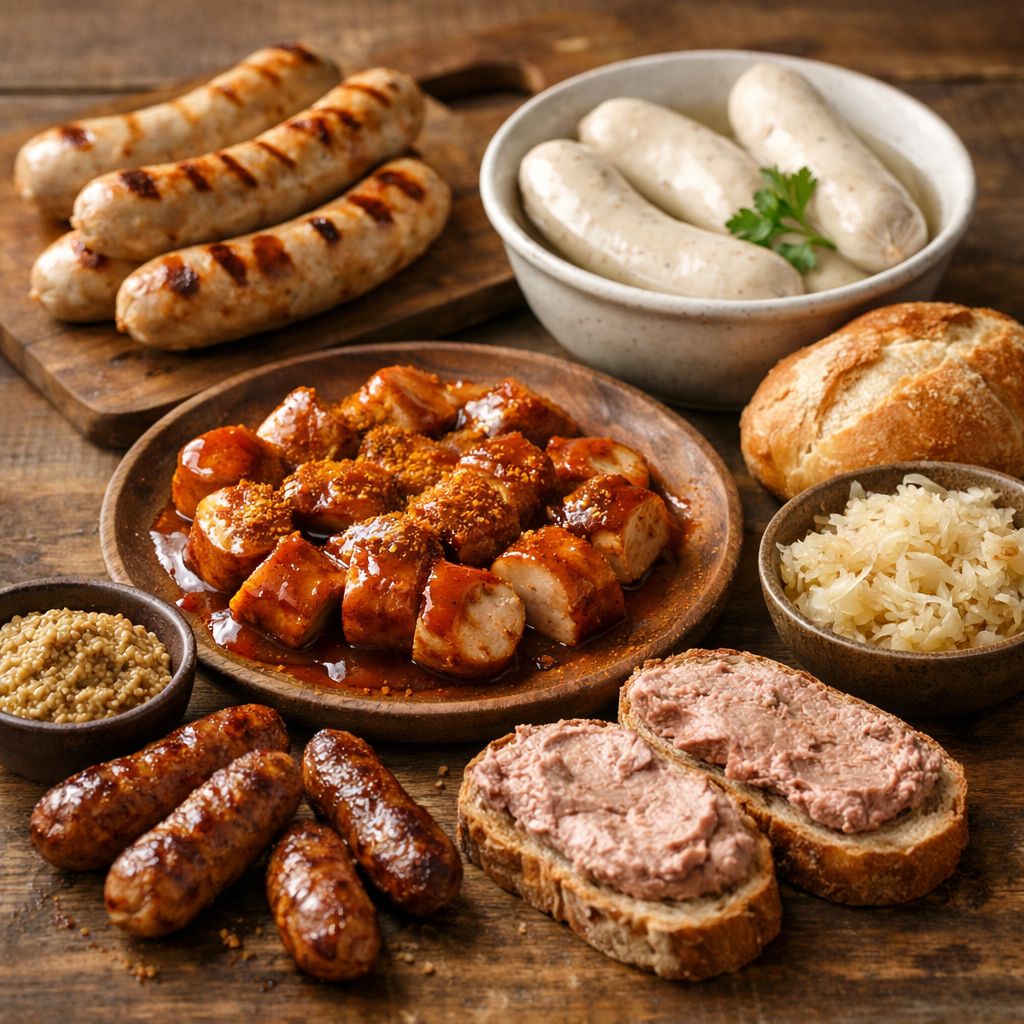
German sausage is not just one thing. It is a whole world of regional recipes, traditions, and everyday foods. If you are new to German sausage, the variety can be a little overwhelming. So rather than trying to cover every regional specialty, I want to focus on the sausages that give you a good starting point.
There is no single objective ranking of the “best” German sausages. Taste is personal, and regional traditions matter. But if you want to know which German sausages are worth trying first, these ten are a good place to start.
Quick Answer: The Best German Sausages to Try
If you want the short version, I would start with these:
- Bratwurst – the classic German sausage with many regional styles
- Currywurst – a Berlin favorite served with a spiced curry-tomato sauce
- Weisswurst – a traditional Bavarian sausage usually served with sweet mustard
- Nuernberger Rostbratwurst – small, thin pork sausages associated with Nuremberg
- Bockwurst – a mild, lightly smoked sausage often served hot
- Frankfurter / Wiener – a classic fine-textured sausage popular throughout Germany
- Leberwurst – a traditional liver sausage often enjoyed as a spread
- Teewurst – a soft, spreadable sausage traditionally served cold
- Blutwurst – a traditional blood sausage with many regional variations
- Mettwurst – a name used for several regional cured, smoked, or spreadable sausage styles
Here is what makes each one different.
1. Bratwurst
If you ask someone outside Germany to name a German sausage, Bratwurst is probably the first answer you will hear. And for good reason.
Bratwurst is not one single recipe. Germany has many regional varieties, made with different meats, seasonings, textures, and preparation methods. Some are fine-textured, while others are coarser. Some are especially associated with grilling, while others are prepared in a pan.
One of the best-known regional varieties is Thuringian Rostbratwurst. Nuernberger Rostbratwurst is another famous example. Both have protected geographical status in the European Union.
For someone trying German sausage for the first time, Bratwurst is probably the easiest place to begin. It is familiar enough to be approachable while still showing how much regional variety German sausage can have.
Best for: grilling, pan-frying, traditional German meals, and first-time sausage buyers.
2. Currywurst
Currywurst is one of the best-known German street foods, especially associated with Berlin. Unlike a traditional sausage variety, Currywurst is really a dish: a cooked sausage is cut into pieces and served with a spiced tomato-based sauce and curry seasoning.
The sausage itself can vary. What makes the dish recognizable is the combination of sliced sausage, curry-spiced sauce, and the way it is served.
I would recommend Currywurst if you want to experience a very different side of German sausage culture. It is less about a particular regional sausage recipe and more about the complete dish.
Best for: street-food fans and anyone who enjoys savory tomato-based sauces with a little spice.
3. Weisswurst
Weisswurst is one of Bavaria’s most recognizable sausage specialties. It is traditionally made with veal and pork and has a pale appearance because it is not browned like a typical grilled Bratwurst.
Traditional Bavarian serving customs pair Weisswurst with sweet mustard and a fresh pretzel. It is also traditionally associated with being eaten before noon, although modern eating habits are naturally less strict.
The sausage is usually gently heated rather than grilled. The casing is traditionally removed before eating.
If you are interested in Bavarian food and traditions, Weisswurst is one of the sausages I would put high on the list.
Best for: Bavarian breakfasts, traditional meals, pretzels, and sweet mustard.
Try our Munich Weisswurst if you want to experience this classic Bavarian specialty.
4. Nuernberger Rostbratwurst
Nuernberger Rostbratwurst is very easy to recognize because of its small size. These thin pork sausages are traditionally seasoned with salt, pepper, and marjoram and are closely associated with the city of Nuremberg.
The name is protected, and authentic Nuernberger Rostbratwurst must be produced in Nuremberg according to the specified traditional requirements.
They are commonly served several at a time, often with sauerkraut, potato salad, bread, or mustard.
The small size also makes them particularly convenient for serving several sausages as part of a traditional German meal.
Best for: regional German food, grilling, traditional sausage plates, and smaller portions.
5. Bockwurst
Bockwurst is a mild, fine-textured sausage that is often lightly smoked. It is usually heated in hot water rather than grilled until heavily browned.
Compared with some strongly seasoned German sausage varieties, Bockwurst has a relatively mild flavor. That makes it an easy introduction if you are not used to heavily seasoned sausages.
It is commonly served with mustard and bread and can also be part of a simple German meal.
Best for: a mild sausage, quick meals, bread and mustard, and first-time buyers.
6. Frankfurter / Wiener
Frankfurter and Wiener sausages are fine-textured, lightly seasoned sausages that are familiar to many people outside Germany. They are typically served hot and are often accompanied by mustard, bread, or a simple side dish.
The terminology can vary by region and country, so you may see similar sausages described as Frankfurter or Wiener depending on where you are.
These sausages are a good choice if you prefer a smooth texture and a milder flavor rather than a coarse, strongly seasoned sausage.
Best for: simple meals, sandwiches, mustard, and anyone who prefers a smooth sausage texture.
7. Leberwurst
Leberwurst is a traditional German liver sausage, and it comes in many regional styles. Depending on the variety, it can be smooth and spreadable or have a firmer texture.
Rather than grilling it, Leberwurst is most commonly enjoyed cold as part of a bread-based meal. Spread it on a slice of German bread and add pickles, onions, or mustard if you like.
This is one of the sausages that shows how different German sausage culture can be from the idea of a sausage that is always grilled or served hot.
Best for: German bread, cold meals, sandwiches, and traditional Abendbrot-style meals.
8. Teewurst
Teewurst is a soft, spreadable sausage traditionally served cold. Despite the name, it is not a sausage that has to be eaten with tea. The name is associated with the tradition of serving it during afternoon tea or a similar light meal.
Its soft texture makes it especially suitable for spreading on bread or rolls. Like many German sausage products, there are different regional and manufacturer-specific styles.
Best for: sandwiches, bread rolls, cold meals, and people who enjoy spreadable sausage.
9. Blutwurst
Blutwurst is a traditional German blood sausage made with blood and other ingredients that vary by regional recipe. Depending on the variety, it can contain meat, fat, grains, onions, or different seasonings.
Blutwurst is a good example of why German sausage cannot be reduced to Bratwurst alone. Traditional recipes differ considerably from one region to another, and the sausage can be prepared and served in different ways.
If you are interested in traditional German food rather than just the most familiar varieties, Blutwurst is certainly worth knowing.
Best for: traditional German cuisine and adventurous eaters interested in regional specialties.
10. Mettwurst
Mettwurst can be confusing for anyone encountering German sausage for the first time because the name covers several regional styles. Depending on the variety, Mettwurst can be smoked, cured, firm, or spreadable.
It is also important not to confuse Mettwurst with Mett. Mett is seasoned raw minced pork that is traditionally eaten fresh, often spread on bread. Mettwurst, on the other hand, is a sausage product.
The exact characteristics of Mettwurst depend heavily on the regional style and recipe.
Best for: traditional cold meals, bread, sandwiches, and anyone interested in regional German sausage varieties.
How to Choose the Right German Sausage
If you are buying German sausage for the first time, I would choose based on how you normally like to eat.
- Want something for the grill? Start with Bratwurst or Nuernberger Rostbratwurst.
- Prefer mild sausages? Bockwurst or Frankfurter/Wiener may be a better starting point.
- Like Bavarian food? Try Weisswurst with sweet mustard and a pretzel.
- Enjoy street food? Currywurst is an obvious choice.
- Prefer cold meals and bread? Leberwurst or Teewurst are worth trying.
- Want traditional regional specialties? Blutwurst and Mettwurst offer something quite different.
When buying German sausage online, it is also worth checking how the product is packaged, whether it is shelf-stable or requires refrigeration, and how it should be prepared. Different sausage products can have very different storage and preparation requirements.
German Sausage vs. American Sausage
It is tempting to compare German sausage directly with American sausage, but that can be misleading. Both countries have many different sausage traditions, and there is no single “German sausage” or “American sausage.”
What makes German sausage particularly interesting is the strong connection between many varieties and their regional traditions. A Bratwurst from one part of Germany can be quite different from one made somewhere else.
That regional variety is one of the reasons I think German sausage is worth exploring one type at a time.
Where to Buy German Sausages Online
If you live outside Germany, finding authentic German sausage locally is not always easy. A German specialty shop can be useful because you can see the actual product, ingredients, packaging, and storage requirements before buying.
At GermanBuy, we offer a selection of German food products for customers in the United States and other destinations where shipping is permitted. Our German food category is a good place to browse beyond sausage as well.
If you are specifically looking for German sausage, you can also visit our German sausage guide for more information and available products.
Final Thoughts
There is no single sausage that deserves the title of “the best German sausage” for everyone. Bratwurst is an excellent starting point, but the real fun begins when you move beyond the familiar varieties.
Try a Bavarian Weisswurst, a small Nuernberger Rostbratwurst, a mild Bockwurst, or a traditional spreadable sausage such as Leberwurst or Teewurst. Each one gives you a slightly different look at German food culture.
And if you already have a favorite German sausage, I would be interested to know which one it is. For me, that is part of what makes German sausage so interesting: there are always more regional varieties to try.
What to Read Next