Beverages from Germany: Explore the Flavors of Deutschland!
When people think about German food and drinks, beer and mineral water probably come to mind first. But Germany has a surprisingly varied selection of non-alcoholic beverages, from sparkling apple spritzers and classic colas to fruit juices that have been part of German households for generations.
I have always found German soft drinks interesting because many of them have a very distinct character. Some are tied to a particular region, some have a fascinating history, and others are simply the kind of everyday drinks that bring back memories of Germany. Here are a few examples from the selection available at GermanBuy.
Apfelschorle: One of Germany’s Favorite Refreshing Drinks
If there is one German soft drink that deserves special attention, it is Apfelschorle.
Apfelschorle is essentially apple juice mixed with sparkling water. It is simple, refreshing, and much less heavy than drinking apple juice on its own. In Germany, you will find it in supermarkets, restaurants, cafes, homes, and refrigerators all over the country.
There are many different brands and recipes, so an Apfelschorle does not necessarily taste the same from one producer to another. That is part of the fun of trying different German versions.
Lift Apfelschorle
Lift Apfelschorle is one of the familiar German versions. It combines apple juice with sparkling water for a light, fruity drink that is easy to enjoy with a meal or simply on its own.
For me, Apfelschorle is one of those drinks that immediately feels German. It is uncomplicated, lightly sparkling, fruity without being a heavy soda, and easy to enjoy throughout the day.
German Cola Has More Than One Story
Germany has its own cola traditions, and some of them are closely connected with German history.
VITA COLA Original
VITA COLA has one of the most interesting histories of any German soft drink. It was developed in the former German Democratic Republic and first bottled in Leipzig in 1958. The drink became known for its distinctive combination of cola and citrus notes and was produced by numerous bottlers throughout East Germany.
After German reunification, VITA COLA eventually returned to the market and today remains a familiar German cola brand. If you would like to read more about its background, I also wrote a separate article about VITA COLA and its history.
What makes VITA COLA particularly interesting to me is that it is more than just another cola. It is a small piece of German post-war and reunification history that you can actually taste.
Club Cola Original
Club Cola has a similarly interesting East German background. It was introduced in 1967 and became another important cola brand in the GDR.
For anyone interested in German food and drink history, VITA COLA and Club Cola make an especially interesting comparison. Both are connected with the beverage culture of East Germany, but each developed its own identity.
VITA COLA Pur: A Different Take on Cola
VITA COLA Pur offers another option for cola fans who want to compare different German cola styles.
Having different versions available also makes it possible to experience the differences for yourself. German soft drinks are often more interesting when you look beyond the familiar international brands and try products that developed specifically for the German market.
Rotbäckchen: A German Juice Tradition
Not every famous German non-alcoholic drink is a soda. Rotbäckchen is a good example of a German juice brand with a long history.
Rotbäckchen dates back to 1952 and has become particularly recognizable for its distinctive small brown bottles and red branding. The range includes several fruit juices and juice-based products with different nutritional profiles.
The Rotbäckchen Immunstark juice available from GermanBuy contains vitamin C and zinc. Rather than making health claims about the drink, I think it is more useful to look at Rotbäckchen as what it is: a long-established German juice brand that many people associate with everyday life in Germany.
For me, Rotbäckchen is also a good example of how certain German food and drink brands become part of everyday life. You do not necessarily think of them as something exotic or special when you grow up with them. Years later, however, they can be surprisingly nostalgic.
German Drinks Are About More Than Soft Drinks
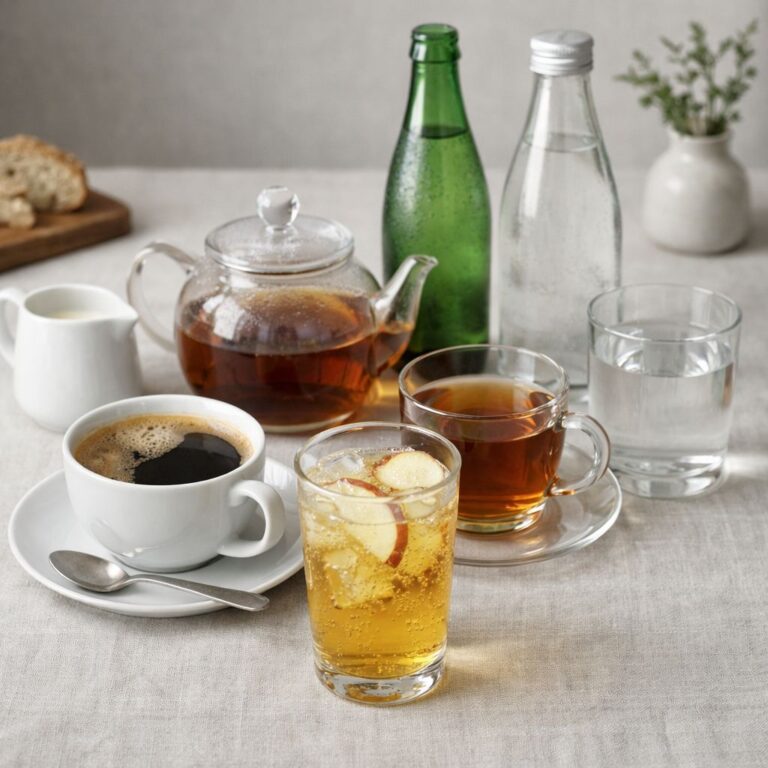
There is also a wider German beverage culture behind these products. Mineral water is extremely important in Germany, and sparkling water is commonly enjoyed on its own or mixed with fruit juice. Fruit spritzers are a familiar part of everyday life, while regional soft drinks and traditional juice brands add plenty of variety.
That regional character is one of the things I enjoy most about German beverages. A drink does not have to be complicated to be memorable. Sometimes a bottle of apple spritzer or a familiar German cola is enough to bring back a particular place, meal, or time in life.
A Taste of Germany in a Bottle
If you live outside Germany, German beverages can also be an easy way to experience something distinctly German without having to recreate an entire meal.
Try an Apfelschorle with a German lunch, pour a VITA COLA over ice, or compare VITA COLA Original with VITA COLA Pur. If you grew up in Germany, you may find yourself remembering drinks from childhood or from family holidays. If you did not, these products offer a simple introduction to a side of German food culture that often receives less attention than sausages, bread, chocolate, or beer.
That is one reason I enjoy having German beverages in the GermanBuy selection. They are everyday products, but everyday products often tell us a lot about a country’s culture.
German Beverages at GermanBuy
Our selection changes over time, but GermanBuy carries a range of German beverages for customers who want to enjoy products from Germany at home.
Whether you are looking for the refreshing simplicity of Apfelschorle, the distinctive taste and history of VITA COLA and Club Cola, or a traditional German fruit juice such as Rotbäckchen, these drinks offer something different from the usual international soft drink selection.
For me, that is the real appeal of German beverages. They do not have to be fancy. Sometimes the most authentic taste of Germany is simply the drink you would have picked up from the refrigerator at home.