
The Largest Lakes and Rivers in Germany
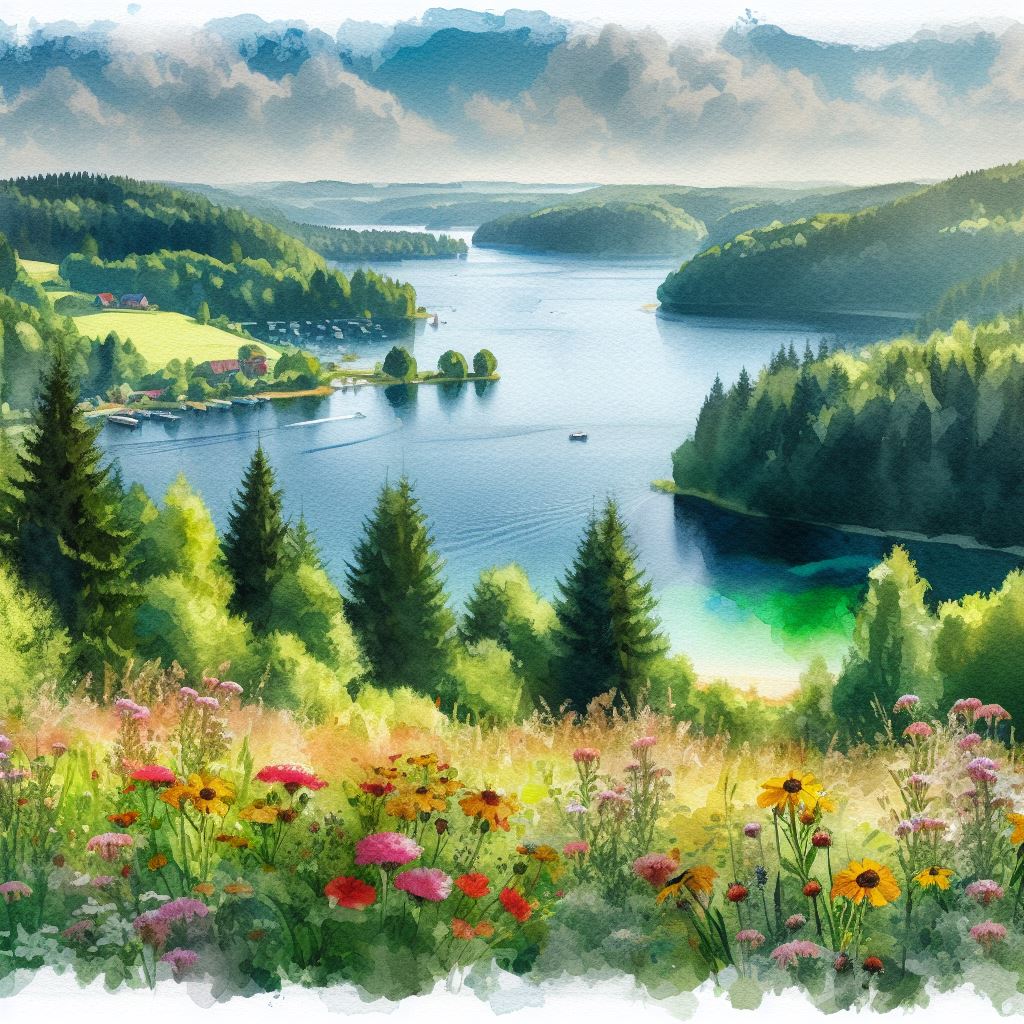
Germany is often associated with forests, mountains, castles, and historic cities, but water is an important part of the country’s landscape as well. From the lake districts of northern Germany to the Alpine foothills in Bavaria, large lakes and major rivers have shaped the country’s scenery, wildlife, cities, and history.
Germany’s Largest Lakes
Germany has thousands of lakes, with particularly large concentrations in the north and northeast. Bavaria also has several major lakes, many of them formed by glaciers and closely connected with the foothills of the Alps.
There is an important distinction when comparing the largest lakes. Lake Constance is larger than the Müritz, but it is shared by Germany, Austria, and Switzerland. The Müritz is the largest lake located entirely within Germany.
1. Müritz – About 117 Square Kilometers
Located in Mecklenburg-Western Pomerania, the Müritz is the largest lake entirely within Germany, covering about 117 square kilometers. It is also the largest lake in the Mecklenburg Lake District, a landscape famous for its many interconnected lakes, forests, wetlands, and waterways.
A large part of the eastern shore belongs to Müritz National Park. The protected landscape is home to extensive forests, wetlands, and important habitats for birds and other wildlife. The town of Waren is one of the best-known places on the shores of the lake and an important gateway to the surrounding region.
2. Chiemsee – About 80 Square Kilometers
The Chiemsee in Bavaria covers about 80 square kilometers and is Germany’s third-largest lake by surface area after Lake Constance and the Müritz. It is also the largest lake in Bavaria and is sometimes called the “Bavarian Sea.”
The lake is particularly famous for its islands. Herreninsel is home to Herrenchiemsee Palace, built by King Ludwig II of Bavaria, while Fraueninsel is known for its historic monastery and village atmosphere.
The Chiemsee also has considerable ecological importance. Its wetlands and shoreline provide habitats for numerous bird species, making the lake interesting not only for visitors but also for nature lovers.
3. Schweriner See – About 63 Square Kilometers
The Schweriner See in Mecklenburg-Western Pomerania covers about 63 square kilometers. It forms part of the extensive lake landscape around Schwerin, the capital of the state.
The lake has numerous bays, islands, and natural shoreline areas. The historic city of Schwerin lies directly beside the lake district, with Schwerin Castle providing one of the region’s most recognizable views.
The surrounding landscape is also important for wildlife. The larger Schwerin lake system includes extensive habitats for waterfowl and migratory birds.
4. Starnberger See – About 56 Square Kilometers
Southwest of Munich, the Starnberger See covers about 56 square kilometers. Its location close to Munich makes it one of the best-known recreational lakes in Bavaria and a popular destination for swimming, sailing, boating, cycling, and day trips.
The lake also has a connection with one of Bavaria’s most famous historical figures. King Ludwig II died in the lake in 1886, and the event remains part of the history associated with the area.
Starnberger See is more than a recreational destination, however. Its wetlands and shoreline provide important habitats for birds and other wildlife, and parts of the lake are protected under European and international conservation programs.
5. Ammersee – About 47 Square Kilometers
The Ammersee, also located southwest of Munich, covers about 47 square kilometers. It is smaller than the nearby Starnberger See but is another important lake in the Bavarian Alpine foothills.
The towns of Herrsching and Dießen are closely associated with the lake, and the surrounding countryside is popular for walking, cycling, swimming, and boating.
The Ammersee is also significant for nature conservation. Wetlands and shallow shoreline areas provide important habitats for waterfowl and other species, giving the lake an ecological importance that goes beyond recreation.
Lake Constance: The Largest Lake Shared by Germany
Lake Constance, known as Bodensee in German, deserves special mention because it is larger than the Müritz but is not entirely within Germany. The lake is shared by Germany, Austria, and Switzerland.
German towns and cities along its shores include Konstanz, Lindau, and Meersburg. The lake connects several distinct landscapes, from the foothills of the Alps to historic towns and vineyards along its northern shore.
This is why different lists of the “largest lakes in Germany” can look slightly different. If the question is about the largest lake entirely within German territory, the answer is the Müritz. If lakes shared with neighboring countries are included, Lake Constance comes first.
Germany’s Major Rivers
Germany’s rivers are just as important as its lakes. They have shaped settlements, trade routes, industrial development, agriculture, and some of the country’s most recognizable landscapes.
1. Rhine – About 865 Kilometers in Germany
The Rhine is Germany’s longest river. About 865 kilometers of its course lie within Germany, although the river itself is much longer and flows through several European countries.
The Rhine enters Germany in the southwest and forms part of the border with France before continuing north. Bonn, Cologne, and Dusseldorf are among the major German cities along its banks.
The river is also famous for its scenery. The Middle Rhine Valley is known for steep vineyards, historic castles, and towns that developed along the waterway. Further north, the Rhine becomes increasingly important for shipping and connects Germany with major European trade routes.
2. Elbe – About 700 Kilometers in Germany
The Elbe rises in the Czech Republic before entering Germany and flowing north toward the North Sea. Its total length is more than 1,000 kilometers, with roughly 700 kilometers within Germany.
The river passes through some of Germany’s best-known cities, including Dresden, Magdeburg, and Hamburg. Each city has a very different relationship with the Elbe.
In Dresden, the river is part of a broad cultural landscape. In Hamburg, it becomes a major shipping route and forms the heart of one of Europe’s most important port cities.
3. Danube – A River That Begins in Germany
The Danube is Europe’s second-longest river and one of the continent’s great waterways. Unlike the Rhine and Elbe, which leave Germany toward the north, the Danube begins in southwestern Germany and flows eastward.
The river’s source is traditionally associated with Donaueschingen in the Black Forest region. From Germany, the Danube continues through Austria and several other European countries before eventually reaching the Black Sea.
German cities along the Danube include Ulm, Ingolstadt, and Regensburg. Regensburg’s historic old town and medieval stone bridge are particularly closely connected with the river.
Why Germany’s Lakes and Rivers Matter
Germany’s lakes and rivers are much more than scenic places on a map. They support wildlife, wetlands, forests, agriculture, transportation, tourism, and recreation.
The Müritz and the surrounding Mecklenburg Lake District are a good example. The region combines large lakes with forests, wetlands, moors, and smaller waterways. Much of this landscape is protected, including substantial areas within Müritz National Park.
The same variety can be seen in southern Germany. Lakes such as the Chiemsee, Starnberger See, and Ammersee combine recreation with important wetland habitats. Major rivers such as the Rhine and Elbe, meanwhile, continue to serve as important transportation routes while also forming cultural landscapes with their own distinctive character.
Water Connects Germany’s Landscapes
Looking at Germany’s largest lakes and rivers reveals how varied the country’s geography really is. The broad waterways of the north, the forested lake districts of Mecklenburg, the Bavarian lakes near the Alps, and the great rivers flowing across Europe all tell different parts of the story.
For travelers, these waters offer plenty to see and do, from boating and swimming to cycling, hiking, wildlife watching, and visiting historic towns. For Germany itself, they are part of the natural environment and have played a major role in how communities, cities, and trade developed.
Whether you are standing beside the Müritz, looking across Lake Constance, watching ships on the Rhine, or walking along the Elbe in Hamburg, Germany’s waters offer a different perspective on the country.
Further Reading:
Germany.de: Geography and Climate
German Federal Agency for Nature Conservation: National Parks in Germany
Germany.de: Lakes in Germany






One Comment
Comments are closed.