What Is the Clearest Lake in Germany?
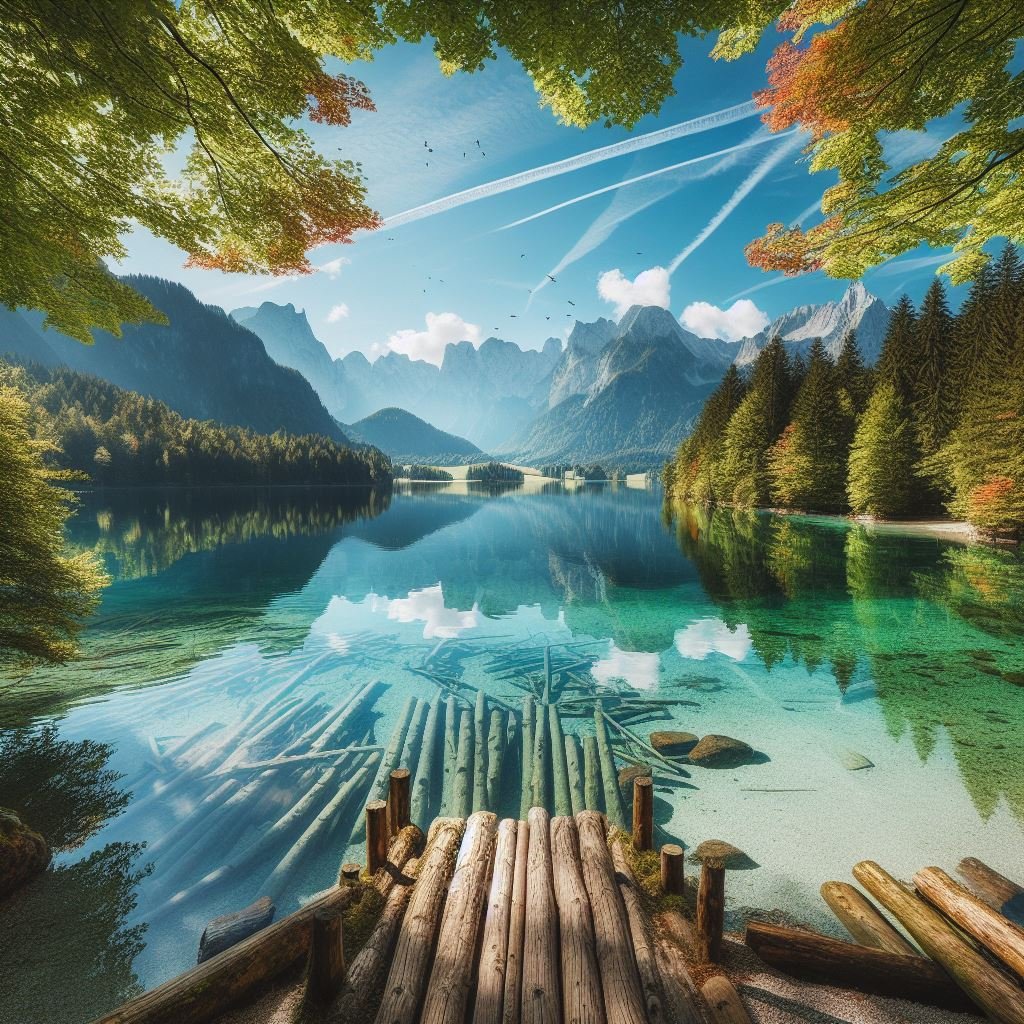
Germany has many lakes with remarkably clear water, but is there one that can honestly be called the clearest? The answer is not as simple as choosing a single lake from a list. There is no official nationwide ranking for water clarity. However, several German lakes are well documented for their exceptionally clear water, and the Stechlinsee in Brandenburg is one of the strongest examples.
Stechlinsee: One of Germany’s Best-Known Clear-Water Lakes
The Stechlinsee, also called the Groser Stechlinsee, lies in northern Brandenburg in the Stechlin-Ruppiner Land region. It is a deep natural lake with a maximum depth of about 69.5 meters (228 feet) and a surface area of approximately 4.25 square kilometers (1.64 square miles).
The lake is particularly interesting when the question is about water clarity. Brandenburg’s environmental authorities classify the Stechlin as a Klarwassersee, or clear-water lake, and state that it normally belongs to the clearest and cleanest lakes in Brandenburg. The state also documents visibility depths of up to around 10 meters (33 feet).
The Leibniz Institute for Freshwater Ecology and Inland Fisheries (IGB), which has studied the Stechlinsee for decades, likewise describes it as one of the deepest and cleanest lakes in northern Germany. Visibility depths of eight to ten meters have been recorded and are not unusual under suitable conditions.
Why Is the Stechlinsee So Clear?
The clarity of a lake is closely connected to its nutrient levels and the amount of algae and other suspended material in the water. Clear-water lakes generally have low nutrient concentrations and comparatively low phytoplankton levels.
The Stechlinsee has traditionally been a nutrient-poor lake with exceptionally clear water. Its transparency also allows aquatic plants to grow at considerable depths. Underwater meadows of stoneworts are among the characteristic features of this type of lake.
That clarity is more than a visual attraction. It is an important ecological characteristic of the lake and one reason the Stechlinsee has long been used for scientific research.
The Stechlinsee Has Changed Over Time
There is an important qualification to the Stechlinsee’s reputation for exceptionally clear water. The lake’s condition has not remained unchanged.
Long-term research showed a significant increase in phosphorus concentrations and a decline in water transparency during the years before 2021. The average visibility depth fell considerably compared with earlier decades. These changes affected the lake’s ecological condition and led Brandenburg authorities to establish a dedicated working group for the Stechlinsee.
More recent research brings a more encouraging picture. According to the IGB, phosphorus concentrations have fallen substantially since 2021, and the water quality has improved. At the same time, researchers caution that this development should not yet be considered a complete recovery. The Stechlinsee therefore remains a clear-water lake, but its ecological condition is something that continues to be monitored.
Königssee: Another Exceptionally Clean German Lake
The Königssee in Bavaria is another strong candidate when talking about Germany’s exceptionally clean and clear lakes. Located in the Berchtesgaden Alps, it is surrounded by steep mountain slopes and lies largely within Berchtesgaden National Park.
The Bavarian Water Management Office describes Königssee as one of the cleanest lakes in Germany. It is classified as nutrient-poor, and several factors help explain its excellent water quality. There is very little agriculture in its catchment area, settlements around the lake have been connected to the sewage system since the 1980s, and passenger boats on the lake operate electrically.
Königssee is also remarkably deep. Its maximum depth is about 190 meters (623 feet), making it one of the deepest lakes in Germany.
Its famous emerald-green appearance is one reason the lake is often associated with exceptionally clear water. However, clean water, water clarity, and the visual impression of a lake are not exactly the same thing. For that reason, it is more accurate to describe Königssee as one of Germany’s cleanest and most remarkable mountain lakes rather than officially declaring it the country’s single clearest lake.
What About Eibsee?
Eibsee, at the foot of the Zugspitze in Bavaria, is another lake frequently associated with clear, green-blue water. Its mountain setting and unusual coloration make it one of Germany’s most recognizable alpine lakes.
Official Bavarian environmental research has documented the lake’s unusual hydrology and its geological setting. Tourism information for the lake also describes its water as crystal clear. However, that does not establish Eibsee as the clearest lake in Germany, and there is no nationwide scientific ranking that would support such a claim.
It is therefore better to appreciate Eibsee for what can actually be established: a distinctive alpine lake known for its striking water color and setting beneath the Zugspitze.
So, What Is the Clearest Lake in Germany?
There is no officially designated clearest lake in Germany. Water clarity is measured through factors such as visibility depth, and these values can change with season, weather, nutrient levels, algae growth, and other environmental conditions.
If the question is specifically about a German lake with well-documented exceptional water clarity, the Stechlinsee is one of the strongest answers. It is officially recognized as a clear-water lake, has historically recorded visibility depths of up to around ten meters, and has been the subject of decades of scientific research.
The Königssee is another excellent example, particularly because its nutrient-poor water and protected alpine catchment have helped maintain very high water quality. The Eibsee is also famous for its clear-looking water, although the available evidence does not justify calling it Germany’s clearest lake.
Clear Water Is More Than a Beautiful View
Clear water can make a lake look almost unreal, but water transparency is also an important ecological indicator. It can tell scientists something about nutrient levels, algae, underwater plant growth, and changes in the condition of a lake.
That is what makes lakes such as the Stechlinsee particularly interesting. Their clear water is not simply part of a beautiful landscape. It is also a feature of a complex freshwater ecosystem that can change over time and needs to be understood and protected.
If you enjoy learning about Germany’s natural landscapes, take a look at our guide to the largest lakes and rivers in Germany.
Further Reading
Brandenburg Ministry of Agriculture, Environment and Climate Protection – AG Stechlin
Leibniz Institute of Freshwater Ecology and Inland Fisheries – The Stechlinsee
Bavarian Water Management Office – Königssee