
The Black Forest: A Natural Wonder
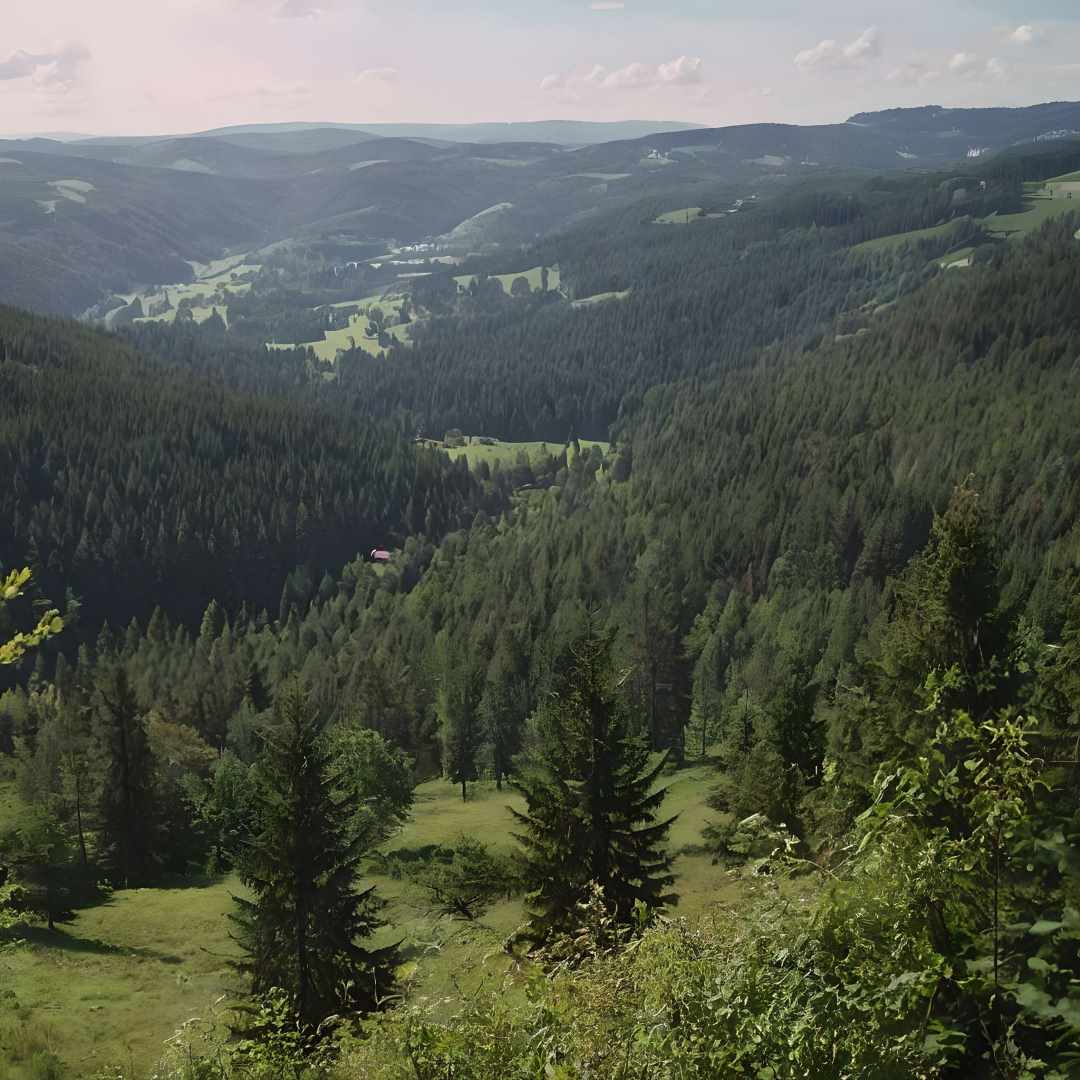
The Black Forest: A Natural Wonder in Germany
In southwestern Germany, the Black Forest is a region of dense woodland, mountain landscapes, lakes, valleys, traditional villages, and a culture shaped by centuries of life in the hills. Known in German as the Schwarzwald, it stretches across much of Baden-Württemberg and offers far more than the fairytale image often associated with its name.

Where Is the Black Forest?
The Black Forest lies in the southwest of Germany, in the state of Baden-Württemberg. The region extends along the eastern side of the Upper Rhine Valley and reaches toward the borders with France and Switzerland.
It is Germany’s highest major upland region, with the Feldberg reaching 1,493 meters (4,898 feet) above sea level. The landscape changes considerably from north to south, with wooded mountains, open highlands, valleys, meadows, lakes, and deep gorges.
The Black Forest also plays an important role in the geography of southern Germany. It forms part of the watershed between the Rhine and the Danube. Water flowing west from parts of the region eventually reaches the Rhine and the North Sea, while water flowing east becomes part of the Danube system and ultimately reaches the Black Sea.
A Landscape of Forests, Mountains, and Lakes
The name Black Forest comes from the dense woodland that historically covered much of the region. Today, the landscape is more varied than the name might suggest.
Large areas of forest alternate with open meadows, traditional farmsteads, valleys, moorland, cliffs, and mountain lakes. In the southern Black Forest, the landscape around the Feldberg, Titisee, and Schluchsee combines wooded slopes with broad views and open highland scenery.
The seasons also give the region very different faces. Spring brings waterfalls and fresh vegetation, summer turns the forests deep green, autumn adds strong colors to the landscape, and winter can transform the higher elevations into a snowy mountain region.
Feldberg: The Highest Point in the Black Forest
At 1,493 meters (4,898 feet), Feldberg is the highest mountain in the Black Forest and the highest point in Baden-Württemberg.
The summit and surrounding highlands are popular for hiking in warmer months and for winter activities when conditions allow. The elevated landscape also provides some of the Black Forest’s most impressive long-distance views.
Nearby natural areas include mountain lakes, forests, moors, and protected habitats, making the Feldberg region particularly important for both recreation and nature conservation.
Black Forest Lakes and Waterfalls
Water is an important part of the Black Forest landscape. Lake Titisee is one of the region’s best-known lakes and has become a popular destination for visitors looking for walks, boating, and views of the surrounding mountains.
Mummelsee, located beneath the Hornisgrinde in the northern Black Forest, is another well-known mountain lake. Its high-elevation setting gives it a very different character from Titisee.
The region is also known for waterfalls and steep river valleys. The famous waterfalls at Triberg are among the best-known attractions, while the Wutach Gorge in the southern Black Forest offers a much wilder landscape of cliffs, forests, and flowing water.
The Black Forest Has a Distinctive Cultural Heritage
The Black Forest is not simply a natural landscape. For centuries, people have lived and worked among its forests and valleys, developing distinctive forms of architecture, clothing, crafts, farming, and food.
Traditional Black Forest farmhouses are particularly characteristic. Their large roofs and distinctive construction developed in response to the local climate and the practical needs of rural life.
The Black Forest Open Air Museum Vogtsbauernhof in Gutach offers an especially detailed look at this rural heritage. Historic farmhouses from different parts of the Black Forest have been preserved there, together with mills, sawmills, gardens, workshops, and other buildings. The museum allows visitors to see how people lived and worked in the region over several centuries.
The Bollenhut: A Famous Black Forest Symbol
Few images are more closely associated with the Black Forest than the Bollenhut, the traditional hat decorated with large woolen pom-poms.
There is an important detail behind the familiar image, however. The Bollenhut is not a traditional headdress worn throughout the entire Black Forest. It belongs specifically to the traditional costume of Gutach, Kirnbach, and Reichenbach in the Kinzig and Gutach valleys.
The most recognizable version has red pom-poms and is traditionally worn by unmarried women. After marriage, the pom-poms are black. Through paintings, postcards, and later tourism, the Bollenhut became an internationally recognized symbol of the Black Forest as a whole.
Cuckoo Clocks and Traditional Crafts
The Black Forest also has a long association with woodworking and clockmaking. Cuckoo clocks became particularly famous and remain one of the region’s best-known traditional products.
The history of Black Forest clockmaking is broader than cuckoo clocks alone. Local clockmakers developed a significant craft tradition in the region, and woodworking remains an important part of its cultural identity.
Traditional crafts can still be encountered in museums, workshops, and regional events, where historic techniques are demonstrated alongside more modern forms of craftsmanship.
Black Forest Food
The region’s culinary traditions are just as recognizable as its landscapes. Black Forest ham is one of the best-known regional specialties, while Black Forest cake has become famous far beyond Germany.
Regional cuisine also includes hearty meat dishes, potatoes, soups, baked goods, and other foods traditionally suited to life in a rural mountain region. Local wines and Kirschwasser, a clear cherry spirit, are also part of the culinary heritage of Baden-Württemberg.
The combination of food, landscape, and regional traditions is one reason the Black Forest has developed such a strong identity.
Hiking Through the Black Forest
Hiking is one of the best ways to experience the region. Long-distance routes cross the mountains and connect forests, valleys, villages, and viewpoints.
The Westweg is one of the best-known trails. It runs for approximately 288 kilometers (179 miles) from Pforzheim to Basel, following much of the western ridge of the Black Forest.
Shorter hiking routes can be found throughout the region, from easy walks around lakes to more demanding trails through gorges and mountain terrain. The variety means that visitors do not have to be experienced hikers to enjoy the landscape.
The Black Forest National Park
In the northern Black Forest, the Black Forest National Park protects around 10,000 hectares (24,700 acres) of forest and mountain landscape.
One of its defining characteristics is the decision to allow natural processes to take place with as little human intervention as possible in designated areas. Forests are therefore allowed to develop naturally, creating habitats for a wide range of plants and animals.
The national park provides another perspective on the Black Forest. Instead of focusing only on traditional cultural landscapes, it also shows what parts of the forest can look like when natural processes are given room to develop.
Why the Black Forest Is More Than a Fairytale
The Black Forest certainly has the scenery that inspired generations of stories, paintings, and romantic images of Germany. But its appeal goes beyond the fairytale image.
It is a real living region shaped by forests, mountains, farming, craftsmanship, food, architecture, and centuries of local traditions. From the highlands around Feldberg to the valleys of the Kinzig and Gutach, the landscape changes constantly.
That combination of nature and culture is what makes the Black Forest such a distinctive part of Germany. It is not simply a place to visit for a beautiful view. It is a region with its own landscape, history, traditions, and character.
If you enjoy discovering German regional food and specialties, you can also browse our German food collection.
Further Reading
Germany Travel – Black Forest National Park
Germany Travel – The Westweg Trail
Black Forest Open Air Museum Vogtsbauernhof
Black Forest Tourism – The History of the Bollenhut







2 Comments
Comments are closed.