Instant Yeast: A Baker’s Best Friend
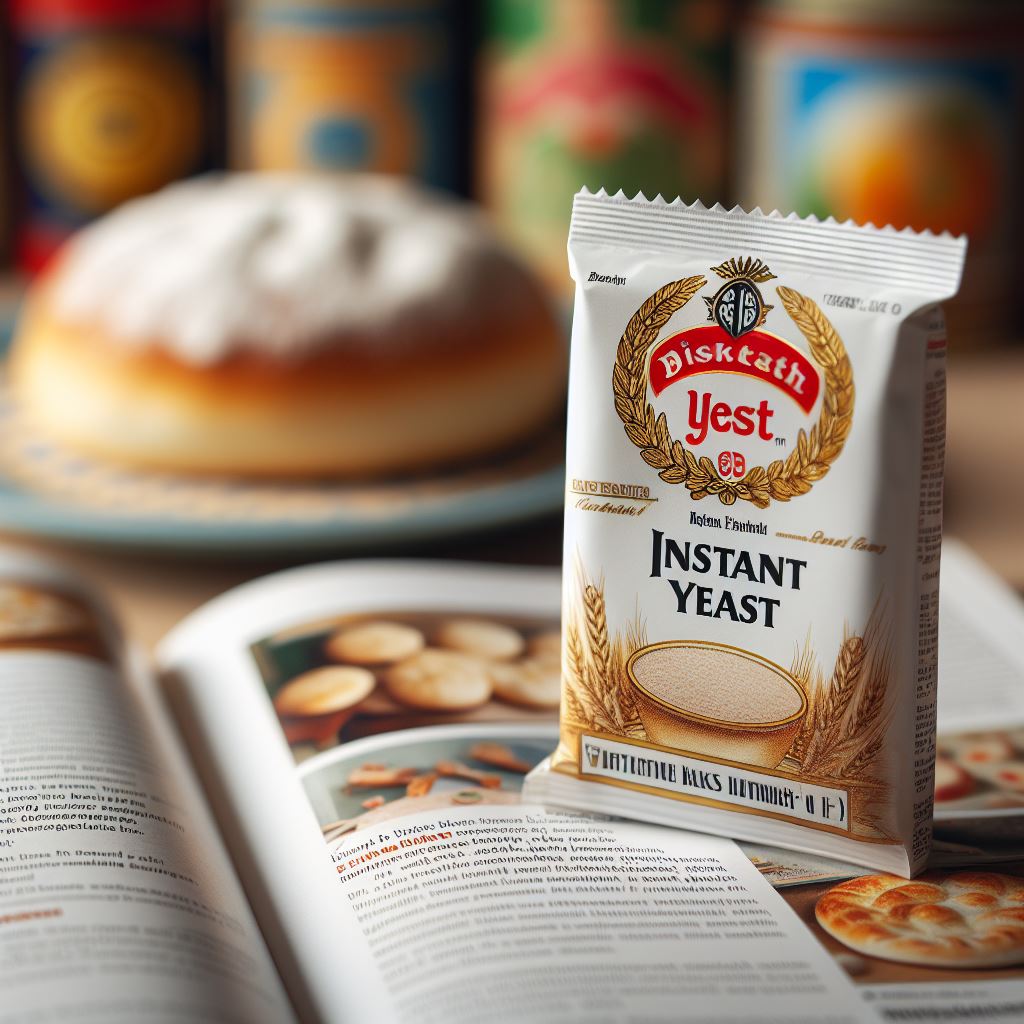
Yeast is one of those small ingredients that can make a surprisingly big difference in baking. It is what gives bread its rise, creates a lighter crumb, and helps turn a simple mixture of flour, water, and a few other ingredients into a loaf with character.
I have used different types of yeast over the years, and one thing I appreciate about instant yeast is its simplicity. There is no separate step that makes baking feel more complicated than it needs to be. You can mix it into the dry ingredients, prepare the dough, and let the yeast do its work.
What Makes Instant Yeast So Convenient?
The main advantage of instant yeast is convenience. The yeast is finely processed so that it can be incorporated directly into the dry ingredients of a dough. For many recipes, there is no need to dissolve it separately in warm liquid first.
That does not mean that instant yeast somehow skips the fermentation process. The yeast still needs time to grow and produce carbon dioxide. That gas becomes trapped in the dough’s gluten structure, allowing the dough to expand and giving baked goods their characteristic texture.
What instant yeast changes is mainly the way you begin the process. Instead of preparing the yeast separately, you can often add it directly to the flour and continue with the recipe.
Instant Yeast and Active Dry Yeast
Instant yeast and active dry yeast are closely related and can often be used in the same recipes. The main practical difference is how quickly the yeast becomes active after being added to the dough.
Instant yeast has smaller granules and is designed to become active readily when combined with the other ingredients. Modern active dry yeast can also be mixed directly into dry ingredients in many recipes, although it may initially become active a little more slowly.
For that reason, the old rule that active dry yeast must always be dissolved in warm water before use is no longer universally applicable. The instructions supplied with the particular yeast are the better guide.
In many recipes, instant yeast and active dry yeast can be substituted for one another without completely changing the recipe. The dough may simply behave somewhat differently during the early stages of fermentation.
Why Instant Yeast Can Save Time
Instant yeast does not eliminate the time needed for dough to rise. That part of baking still depends on the recipe, the amount of yeast, the temperature, and the dough itself.
What it can save is preparation time. When the yeast can be mixed directly with the flour, there is one less step before the dough comes together.
For everyday baking, that small difference can be useful. I especially like this when I am making bread on a normal day rather than planning an elaborate baking project. The fewer separate steps there are, the easier it is to get started.
What Happens Inside the Dough?
Yeast is a living microorganism. When it has suitable conditions, it uses available sugars and produces carbon dioxide and alcohol as part of fermentation.
The carbon dioxide is especially important for bread. As the gas is produced, it forms bubbles within the dough. The gluten network helps hold those bubbles in place, allowing the dough to expand.
This is why the rising stage matters so much. The dough is not simply being left to rest. Fermentation is actively changing its structure and developing flavor.
Temperature also matters. Yeast generally works more quickly in a warm environment, while cooler conditions slow fermentation. That is one reason why the same recipe can take noticeably different amounts of time on different days.
How Much Instant Yeast Should You Use?
There is no single amount of instant yeast that works for every bread recipe. The right quantity depends on the type of dough, the amount of flour, the desired rising time, and the recipe itself.
German packaged dry baker’s yeast is often sold in convenient 7 g packets. For example, Dr. Oetker Hefe is supplied in 7 g packets, with the manufacturer’s instructions specifying one packet for up to 500 g of flour.
That is a useful example of how German packaged yeast is commonly portioned, but it should not be treated as a universal rule for every yeast product or every bread recipe. When using a specific yeast, I recommend following the instructions on its package and then adjusting the amount only when the recipe calls for it.
Can You Substitute Instant Yeast for Active Dry Yeast?
In many bread recipes, yes. Instant yeast and active dry yeast can often be substituted directly at the same quantity.
The most noticeable difference may be during the beginning of fermentation. Instant yeast can get going more quickly, while active dry yeast may take a little longer to become fully active. Over a longer rise, however, the difference may become much less noticeable.
If you are adapting an older recipe, the instructions can sometimes make yeast sound more complicated than it really is. Rather than relying on a rigid rule, look at the type of yeast you have and follow the manufacturer’s preparation instructions.
Baking with German Dry Yeast
German baking has a long tradition of yeast-based doughs, from everyday breads and rolls to sweet pastries and cakes. Packaged dry baker’s yeast is particularly convenient because it can be stored for much longer than fresh yeast and is easy to keep available for baking.
German recipes may use terminology that looks unfamiliar to an American baker, but the actual baking process is often very familiar. Flour, liquid, yeast, salt, sugar, fat, and other ingredients are combined according to the type of dough being prepared, followed by a period of fermentation and rising.
When using a German dry yeast product, I would not try to convert the product into an American yeast category based on the name alone. The manufacturer’s preparation instructions tell you how that particular product is intended to be used.
A Simple Bread to Start With
If you are new to working with instant yeast, a basic wheat bread is a good place to start. It allows you to see the complete process without a long list of additional ingredients.
A simple dough can be made with flour, yeast, water, salt, and a small amount of oil. Once the ingredients have been combined, the dough is kneaded until it becomes smooth and elastic. It is then left to rise until it has visibly increased in volume.
After shaping, the dough gets another period of rest before baking. This second rise can help develop the final texture and volume of the bread.
The important lesson is not to judge the dough only by the clock. Rising times are affected by temperature and other conditions. A dough that has visibly expanded is usually a better indication that fermentation has progressed than a timer alone.
Simple German-Style Wheat Bread
For a straightforward loaf, I like keeping the ingredient list simple:
- 500 g (17.6 oz) wheat flour
- 1 packet Dr. Oetker Hefe (7 g / 0.25 oz)
- about 300 ml (10.1 fl oz) lukewarm water
- 1 teaspoon Bad Reichenhaller AlpenSalz
- 1 tablespoon vegetable oil
Mix the flour and yeast according to the yeast manufacturer’s instructions. Add the remaining ingredients and work everything into a dough. Knead until the dough becomes smooth, then cover it and leave it in a warm place until it has visibly increased in size.
Shape the dough into a loaf and allow it to rest again before baking. Bake according to the recipe and your oven’s characteristics until the bread is properly browned and sounds hollow when tapped underneath.
This is intentionally a simple starting point rather than a strict German master recipe. Flour absorbs different amounts of water, ovens behave differently, and the desired bread texture can vary considerably. The important part is learning to recognize how a properly fermented dough looks and feels.
Germany and the United States Use Different Kitchen Conventions
One reason yeast recipes can sometimes feel confusing when moving between German and American baking is that the ingredients may be packaged differently.
German home bakers commonly encounter yeast in standardized small packets, while American recipes may refer to yeast by teaspoons, tablespoons, or packets. Recipes can also be written around different assumptions about flour quantities and fermentation times.
That does not mean the underlying baking process is fundamentally different. It simply means that the recipe and the yeast package need to be read together.
For anyone baking from a German recipe in the United States, or using German ingredients with an American recipe, this is a useful habit: pay attention to the actual quantity of flour, the type of yeast, and the manufacturer’s instructions rather than relying only on the word used to describe the yeast.
Why I Keep Dry Yeast in the Pantry
There is something reassuring about having a packet of yeast ready when the idea of baking bread suddenly sounds good. Fresh yeast is wonderful when you have it available, but dry yeast is simply easier to keep on hand.
It also gives me more flexibility. I do not have to plan a baking day around buying a fresh yeast cube. A small packet can sit in the pantry until I need it.
That convenience is probably the biggest reason instant-style dry yeast has become such a useful ingredient for home bakers. It does not make good bread automatically, but it removes one small obstacle between the idea of baking and actually getting the dough started.
The Best Yeast Is the One You Understand
Instant yeast is not complicated once you understand what it is designed to do. It is a convenient form of baker’s yeast that can often be mixed directly into the dry ingredients, allowing the fermentation process to begin without an additional preparation step.
The more important lesson is that yeast should not be treated as a collection of rigid rules. Different products, recipes, flour types, temperatures, and fermentation times all influence the result.
That is also why I prefer reading the instructions on the actual yeast package rather than assuming that every product behaves in exactly the same way. Once you understand that, working with German yeast products becomes much less mysterious.
Product descriptions and preparation instructions may change. Please follow the instructions on the package of the product you are using.