
Black Forest Ham: History, Production, and Culinary Uses
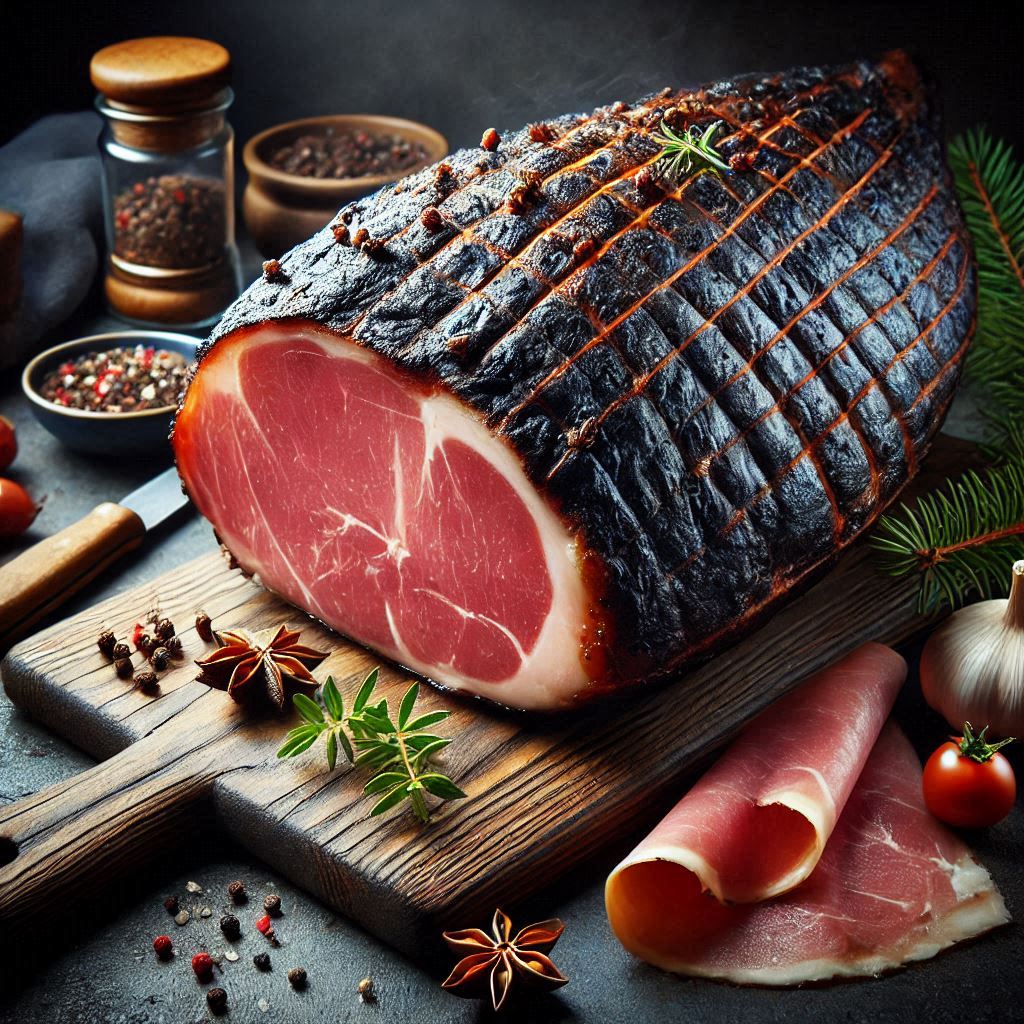
Black Forest ham, known in Germany as Schwarzwälder Schinken, is one of the best-known regional specialties from southwestern Germany. Its dark exterior, firm texture, and distinctive smoky flavor set it apart from many other types of ham.
But what makes Black Forest ham different? The answer lies largely in how it is cured, seasoned, smoked, and matured. Its protected geographical status also connects the name Schwarzwälder Schinken specifically to the Black Forest region of Germany.
What Is Black Forest Ham?
Black Forest ham is a dry-cured and smoked raw ham made from pork. In German, it is called Schwarzwälder Schinken. The ham is cured with salt and seasonings before being cold-smoked and matured.
One of its most recognizable features is its dark outer surface. This develops during the curing and smoking process and contrasts with the characteristic red to pink color of the meat inside.
The name is more than a reference to the region where the ham is popular. Schwarzwälder Schinken is protected as a European Union Protected Geographical Indication (PGI), which links the product and its specified production requirements to the Black Forest area.
How Is Black Forest Ham Made?
Producing Black Forest ham takes considerably more time than preparing a typical fresh or cooked ham. The individual stages are important because they gradually develop the flavor, texture, and characteristic appearance.
1. Selecting the Pork
The process begins with suitable pork legs. Producers select the meat according to the requirements of the product and prepare it for curing.
2. Curing
The pork is rubbed with salt and a seasoning mixture. Garlic and pepper are among the seasonings traditionally associated with Black Forest ham.
The curing period allows the salt and spices to penetrate the meat while moisture is gradually reduced. This is an important step in developing the ham’s firm texture and concentrated flavor.
3. Cold Smoking
After curing, the ham is cold-smoked. Wood from the Black Forest, particularly fir and spruce, is traditionally associated with the smoking process.
The smoke contributes much of the aroma for which Black Forest ham is known. It also helps create the dark exterior that makes the ham immediately recognizable.
4. Maturing
Smoking is followed by a period of maturation. The ham is kept under controlled conditions while its texture and flavor continue to develop.
The result is a firm, dry-cured ham with a pronounced savory and smoky character.
What Does Black Forest Ham Taste Like?
Black Forest ham has a noticeably smoky flavor, but smoke is not the only characteristic that defines it. The curing process gives the meat a concentrated savory taste, while the seasoning contributes additional depth.
Its texture is generally firmer and drier than that of a typical cooked ham. When sliced thinly, the ham works particularly well as part of a cold meal, sandwich, or charcuterie-style selection.
The dark outer surface is another distinctive feature. It should not be confused with the appearance of ordinary cooked ham, which normally has a much lighter exterior.
Why Is It Called Black Forest Ham?
The name comes directly from the Black Forest, or Schwarzwald, a mountainous region in the German state of Baden-Wuerttemberg.
Traditional food production in the region has long been influenced by the local climate, landscape, and available resources. The smoking and curing of meat became practical ways of preserving pork, while the use of local wood for smoking became part of the character associated with the regional specialty.
Today, the protected name Schwarzwälder Schinken helps distinguish genuine Black Forest ham from products that simply use “Black Forest” as a flavor or marketing reference.
Black Forest Ham and Regular Ham: What Is the Difference?
The main difference is the production method.
- Black Forest ham: dry-cured, seasoned, cold-smoked, and matured according to defined production requirements.
- Cooked ham: typically cured and then cooked, resulting in a softer and moister texture.
- Smoked ham: may be smoked in different ways and does not necessarily follow the specific production requirements associated with Black Forest ham.
Black Forest ham is therefore not simply regular ham with a smoky flavor. Its characteristic taste and texture come from the combination of curing, seasoning, cold smoking, and maturation.
Is Black Forest Ham Healthy?
Black Forest ham provides protein and can be part of a balanced diet, but it is also a cured meat and therefore contains a significant amount of sodium. The nutritional values can vary between products and manufacturers, so the package label is the best source for the exact information for a particular ham.
Because cured ham is concentrated during processing, portion size is worth considering as well. A few thin slices can add plenty of savory flavor to a meal without requiring a large amount of meat.
For this reason, it is more useful to consider Black Forest ham as a flavorful ingredient rather than describing it simply as a “healthy” or “low-calorie” food.
How to Use Black Forest Ham in the Kitchen
Thinly sliced Black Forest ham is particularly versatile. Its smoky, savory character works well with both simple German meals and more modern dishes.
Sandwiches and Bread
Black Forest ham is a natural choice for sandwiches and German-style open-faced bread. Add cheese, mustard, pickles, tomatoes, or fresh vegetables depending on your preference.
Breakfast and Brunch
The ham can also be used with eggs, including omelets, scrambled eggs, and savory breakfast dishes. Its smoky flavor means that a small amount can add considerable character.
Charcuterie Boards
Thin slices of Black Forest ham make an excellent addition to a charcuterie board. Serve them with German cheeses, bread, pickles, fruit, or nuts for a mixture of salty, smoky, creamy, and sweet flavors.
Salads
Small strips of ham can add a savory element to green salads, potato salads, or hearty mixed salads. Because the ham already has a strong flavor, a simple dressing is often enough.
Warm Dishes
Black Forest ham can also be incorporated into soups, pasta dishes, casseroles, and other cooked meals. In these applications, it can be used much like other smoked or cured meats to add depth to the dish.
How Is Black Forest Ham Traditionally Served in Germany?
One of the simplest ways to enjoy Black Forest ham is sliced thinly and served cold. A traditional German-style cold meal might include ham alongside bread or rolls, cheese, pickles, and other savory accompaniments.
It also fits naturally into a Frühstück or Abendbrot spread, where a selection of bread, cold cuts, cheese, and other simple foods forms the meal.
This is one reason Black Forest ham is so versatile. It does not need an elaborate recipe to make an impression. Good bread, a few thin slices of ham, and a few well-chosen accompaniments can be enough.
Frequently Asked Questions About Black Forest Ham
What is special about Black Forest ham?
Its characteristic combination of dry curing, seasoning, cold smoking, and maturation gives Black Forest ham its firm texture, smoky flavor, and dark exterior. The protected geographical name also connects genuine Schwarzwälder Schinken to the Black Forest region.
What is the difference between Black Forest ham and regular ham?
Black Forest ham is a specific dry-cured and smoked specialty with defined production requirements. Regular ham can refer to many different products, including cooked, cured, or smoked hams made using other methods.
Is Black Forest ham made from pork?
Yes. Black Forest ham is a pork product made from the hind leg of the pig.
What is Black Forest ham called in German?
Black Forest ham is called Schwarzwälder Schinken in German. The name refers to the Black Forest, or Schwarzwald, region of Germany.
Can Black Forest ham be used in cooking?
Yes. Although thinly sliced Black Forest ham is excellent served cold, it can also be used in omelets, pasta dishes, soups, salads, casseroles, and other savory recipes.
A Taste of the Black Forest
Black Forest ham is a good example of how a regional German specialty can become known far beyond its place of origin. Its distinctive flavor does not come from one ingredient alone. The character of the ham develops through curing, seasoning, cold smoking, and careful maturation.
Whether served simply with good bread, added to a breakfast dish, or used as a savory ingredient in cooking, Schwarzwälder Schinken offers a distinctive taste of the Black Forest and an interesting example of Germany’s regional food traditions.







One Comment
Comments are closed.