How to make coffee without a coffeemaker
How to Make Coffee Without a Coffeemaker
You do not need a traditional coffeemaker to make a good cup of coffee. Whether your machine stopped working, you are traveling, or you simply want to make coffee with the equipment you already have, there are several simple ways to brew it.
The easiest method depends on what you have available. A paper coffee filter and hot water can produce a clean, familiar cup. A French press gives you a fuller body, while a saucepan can be used when you have no brewing equipment at all.
How Much Coffee and Water Do You Need?
A good starting point is about 1 tablespoon of ground coffee for every 6 ounces of water. You can adjust the amount to make your coffee stronger or milder.
For a larger cup, you can use approximately 2 tablespoons of coffee for 12 ounces of water. Freshly ground coffee usually gives the best flavor, but regular ground coffee works perfectly well for these methods.
The grind size also matters. Medium-ground coffee works well for a paper filter, while a French press generally works best with coarsely ground coffee.
Method 1: Coffee Filter and Hot Water
If you have paper coffee filters but no coffeemaker, you can make coffee by pouring hot water through the grounds manually. This is one of the simplest alternatives to a traditional drip machine.
What You Need
- Ground coffee
- A paper coffee filter
- A mug or heat-resistant container
- Hot water
How to Make It
- Heat your water until it is hot but not aggressively boiling.
- Place the coffee filter securely over your mug or container.
- Add the desired amount of ground coffee to the filter.
- Slowly pour a small amount of hot water over the grounds and let them become fully wet.
- Wait about 30 seconds, then continue pouring the remaining water slowly and evenly.
- Allow the water to pass completely through the coffee grounds.
- Remove the filter and enjoy your coffee.
Pouring the water gradually gives you better control than simply filling the filter all at once. It also helps prevent the coffee grounds from overflowing the filter.
Method 2: Make Coffee With a French Press
A French press is another excellent option when you do not have a traditional coffeemaker. It is particularly useful if you prefer coffee with a fuller body and more texture.
What You Need
- A French press
- Coarsely ground coffee
- Hot water
How to Make It
- Heat your water until it is hot but not boiling vigorously.
- Add about 1 tablespoon of coarsely ground coffee for every 6 ounces of water.
- Pour the hot water over the coffee grounds.
- Stir gently to make sure all the grounds are saturated.
- Place the lid on the French press with the plunger pulled up.
- Let the coffee steep for about 4 minutes.
- Slowly press the plunger down.
- Pour the coffee into your cup immediately.
French press coffee is best served soon after brewing. Leaving the coffee in the press for too long can make it taste overly strong or bitter.
Method 3: Make Coffee in a Saucepan
If you do not have a coffee filter or French press, a saucepan can still make a satisfying cup of coffee. This method is especially useful when you are camping, traveling, or dealing with a broken coffeemaker.
What You Need
- A small saucepan
- Ground coffee
- Water
- A cup
How to Make It
- Add about 6 ounces of water to the saucepan for each cup of coffee.
- Add approximately 1 tablespoon of ground coffee per 6 ounces of water.
- Heat the mixture until it reaches a gentle simmer.
- Remove the saucepan from the heat.
- Let the coffee sit for about 4 minutes so the grounds can settle.
- Carefully pour the coffee into your cup, leaving as much of the settled grounds as possible in the saucepan.
This method does not produce the same clean cup as a paper filter, but it requires almost no special equipment. If you have a fine-mesh strainer, you can use it when pouring to catch some of the remaining grounds.
Method 4: Try a Simple Pour-Over
If you have a reusable pour-over cone, a paper filter, or similar brewing device, you can make coffee without an electric machine. The principle is the same as manual filter brewing: hot water passes slowly through the grounds and into your cup or carafe.
Use medium-ground coffee and pour the water slowly rather than flooding the grounds. A steady pour gives you more control over the brewing process and makes it easier to adjust the strength from one cup to the next.
Which Method Makes the Best Coffee?
There is no single best method for everyone. Each approach produces a slightly different cup.
| Method | Best For | Result |
|---|---|---|
| Paper filter | Clean, familiar coffee | Light and clear |
| French press | Full-bodied coffee | Rich and more textured |
| Saucepan | No brewing equipment | Strong and rustic |
| Pour-over | More control over brewing | Clean and balanced |
If you normally drink German-style filter coffee, the paper-filter method is probably the closest match. If you prefer a stronger, fuller cup, a French press may be a better choice.
Tips for Better Coffee Without a Coffeemaker
Use Fresh Coffee
Coffee tastes better when the grounds are reasonably fresh. Store coffee in an airtight container away from heat, light, and moisture.
Use Good-Tasting Water
Coffee is mostly water, so the quality of the water can noticeably affect the finished cup. If your tap water has a strong taste or odor, filtered water may produce a cleaner result.
Do Not Use Water at a Full Boil
Very aggressively boiling water can make manual brewing harder to control. Let the water settle briefly after boiling before pouring it over the coffee.
Adjust the Coffee-to-Water Ratio
If your coffee tastes weak, use a little more coffee next time. If it tastes too strong or bitter, reduce the amount slightly or shorten the brewing time.
Grind the Coffee for the Method
Medium grounds work well with paper filters and pour-over brewing. Coarse grounds are better suited to a French press. Using the right grind can make a noticeable difference in the final cup.
Can You Make Coffee Without Electricity?
Absolutely. None of the basic methods above requires an electric coffeemaker. You only need a way to heat water and some method of separating the brewed coffee from the grounds.
This makes manual coffee brewing useful not only when a coffeemaker breaks, but also when you are traveling, camping, staying somewhere with a simple kitchen, or simply want a slower way to prepare your morning coffee.
German Coffee and the Art of a Simple Cup
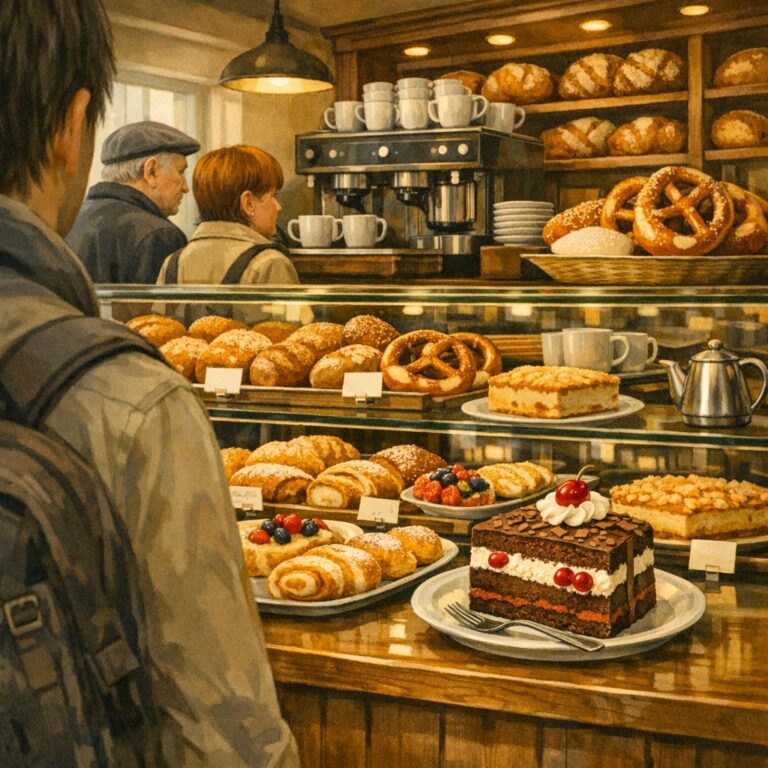
Coffee has a long-standing place in German everyday life. A simple cup of filter coffee is still familiar in homes, offices, cafés, and at the traditional German coffee table, or Kaffeetafel.
You do not need elaborate equipment to enjoy that basic coffee ritual. Good coffee, fresh water, the right brewing method, and a little patience are often enough.
For anyone interested in German coffee and German food culture, our German coffee selection is another place to start. Different coffees can have noticeably different flavor profiles, so trying a few varieties is an easy way to find a favorite.
Frequently Asked Questions
Can I make coffee without a coffeemaker?
Yes. You can make coffee with a paper filter and hot water, a French press, a saucepan, or a manual pour-over device. You only need a way to heat water and brew or separate the coffee grounds.
What is the easiest way to make coffee without a coffeemaker?
A paper filter placed over a mug is one of the simplest methods. Add ground coffee to the filter and slowly pour hot water over the grounds.
How much coffee should I use without a coffeemaker?
A useful starting point is about 1 tablespoon of ground coffee for every 6 ounces of water. Adjust the ratio according to your preferred strength.
Can I make coffee with just a saucepan?
Yes. Simmer the coffee and water together briefly, then allow the grounds to settle before carefully pouring the coffee into a cup. A fine-mesh strainer can help remove additional grounds.
How long should coffee steep in a French press?
About 4 minutes is a good starting point for a standard French press. You can adjust the brewing time slightly according to the coffee and your preferred strength.
What is the best coffee method without a machine?
That depends on your taste. A paper filter produces a clean cup, a French press produces fuller-bodied coffee, and a saucepan is useful when you have almost no brewing equipment.
Final Thoughts
A broken or missing coffeemaker does not mean you have to give up your morning coffee. With a paper filter, a French press, or even a simple saucepan, you can make a good cup using basic kitchen equipment.
The most important things are simple: use fresh coffee, start with a sensible coffee-to-water ratio, use hot water, and give the coffee enough time to brew. Once you find the method that suits your taste, making coffee without a coffeemaker becomes surprisingly easy.