Oktoberfest in Germany: A Celebration of Tradition and Flavor
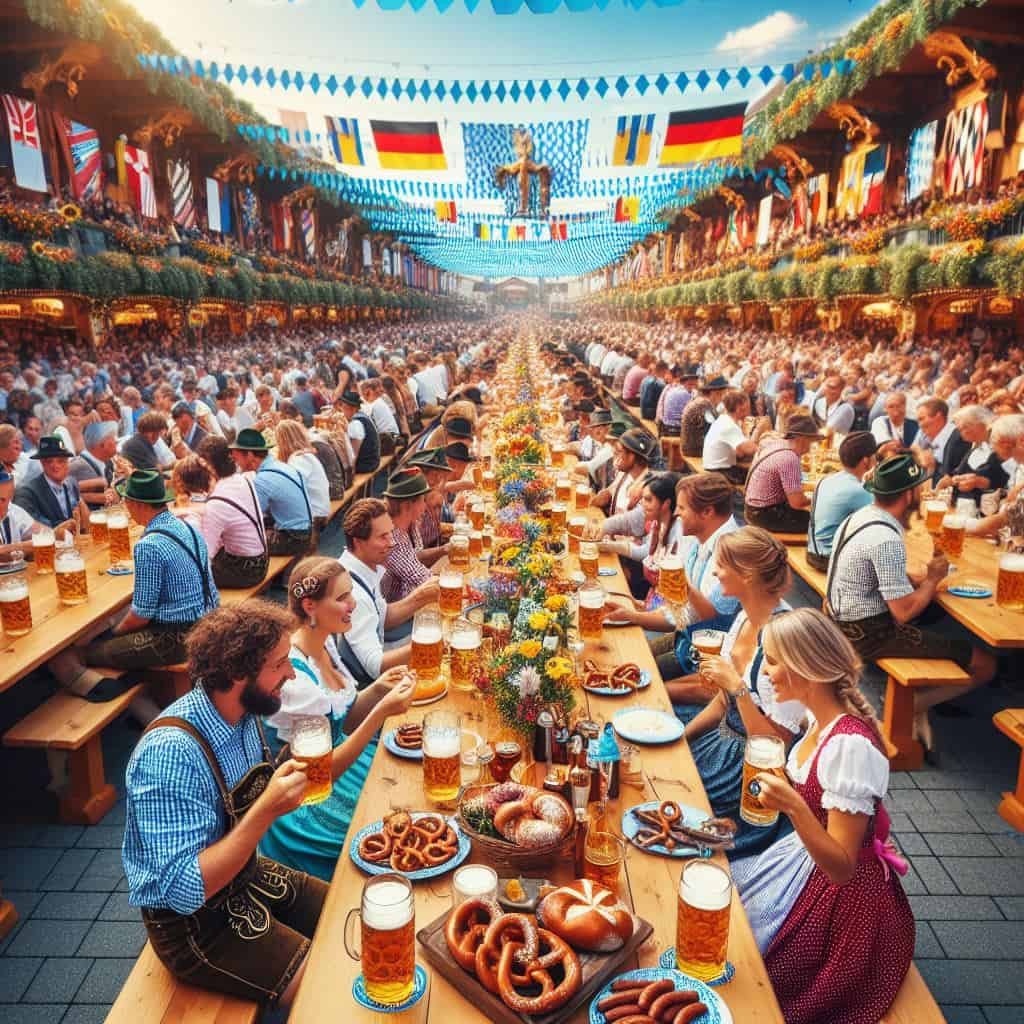
When people outside Germany hear the word Oktoberfest, they often think of beer, giant pretzels, sausages, and people wearing lederhosen. All of those things are part of the picture, but they do not tell the whole story. Having an Oktoberfest beer or eating a pretzel is easy to recreate almost anywhere. The real character of the Munich Oktoberfest comes from the combination of tradition, place, music, rides, food, and the simple pleasure of spending time together.
The Munich Oktoberfest, known locally as the Wiesn, has become one of Germany’s most recognizable cultural events. Millions of visitors come to Munich for the festival, but the event itself is still closely connected to the city and its Bavarian traditions.
Oktoberfest Started with a Royal Wedding
The origins of Oktoberfest go back to 1810, when Crown Prince Ludwig of Bavaria married Princess Therese of Saxe-Hildburghausen. The celebrations included a large horse race on a meadow outside Munich. The meadow was later named Theresienwiese in honor of the bride, and the site has remained the home of Oktoberfest.
That beginning is quite different from the image many people have of Oktoberfest today. There were no enormous beer tents, modern amusement rides, or rows of food stands at the first event. Those elements developed gradually as the festival returned year after year.
The festival also explains why Oktoberfest is held mainly in September today. In 1872, the start was moved earlier in the year to take advantage of the generally milder weather. The name, however, stayed the same.
Why Munich’s Oktoberfest Feels Different
One thing I find interesting about Oktoberfest is that it is not simply a large beer festival. It is a Volksfest — a public festival that brings together food, drink, entertainment, music, rides, and social traditions.
You can spend part of the day enjoying a festival tent, then walk through the fairgrounds, watch the rides, stop for something to eat, and meet friends again later. There is no single way to experience the Wiesn.
The large festival tents are an important part of that atmosphere. Each has its own character, music, food, and crowd. Some are strongly associated with traditional Bavarian music and atmosphere, while others are known for a livelier party atmosphere as the day goes on.
The Wiesn Is More Than the Beer Tents
It is easy to concentrate on the beer tents because they are such a recognizable part of Oktoberfest. But the fairground surrounding them is just as important to the experience.
Oktoberfest has been developing its amusement and entertainment side for centuries. The first carousel and swings appeared as early as 1818. Today, the festival combines traditional attractions with large modern rides, creating a mixture that is part historic fair and part enormous contemporary festival.
That combination is one reason the event appeals to people who are not primarily interested in beer. Families, friends, tourists, local residents, and visitors looking for the rides and atmosphere all experience the same festival in different ways.
Tradition Without a Strict Dress Code
Traditional Bavarian clothing is strongly associated with Oktoberfest. Lederhosen and dirndls are everywhere, and they have become part of the visual identity of the festival.
But wearing traditional clothing is not a requirement for visiting Oktoberfest. The festival is open to people in everyday clothing as well. What matters more is understanding that the traditional clothing is part of a broader Bavarian cultural identity rather than simply an Oktoberfest costume.
I think that distinction is worth remembering, especially when Oktoberfest is recreated outside Germany. Wearing a costume and drinking beer can create the appearance of an Oktoberfest party, but the Munich festival itself has a much deeper connection to local tradition.
Food Is Part of the Experience
Of course, food plays a major role at Oktoberfest. The festival grounds offer a huge variety of Bavarian and German dishes, from roasted chicken and pork specialties to sausages, potato dishes, cabbage, and enormous soft pretzels.
But I would not reduce Oktoberfest food to a fixed menu. Different tents and food stands have their own specialties, and visitors often choose something simply because it looks good at that particular moment.
If you want to learn more about the food itself, I have already written a separate guide to traditional Oktoberfest food favorites in Germany. That article goes into much more detail about the classic dishes associated with an Oktoberfest-style meal.
Weisswurst Has Its Own Bavarian Tradition
One food that deserves special attention is Weisswurst, the traditional Munich white sausage. It is strongly associated with Bavarian food culture and has its own customs and traditions that make it different from simply putting another sausage on the grill.
I have covered that subject separately in my German Weisswurst Guide, including what makes Weisswurst different and how it fits into Bavarian food traditions.
That is also why I prefer not to turn this article into another long list of Oktoberfest dishes. The food is important, but the festival is much bigger than its menu.
The Pretzel: Probably the Most Recognizable Snack
If there is one food that visually belongs almost everywhere in the Oktoberfest world, it is the large Bavarian-style pretzel. The combination of a dark, crisp crust and soft interior makes it particularly well suited to a long day at a festival.
Pretzels are easy to share, easy to carry, and go well with many of the foods and drinks served at Oktoberfest. That makes them a natural part of the festival atmosphere.
If you want to bring that part of the experience home, GermanBuy also offers Huober Big Salted Pretzels from Germany.
Oktoberfest Is a Social Tradition
Perhaps the most important part of Oktoberfest is something that is difficult to put into a product description: people come together.
Friends meet at a tent, families spend time at the fairground, colleagues celebrate together, and visitors from different countries share tables and conversations. Music creates a common atmosphere even when people do not know one another.
That social side is easy to overlook when photographs of Oktoberfest focus on beer mugs and traditional clothing. The festival has always been a gathering as much as an attraction.
From Munich to Oktoberfest Celebrations Around the World
Oktoberfest has inspired celebrations far beyond Munich. Many cities now hold their own Oktoberfest-style events, complete with Bavarian food, beer, music, and traditional clothing.
There is nothing wrong with enjoying those celebrations. But there is a difference between an Oktoberfest-themed party and the original Munich festival. The Munich event is tied to the Theresienwiese, to more than two centuries of history, and to traditions that developed there over generations.
That is why I think German food and products can be a fun way to bring a small part of that atmosphere home, without pretending that a backyard gathering is the same thing as being on the Wiesn in Munich.
Celebrate Your Own Oktoberfest at Home
You do not have to travel to Munich to enjoy some of the food and atmosphere associated with Oktoberfest. A gathering at home can be as simple or elaborate as you want it to be.
Serve German pretzels, add mustard and traditional German specialties, invite a few friends, and put on some Bavarian music. You can create an enjoyable Oktoberfest-inspired meal without trying to reproduce every detail of the Munich festival.
I have also written a separate article with practical ideas for celebrating your own Oktoberfest at home.
Oktoberfest at GermanBuy
For me, Oktoberfest is interesting precisely because it brings so many parts of German and Bavarian culture together. It is history, food, music, entertainment, tradition, and social life all in one place.
If you would like to bring some German Oktoberfest specialties to your own table, you can browse the Oktoberfest collection at GermanBuy. The selection includes German pretzels, Weisswurst, mustard, soups, and other foods that can help create an Oktoberfest-inspired meal at home.
And if you are planning an Oktoberfest meal, remember that you do not need to copy everything you might see in Munich. Sometimes a good pretzel, a traditional German specialty, some friends, and a relaxed table are enough to capture the most important part of the Wiesn: getting together and enjoying the occasion.
Oktoberfest Is About More Than Beer
Beer may be the most famous part of Oktoberfest outside Germany, but it is not the whole story. The Munich festival has survived for more than two centuries because it became much more than the celebration that first brought people together in 1810.
The rides, tents, music, food, traditions, and social atmosphere all became part of the experience over time. That is what makes Oktoberfest such a distinctive part of German culture — and why the real Wiesn is much more interesting than the familiar clichés suggest.