Apple Strudel Recipe – Homemade German Apfelstrudel
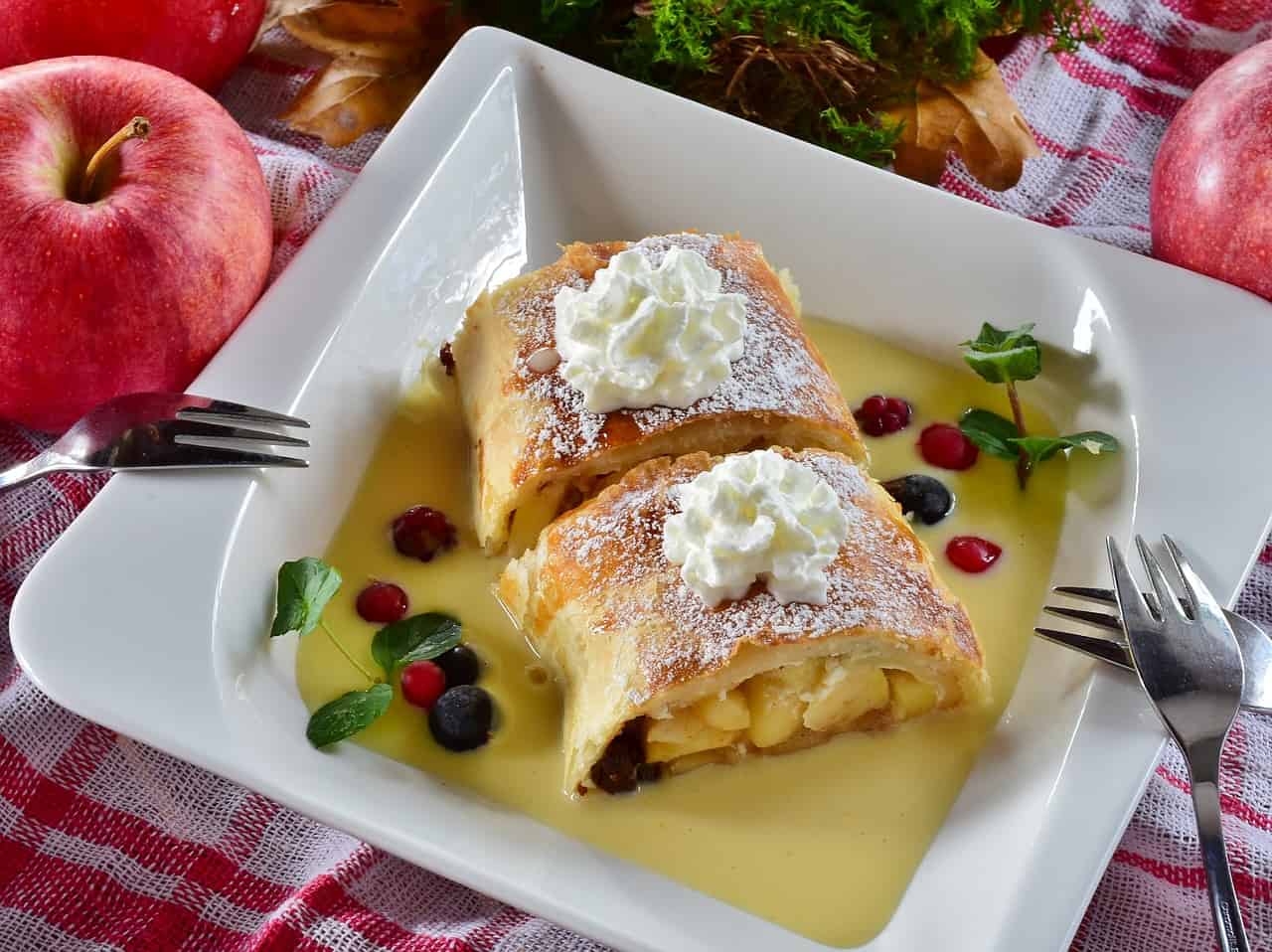
Few desserts are as recognizable across the German-speaking world as Apfelstrudel. Thin, delicate pastry surrounds a warm filling of apples, raisins, cinnamon, sugar, and buttery breadcrumbs, creating a dessert that is simple in its ingredients but surprisingly rewarding to make at home.
Although Apfelstrudel is especially associated with Vienna and Austrian cuisine, it is also widely enjoyed throughout German-speaking Central Europe. For English-speaking readers, it is often simply known as German apple strudel or apple strudel.
The traditional version is different from an American apple pie. Instead of a thick pastry crust, classic strudel uses a soft dough that is stretched remarkably thin before the apple filling is added. The result is a light, crisp pastry wrapped around a fragrant apple filling.
What Is Apfelstrudel?
Apfelstrudel is the German word for apple strudel. The classic dessert consists of very thin strudel dough wrapped around apples, sugar, cinnamon, raisins, and other ingredients that vary from recipe to recipe.
Apfelstrudel is particularly associated with Vienna. The Vienna Tourist Board includes apple strudel among the classics of Viennese cuisine and describes a traditional preparation using thin strudel dough, apples, raisins, breadcrumbs, cinnamon, butter, and powdered sugar.
The dessert is also part of the broader food culture of German-speaking Europe. That is why English-language readers may encounter it described as Viennese apple strudel, Austrian apple strudel, German apple strudel, or simply Apfelstrudel.
Is Apfelstrudel German or Austrian?
There is no need to force a simple either-or answer.
Apfelstrudel is strongly associated with Vienna and Austrian cuisine, where the tradition of hand-stretched strudel dough is particularly well known. At the same time, the dessert is familiar throughout German-speaking countries and has long been part of the wider Central European baking tradition.
Austria’s official tourism organization notes that the history of strudel reaches across several regions and that the oldest known Apfelstrudel recipe dates to 1696. The Viennese tradition later became particularly famous.
So if you are looking for a German apple strudel recipe, you are looking at a dessert that belongs to a much larger German-speaking culinary tradition, with Vienna playing an especially important role in its history.
What Makes Traditional Apfelstrudel Different?
The pastry is what really sets traditional Apfelstrudel apart.
Unlike the thicker dough used for many pies, strudel dough is kneaded until elastic and then stretched until it becomes extremely thin. Traditionally, the dough should be thin enough to see through.
That technique takes some practice, but it is also what gives a properly made Apfelstrudel its characteristic delicate layers.
The filling is equally important. Apples are combined with sugar, cinnamon, raisins, and lemon, while buttered breadcrumbs help absorb some of the moisture released by the apples during baking.
Ingredients for Homemade German Apfelstrudel
For the Strudel Dough
- 2 cups (250 g) all-purpose flour
- 1 pinch of salt
- 1 tablespoon neutral vegetable oil
- 1/2 cup (125 ml) lukewarm water
- Additional flour for the work surface
- A little oil for resting the dough
For the Apple Filling
- About 3.3 lb (1.5 kg) apples
- 1/3 to 1/2 cup (80–100 g) sugar
- 1/4 cup (50–60 g) raisins
- Juice of 1 lemon
- 1 to 2 teaspoons ground cinnamon
- 2 tablespoons vanilla sugar, optional
For the Buttered Breadcrumbs
- About 1 cup (100 g) breadcrumbs
- 3 tablespoons (40–45 g) butter
For Finishing
- Melted butter for brushing
- Powdered sugar for serving
How to Make German Apfelstrudel From Scratch
1. Prepare the Strudel Dough
Place the flour and salt in a large mixing bowl. Add the oil and lukewarm water and mix until the ingredients come together into a soft dough.
Knead the dough thoroughly until it becomes smooth and elastic. This step is important because the dough needs enough elasticity to be stretched very thin later.
Shape the dough into a ball, lightly coat it with oil, and place it in a covered bowl. Let the dough rest before stretching it. Traditional recipes allow a substantial resting period because the dough becomes easier to stretch as it relaxes.
2. Prepare the Apples
Peel and core the apples, then cut them into thin slices.
Toss the apples with lemon juice to add brightness and help prevent them from browning.
Add the sugar, cinnamon, and raisins. The exact amount of sugar can be adjusted according to the sweetness and acidity of the apples.
If you enjoy the traditional combination of raisins and rum, the raisins can be soaked in a small amount of rum before they are added. This is optional, and the strudel works perfectly well without alcohol.
3. Prepare the Buttered Breadcrumbs
Melt the butter in a skillet over medium heat. Add the breadcrumbs and cook them until they become lightly golden and fragrant.
Stir them frequently so they do not burn.
Buttered breadcrumbs are a traditional component of many Apfelstrudel recipes. They add a toasted flavor and help manage some of the moisture released by the apples during baking.
4. Stretch the Strudel Dough
Lightly flour a large, clean kitchen towel and place the rested dough on it.
Roll the dough out with a rolling pin first. Once it is fairly thin, carefully begin stretching it by hand from the center toward the edges.
Work slowly and gently. Traditional strudel dough is supposed to become extremely thin, almost transparent.
Do not worry if the dough is not perfect the first time. Stretching strudel dough is a technique that becomes easier with practice.
5. Add the Filling
Brush the stretched dough with melted butter, leaving enough space around the edges to fold the pastry over the filling.
Spread the buttered breadcrumbs over the dough and arrange the apple mixture evenly on top.
Try to leave excess liquid behind in the bowl rather than pouring it onto the dough. Too much moisture can make the pastry difficult to handle and can result in a soggy finished strudel.
6. Roll the Apfelstrudel
Use the kitchen towel to help roll the pastry over the filling. Fold the sides inward as you roll so the apples remain enclosed.
Continue rolling until you have a long, sealed pastry. Place it seam-side down on a baking sheet lined with parchment paper.
The finished strudel does not have to be perfectly straight. If necessary, gently curve it so that it fits your baking sheet.
7. Brush the Strudel With Butter
Brush the entire outside of the strudel with melted butter.
This helps the pastry develop a golden color and a crisp, delicate surface during baking.
8. Bake the Apfelstrudel
Preheat the oven to 350°F (180°C).
Bake the strudel until the pastry is golden brown and crisp. Depending on the size of the roll and your oven, this will generally take around 30 to 50 minutes.
Start checking toward the end of the baking time. The pastry should be thoroughly baked and golden without becoming excessively dark around the edges.
9. Dust With Powdered Sugar
Remove the finished Apfelstrudel from the oven and allow it to cool slightly.
Dust the top generously with powdered sugar before serving.
What Apples Are Best for Apfelstrudel?
The best apples for Apfelstrudel have a good balance of sweetness and acidity and retain some structure during baking.
You do not necessarily need one specific variety. What matters more is choosing apples that are flavorful and not excessively watery.
If the apples are naturally sweet, reduce the added sugar. If they are quite tart, a little more sugar may be appropriate.
Using a mixture of apple varieties can also create a more interesting flavor than relying on just one type.
Why Are Breadcrumbs Used in Apfelstrudel?
Buttered breadcrumbs are one of the traditional details that can easily be overlooked when adapting Apfelstrudel for a modern kitchen.
They provide a toasted, buttery flavor and help absorb some of the juice released by the apples. This can help protect the delicate pastry from becoming excessively wet.
Not every traditional recipe uses breadcrumbs in exactly the same way, however. Regional and family recipes can differ, so there is room for variation.
Can You Make Apfelstrudel With Puff Pastry?
Yes. Puff pastry is a convenient shortcut, particularly if you want to make apple strudel without learning the traditional dough-stretching technique.
There is an important difference, though: puff pastry is not traditional strudel dough.
Traditional Apfelstrudel gets its characteristic texture from very thin, stretched dough. Puff pastry creates a different, more layered and flaky pastry.
For a quick weeknight dessert, puff pastry is perfectly practical. For a traditional homemade Apfelstrudel experience, making the dough from scratch is worth the extra effort.
How to Keep Apple Strudel From Getting Soggy
Moisture is one of the biggest challenges when making apple strudel.
Apples naturally release juice during baking. Too much liquid can soften the pastry and make the bottom of the strudel less crisp.
These simple steps can help:
- Choose apples that are not excessively watery.
- Do not add unnecessary liquid from the apple mixture.
- Use buttered breadcrumbs as part of the filling.
- Avoid overfilling the pastry.
- Make sure the oven is fully preheated.
- Bake the strudel until the pastry is properly golden.
Why Does Strudel Dough Tear?
Traditional strudel dough is extremely thin, so small tears can happen, especially the first few times you make it.
One of the most important steps is allowing the dough to rest before stretching. A properly rested dough is easier to work with and less likely to fight back as you stretch it.
When stretching, work gradually from the center toward the edges instead of pulling aggressively in one direction.
If a small hole appears, do not automatically start over. Continue working carefully around the damaged area. Once the filling is added and the strudel is rolled, minor imperfections are usually not noticeable.
How Is Apfelstrudel Traditionally Served?
Freshly baked Apfelstrudel can be served warm or at room temperature. A simple dusting of powdered sugar is enough for a classic presentation.
It is also commonly served with vanilla sauce, whipped cream, or vanilla ice cream. Warm Apfelstrudel with a cool vanilla accompaniment creates a particularly enjoyable contrast.
And there is another classic pairing: coffee.
A slice of Apfelstrudel with a cup of German filter coffee fits naturally into the broader tradition of Kaffee und Kuchen, the German coffee-and-cake tradition.
If you want to serve it with a familiar German coffee, Jacobs Kronung is one of the classic German filter coffees available from GermanBuy.
German Apfelstrudel vs. American Apple Pie
Although both desserts are built around apples and pastry, they are quite different.
American apple pie generally has a relatively substantial pastry crust surrounding the filling. Apfelstrudel, by contrast, is wrapped in a very thin sheet of dough that is stretched and rolled around the apples.
The texture is therefore one of the biggest differences. A properly baked Apfelstrudel has a delicate, crisp exterior surrounding a soft, fragrant apple filling.
The filling can also differ. Raisins, cinnamon, lemon, sugar, and buttered breadcrumbs are common in Apfelstrudel, while American apple pie recipes vary widely in their use of spices and other ingredients.
Can You Prepare Apfelstrudel Ahead of Time?
Some preparation can be done ahead of time. The dough can be prepared and rested before assembly, and the apples can be prepared shortly before the strudel is assembled.
For the best pastry texture, however, freshly baked Apfelstrudel is difficult to beat.
If you are serving it to guests, baking it close to serving time allows the pastry to retain more of its crisp texture.
Frequently Asked Questions About Apfelstrudel
Is Apfelstrudel German or Austrian?
Apfelstrudel is particularly associated with Vienna and Austrian cuisine, but it is also widely enjoyed throughout German-speaking Central Europe. The term German apple strudel therefore describes a familiar part of the broader German-speaking food tradition, while Viennese apple strudel refers specifically to the famous Austrian tradition.
What does Apfelstrudel mean?
Apfel means apple in German, while Strudel refers to the rolled pastry. Apfelstrudel therefore simply means apple strudel.
What kind of apples are best for Apfelstrudel?
Use flavorful apples with a good balance of sweetness and acidity that do not release excessive amounts of water during baking. The exact variety is less important than the characteristics of the apples.
Do I have to use raisins?
No. Raisins are traditional in many Apfelstrudel recipes, but they can be omitted if you prefer a simpler apple filling.
Do I have to use rum?
No. Rum is optional. Some traditional preparations use rum-soaked raisins, but the dessert can be made completely without alcohol.
Can I use puff pastry instead of strudel dough?
Yes. Puff pastry is a convenient shortcut, but it produces a different texture. Traditional Apfelstrudel uses very thin, stretched strudel dough.
Should Apfelstrudel be served warm?
It can be served warm or at room temperature. Warm Apfelstrudel is particularly good with vanilla sauce, whipped cream, or vanilla ice cream.
Why does my Apfelstrudel become soggy?
Excess moisture from the apples is usually the main issue. Use apples that are not excessively watery, avoid adding unnecessary liquid to the filling, use breadcrumbs, and bake the strudel until the pastry is properly crisp.
Final Thoughts
Making traditional Apfelstrudel from scratch takes more effort than preparing an ordinary apple dessert, but that is also part of its appeal. The dough, the apples, the cinnamon, the buttered breadcrumbs, and the careful rolling all contribute to the character of the finished pastry.
The most challenging part is usually the dough. Once you become comfortable stretching it thin, the rest of the recipe is surprisingly straightforward.
Whether you know it as Apfelstrudel, German apple strudel, or Viennese apple strudel, this classic dessert is a wonderful example of how simple ingredients can become something special.
Serve it warm with powdered sugar, add vanilla sauce or whipped cream if you like, and put a fresh cup of coffee alongside it. That is a simple way to bring a little of the German-speaking coffee-table tradition into your own kitchen.
Sources & Further Reading:
Vienna Tourist Board – Apple Strudel
Austria.info – Apple Strudel Recipe
Austria.info – Austrian Desserts and Sweets
Vienna Tourist Board – Viennese Cuisine and Recipes