
Nuremberg Sausages with Sauerkraut and Mashed Potatoes
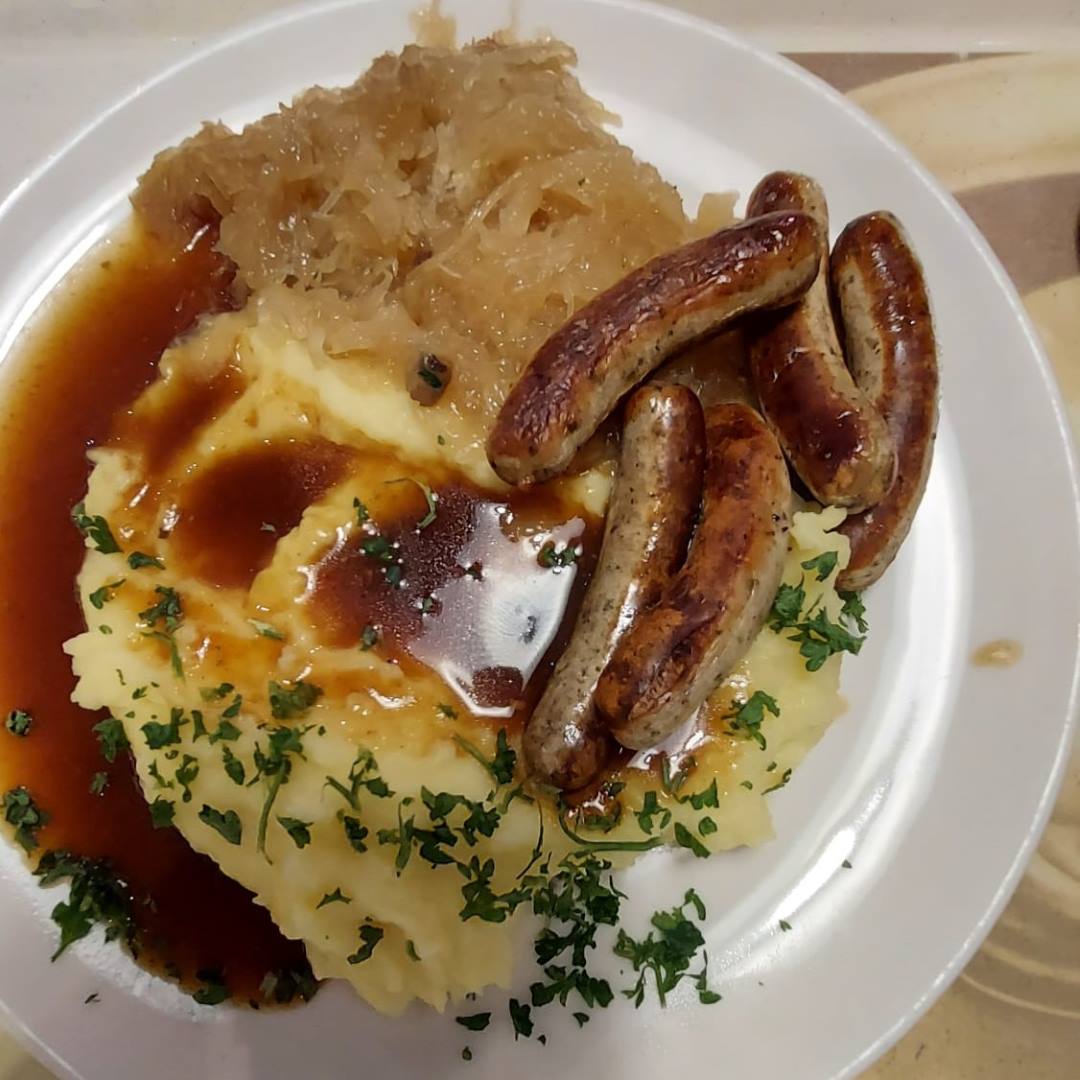
Nuremberg sausages with sauerkraut and mashed potatoes make a comforting German-style meal that brings together several familiar flavors: small grilled pork sausages, tangy sauerkraut, creamy potatoes, and a savory sauce if you like a little extra richness.
The sausages themselves are known in Germany as Nurnberger Rostbratwurste or Nurnberger Wurstchen. They are a specialty of Nuremberg in Bavaria and are much smaller than many other German bratwurst varieties. Their size, seasoning, and traditional production give them a character of their own.
This recipe combines the sausages with sauerkraut and mashed potatoes for a hearty meal that is easy to prepare at home. It is not meant to represent one fixed regional recipe. Instead, it is a practical way to serve a well-known German sausage with classic side dishes.
What Are Nuremberg Sausages?
Nurnberger Rostbratwurste are small pork sausages from Nuremberg, Germany. They are traditionally seasoned with marjoram and have a distinctive small size. Unlike a large bratwurst, several Nuremberg sausages are normally served as one portion.
The name is also protected under European Union geographical indication rules. Authentic Nuremberg sausages must meet specific requirements concerning their production and characteristics.
In Germany, you may see them served grilled or pan-fried with simple sides. Sauerkraut, potato dishes, bread, and mustard are all natural companions for this type of sausage.
A Short History of Nuremberg Sausages
Nuremberg has a long association with its small sausages. Historical references to the city’s sausages go back several centuries, although the modern protected product has specific production standards that should not be confused with every sausage made in Nuremberg in the past.
The small size is one of the most recognizable features of Nuremberg sausages. Their traditional seasoning also gives them a distinct flavor, with marjoram playing an important role.
Today, Nuremberg sausages are closely associated with the city and with Franconian cuisine. They are commonly served in groups rather than individually, making them especially well suited to a generous plate of German side dishes.
Why Sauerkraut and Mashed Potatoes Work So Well
Sauerkraut brings acidity and a slightly sharp flavor to the plate. That works particularly well with the savory, browned sausages.
Mashed potatoes provide the opposite texture. They are soft, creamy, and mild, which balances the stronger flavors of the sausage and sauerkraut.
A simple pan gravy is optional. It is not required for a traditional serving of Nuremberg sausages, but it can turn the combination into a more substantial home-style meal.
Nuremberg Sausages with Sauerkraut and Mashed Potatoes Recipe
Ingredients
For the Nuremberg Sausages
- 1 pound (450 g) Nuremberg sausages
- 1 tablespoon vegetable oil, if needed for pan-frying
For the Sauerkraut
- 1 pound (450 g) prepared sauerkraut
- 1 small onion, finely chopped
- 1 small apple, peeled and grated or finely diced
- 1 tablespoon butter or vegetable oil
- 1/2 teaspoon caraway seeds, optional
- Salt and black pepper to taste
If you want to keep the preparation especially simple, you can use German sauerkraut straight from the package and season it to your taste.
For the Mashed Potatoes
- 2 pounds (900 g) potatoes
- 1/2 cup (120 ml) milk, warmed
- 1/4 cup (60 g) unsalted butter
- Salt and black pepper to taste
Optional Gravy
- 1 tablespoon butter
- 1 tablespoon all-purpose flour
- 1 cup (240 ml) beef or vegetable broth
- Black pepper to taste
How to Prepare the Meal
- Prepare the potatoes: Peel the potatoes and cut them into similar-sized pieces. Place them in a pot of cold, salted water. Bring to a boil and cook until tender, usually about 15 to 20 minutes.
- Prepare the sauerkraut: While the potatoes cook, heat the butter or oil in a saucepan. Add the chopped onion and cook until softened. Add the sauerkraut, apple, and caraway seeds if using. Stir well and cook gently for about 15 to 20 minutes. Season with salt and pepper as needed.
- Cook the sausages: Heat a skillet over medium heat. Add a little oil if necessary, then cook the Nuremberg sausages until browned on the outside and cooked through. Turn them regularly so they brown evenly.
- Make the mashed potatoes: Drain the cooked potatoes well. Add the warm milk and butter, then mash until smooth. Season with salt and pepper. Avoid overworking the potatoes, as this can make them gluey.
- Make the optional gravy: Melt the butter in a small saucepan. Stir in the flour and cook briefly. Gradually whisk in the broth and continue stirring until the sauce thickens. Season with black pepper and add salt only if needed.
- Serve: Arrange the Nuremberg sausages with a generous portion of sauerkraut and mashed potatoes. Add a little gravy over the potatoes if desired.
How Nuremberg Sausages Are Often Served in Germany
There is more than one way to serve Nuremberg sausages. In Franconia, you will find them with different combinations of potatoes, sauerkraut, bread, mustard, or other regional sides.
The famous small sausages also appear in larger portions at restaurants and traditional food establishments. Their compact size makes it easy to serve several together, which is one of the things that distinguishes them from larger German bratwurst.
For a simple meal at home, however, you do not need a complicated presentation. Good-quality sausages, properly prepared sauerkraut, and creamy mashed potatoes are enough to make a satisfying German-style dinner.
A German Comfort Food Combination
Nuremberg sausages with sauerkraut and mashed potatoes are a good example of how German meals often combine a flavorful main ingredient with simple, filling side dishes.
The sausages provide the savory centerpiece. Sauerkraut adds acidity, while mashed potatoes bring a mild and creamy element to the plate. A little gravy is an optional addition rather than a requirement.
If you want to bring a taste of Franconian sausage culture into your own kitchen, this is an easy place to start. The recipe uses familiar ingredients and does not require any special cooking equipment.


One Comment
Comments are closed.