
Easter 2026 in Germany: Dates, Traditions, History & How Germans Celebrate
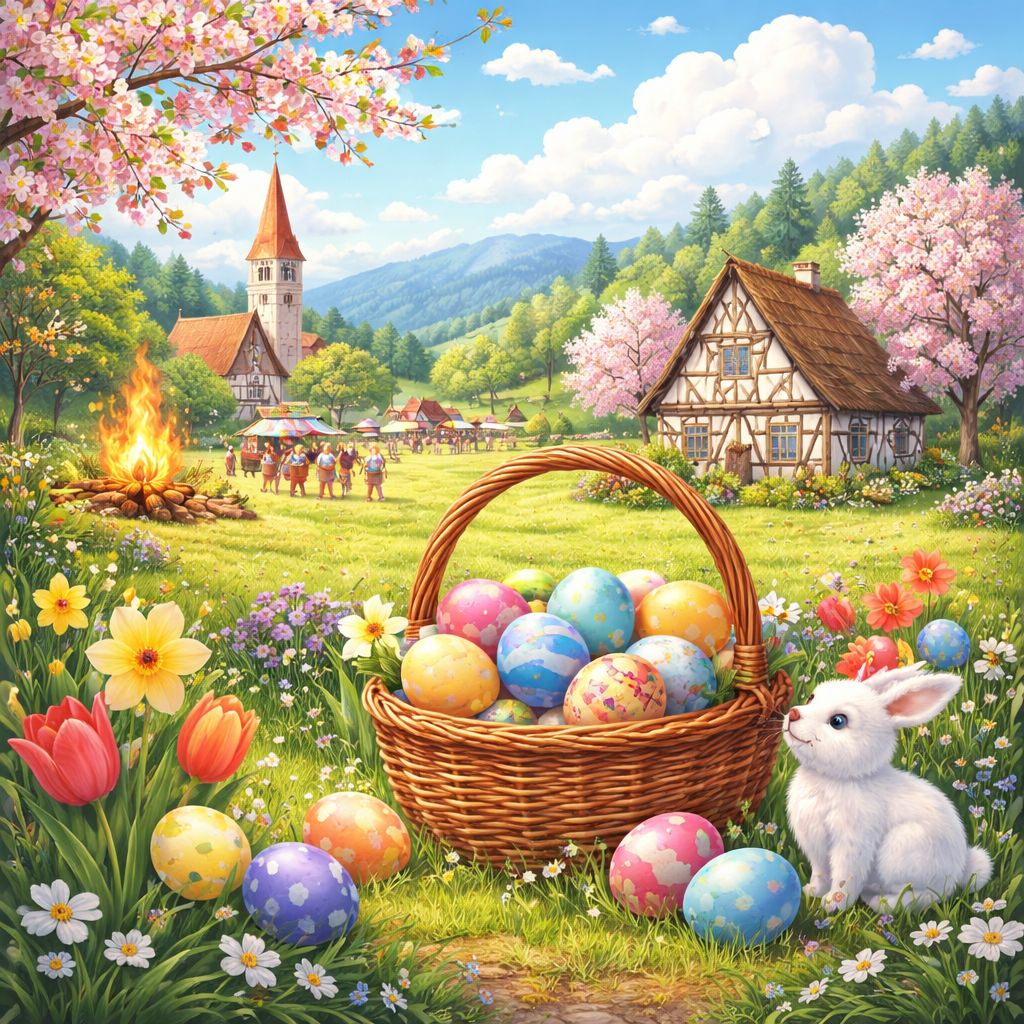
Easter comes early in Germany in 2026. Good Friday falls on April 3, Easter Sunday on April 5, and Easter Monday on April 6.
For many people in Germany, Easter is a mixture of Christian tradition, family time, and the feeling that spring has finally arrived. The holiday is important to Christians, of course. At the same time, many familiar Easter customs have become part of everyday German culture.
When Is Easter in Germany in 2026?
The main Easter dates in Germany are:
- Good Friday (Karfreitag): April 3, 2026
- Easter Sunday (Ostersonntag): April 5, 2026
- Easter Monday (Ostermontag): April 6, 2026
Good Friday and Easter Monday are nationwide public holidays in Germany. Easter Sunday falls on a Sunday and therefore does not function like a separate weekday public holiday, although German law gives Sundays and religious holidays special protection.
Maundy Thursday, or Gründonnerstag, falls on April 2. It is an important day in the Christian Easter period, but it is not a nationwide public holiday.
What Does Easter Mean in Germany?
For Christians, Easter celebrates the resurrection of Jesus Christ. Good Friday recalls his crucifixion, while Easter Sunday celebrates the resurrection.
The days around Easter are known in German as the Karwoche, or Holy Week. Church services and traditions give the period a very different character from an ordinary spring weekend.
At the same time, Easter in Germany has a strong family side. Children look for hidden Easter eggs, families decorate their homes, and chocolate Easter bunnies appear in stores well before the holiday.
That combination of religious meaning and familiar family customs is what makes Easter interesting to me as part of German culture.
Easter Eggs and the Easter Bunny
Painted eggs are one of the most familiar German Easter traditions. Families may decorate real eggs, use them as table decorations, or hide them for children to find on Easter Sunday.
The Easter bunny, or Osterhase, is just as familiar. In many German families, the Easter bunny hides chocolate eggs and other small treats for children.
There is also a long history behind the egg as an Easter symbol. Today, however, you do not have to look very far to see how much the tradition has become part of everyday spring life in Germany. Supermarket shelves fill with chocolate eggs and chocolate bunnies, while homes and gardens get their own Easter decorations.
Easter Fires in Germany
One tradition I find particularly interesting is the Osterfeuer, or Easter fire.
In many parts of Germany, communities light large fires around Easter. The custom varies from one region to another, and the events can have both older seasonal roots and Christian associations.
For many communities, the fire is also a social occasion. People gather outdoors, meet neighbors and friends, and spend part of the evening together. In some places, the Easter fire also plays a role in the Easter Vigil and the lighting of the Easter candle.
These regional differences are worth remembering. There is no single German Easter tradition that looks exactly the same everywhere.
Osterbrunnen: Easter Fountains in Franconia
Another beautiful tradition can be found in parts of Franconia. Around Easter, villages decorate public fountains with hundreds or even thousands of painted eggs, garlands, and flowers.
These decorated fountains are known as Osterbrunnen. The tradition is especially associated with Franconian Switzerland, where many villages continue to decorate their fountains each year.
The result can be quite spectacular. What begins as a local Easter custom turns into a colorful part of the spring landscape.
The Easter Lamb
The Osterlamm, or Easter lamb, has a strong Christian meaning. The lamb is an old Christian symbol associated with sacrifice and resurrection.
In Germany, the Easter lamb also appears as a traditional cake. A small lamb-shaped cake made from sponge cake is a familiar sight on many Easter tables.
It is a good example of the way religious symbols and everyday German food traditions often meet during the holidays.
What Is Good Friday Like in Germany?
Good Friday has a more serious character than Easter Sunday. It commemorates the crucifixion of Jesus and remains an important day of reflection for Christians.
Germany also treats Good Friday as a protected public holiday. Because holiday laws differ somewhat between the federal states, restrictions on public entertainment can vary by location.
Some states have restrictions on dancing, public entertainment, or other activities during certain hours. These rules are often referred to as Tanzverbot. They are part of Germany’s broader tradition of protecting certain religious holidays.
For visitors, the main thing to understand is simple: Good Friday is not just an ordinary Friday in Germany. It has a distinct place in the calendar and in public life.
Are Stores Open During Easter in Germany?
If you are visiting Germany around Easter, the holiday dates are worth keeping in mind.
Most regular retail stores and supermarkets close on Good Friday and Easter Monday because both are public holidays. Easter Sunday is also a day when normal retail shopping is generally not possible.
There are exceptions. Restaurants, hotels, gas stations, and some bakeries may open, depending on local rules and their own schedules. Easter Saturday is generally a normal shopping day, although individual businesses can set their own opening hours.
For that reason, I would not leave important shopping until the holiday itself.
Easter and the Arrival of Spring
One reason Easter feels different in Germany is the time of year. By early April, the days are getting longer, gardens are beginning to wake up, and spring flowers are appearing in many parts of the country.
Easter traditions fit naturally into this season. Painted eggs, flowers, decorated branches, Easter fires, and outdoor gatherings all become part of the landscape.
In some regions, Easter also arrives just as the first major spring foods begin to appear. White asparagus season, for example, gets underway around this time of year, although the exact start depends on the weather and growing conditions.
A German Easter Has Many Different Faces
There is no single way to celebrate Easter in Germany.
For a Christian family, the church services may be the most important part of the holiday. For another family, Easter may revolve around children searching for eggs and everyone sitting down together for a meal. In some villages, the local Easter fire or decorated fountain may be the tradition that brings people together.
That regional and personal variety is one of the things I like about German holidays. The customs are familiar, but they do not have to look exactly the same from one place to another.
Easter 2026 in Germany
Easter 2026 falls at the beginning of April, bringing together several different sides of German life: Christian traditions, family customs, regional celebrations, and the arrival of spring.
If you happen to be in Germany during Easter, you may notice the holiday in small ways as well as large ones. There might be painted eggs in a bakery window, an Easter lamb on a family table, flowers and decorations in a village, or a large fire waiting for the evening.
Those small details are often what make a holiday feel real. And in Germany, Easter has plenty of them.
Sources & Further Reading:
Evangelical Church in Germany (EKD): Easter – Basic Facts About the Faith
Deutschland.de: Easter in Germany – Traditions
Germany Travel: Spring in Germany – Easter Traditions





2 Comments
Comments are closed.