Creamy Swiss Chard Soup: A Simple German-Style Recipe
The first time I ate Swiss chard, I immediately thought of spinach. At least for the first few bites.
The flavor was familiar, but Swiss chard had more character. It tasted a little earthier and more intense than spinach, while the stems gave the vegetable a texture that spinach simply does not have.
In Germany, Swiss chard is called Mangold, and it is a familiar vegetable in home cooking. I like it particularly well in a simple soup because the leaves bring a deep green vegetable flavor while the stems add a little more substance.
That first impression stayed with me. Since then, I have found that Swiss chard works particularly well in a simple vegetable soup. Once the leaves and stems are cooked with potatoes, onions and vegetable stock, the soup develops a deep green color and a pleasantly savory flavor. A little cream at the end makes it smooth and mellow without turning it into a heavy cream soup.
What Does Swiss Chard Taste Like?
If you have never eaten Swiss chard, spinach is probably the easiest comparison. The leaves have a similar green, slightly earthy flavor, but Swiss chard has a stronger vegetable character.
The stems are another reason I like it. They are firmer and more substantial than spinach stems, and they add a little more texture before cooking. In a soup, I cut them into small pieces and give them a head start in the pot before adding the leaves.
Once everything is cooked and blended, the stems become part of the smooth texture while still contributing to the overall flavor.
Why I Like Swiss Chard in Soup
There is something very practical about a good vegetable soup. You do not need many ingredients, and you can let the vegetables provide most of the flavor themselves.
For this recipe, potatoes are particularly useful. They add body and give the soup a naturally creamy texture when blended. The onion provides a gentle savory base, while the Swiss chard remains the main flavor.
I also prefer to keep the seasoning fairly simple. A little pepper, a touch of nutmeg and enough salt are all I need. The goal is to taste the Swiss chard rather than cover it with strong spices.
Ingredients for Swiss Chard Soup
- 500 g (17.6 oz) fresh Swiss chard
- 400 g (14.1 oz) potatoes
- 1 medium onion
- 1 tablespoon butter or neutral cooking oil
- 750 ml (25.4 fl oz / about 3 cups) vegetable stock
- 100 ml (3.4 fl oz) heavy cream
- salt, to taste
- Freshly ground black pepper
- A small pinch of ground nutmeg
- Fresh parsley for serving
Preparing the Swiss Chard
Start by washing the Swiss chard thoroughly. Dirt can collect around the stems, so rinse the leaves and stalks well under cold running water.
Separate the leaves from the thicker stems. Cut the stems into small pieces and roughly chop the leaves.
There is no reason to discard the stems. They are completely usable and bring more texture and flavor to the soup. Because they are firmer than the leaves, they simply need a little more cooking time.
How to Make the Soup
- Peel the potatoes and cut them into small, even cubes.
- Peel and finely chop the onion.
- Wash the Swiss chard, separate the leaves from the thicker stems, and chop both.
- Heat the butter or neutral cooking oil in a large pot over medium heat.
- Add the chopped onion and cook gently for several minutes until softened. Try not to brown it too much.
- Add the chopped Swiss chard stems and potatoes. Stir and cook for another 2–3 minutes.
- Pour in the vegetable stock and bring everything to a gentle boil.
- Reduce the heat and simmer for about 10 minutes, or until the potatoes and stems are tender.
- Add the chopped Swiss chard leaves and cook for another 3–5 minutes, until the leaves have completely wilted.
- Puree the soup with an immersion blender until smooth.
- Stir in the heavy cream and season with salt, freshly ground black pepper and a small pinch of nutmeg.
- Warm the soup gently for another minute or two, but do not let it boil vigorously after adding the cream.
- Ladle the soup into bowls and finish with fresh parsley and, if desired, a small swirl of cream.
Getting the Smooth Texture
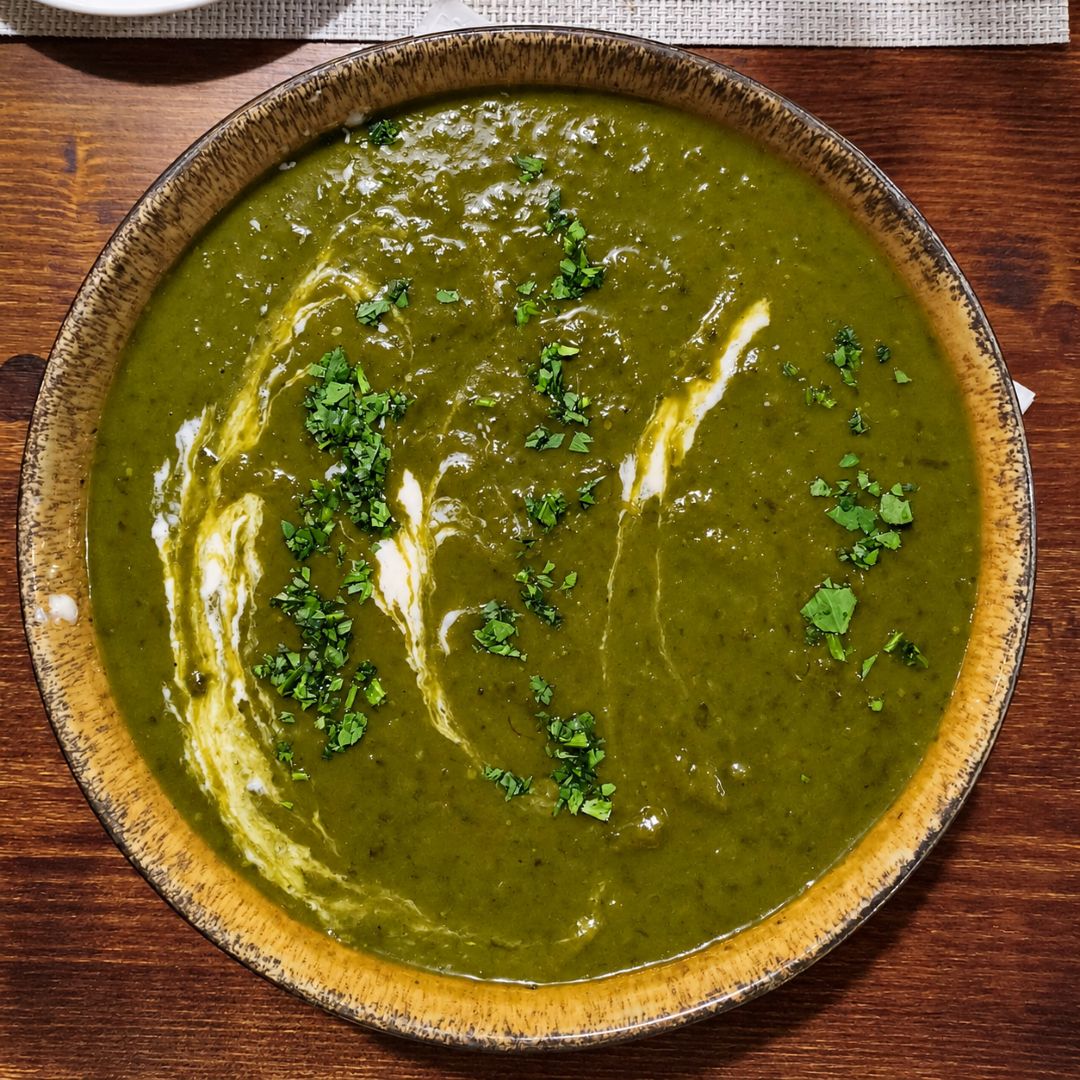
The soup in my photo is very smooth, so I prefer to puree it thoroughly rather than leave visible pieces of vegetable in the bowl.
An immersion blender is the easiest option. Move it slowly through the soup until the potatoes, stems and leaves have completely broken down.
If you want an exceptionally fine texture, you can also pass the finished soup through a fine-mesh strainer. I usually do not find that necessary at home, but it is a useful option if you want a particularly elegant finish.
The consistency is easy to adjust. If the soup is too thick after blending, add a little more vegetable stock. If it is too thin, let it simmer gently for a few more minutes before serving.
Why I Add Only a Little Cream
I like the soup best when the cream remains in the background.
Swiss chard has enough flavor to carry the dish on its own, and the potatoes already give the soup plenty of body. Around 100 ml (3.4 fl oz) of cream is enough to make the texture smoother and the flavor a little rounder.
For the finish, I add just a small swirl of cream to the bowl. It creates the pale streaks against the deep green soup that you can see in my photo.
Fresh parsley adds a little color and a fresh herbal note at the end.
My Tips for Better Swiss Chard Soup
Use the stems
Do not throw away the thicker Swiss chard stems. They have more texture than the leaves and add character to the soup. Just cut them into small pieces and cook them before adding the leaves.
Give the potatoes enough time
The potatoes need to be completely tender before blending. If they are still firm, the soup will not become as smooth as it should.
Add the leaves later
The leaves cook much faster than the stems and potatoes. Adding them toward the end keeps the cooking time short and helps preserve their fresh vegetable flavor.
Season after blending
Vegetable stock can already contain salt, so I prefer to wait until the soup has been blended before adjusting the seasoning. This makes it easier to control the final flavor.
Do not overpower the Swiss chard
Strong spices are not necessary here. Black pepper and a small pinch of nutmeg are enough for me. The soup should still taste like Swiss chard.
Can You Make Swiss Chard Soup Without Cream?
Yes. The potatoes already provide a naturally creamy texture, so the cream is not essential.
For a lighter version, simply leave it out and add a little more vegetable stock if necessary. You can also use a plant-based cream alternative if you prefer a dairy-free version.
Personally, I like the small amount of cream because it softens the slightly earthy flavor of the Swiss chard and gives the soup a smoother finish.
What to Serve with Swiss Chard Soup
A bowl of this soup makes a nice light lunch, especially with a slice of crusty bread on the side.
I particularly like it with good German-style bread. The contrast between the hearty bread and the smooth vegetable soup works very well.
If you want a more substantial meal, serve the soup with toasted bread, a simple sandwich or a small salad.
A Simple Vegetable Soup with Plenty of Character
What surprised me about Swiss chard the first time I ate it was how familiar and different it could taste at the same time.
My first thought was spinach. Then I noticed the deeper, slightly earthy flavor and the more substantial stems. In soup, those characteristics work particularly well.
There is also something I like about the way this vegetable connects a very simple recipe with everyday cooking in Germany. You do not need a complicated recipe or a long list of ingredients. A few basic vegetables, good stock and a little cream are enough to turn Mangold into a satisfying homemade soup.
The potatoes provide the creamy foundation, the Swiss chard gives the soup its distinctive flavor, and fresh parsley adds the final touch.
It is not a complicated recipe, and that is exactly what I like about it. It is the kind of vegetable soup that can be made from a handful of straightforward ingredients and still feel like a proper homemade meal.
If you have never cooked Swiss chard before, this is one of the preparations I would recommend trying first. It is simple, comforting and just different enough from a traditional spinach soup to make the bowl interesting.