
Why is NIVEA Creme So Popular?
Unveiling the Secrets Behind Its Iconic Blue Tin
There are some skincare products that become more than just products. NIVEA Creme is one of them. For generations, the familiar blue tin has been part of bathrooms, bedrooms, handbags, and medicine cabinets in Germany and far beyond.
What makes it so popular? The answer is not just the cream itself. There is also the history behind it, the unmistakable blue-and-white design, the familiar scent and texture, and the simple idea of having one classic cream that can be used in many different parts of an everyday skincare routine.
I have always found the blue NIVEA tin particularly interesting because you hardly need to see the name to know what it is. The design has become so familiar that the tin itself has become a symbol of the brand.
A Skincare Classic Since 1911
The story of NIVEA Creme goes back to 1911, when Beiersdorf introduced the cream in Hamburg. The development was made possible by Eucerit, an emulsifier that allowed oil and water to be combined into a stable cream.
The name NIVEA was chosen because of the cream’s snow-white appearance. It comes from the Latin words nix and nivis, referring to snow and the color white.
At the time, creating a stable cream that could be produced on a larger scale was an important development in modern skincare. NIVEA Creme was therefore not simply another cosmetic product. It represented a new approach to everyday skin care and eventually became one of the best-known products to come out of Germany.
The Blue Tin Came Later
Interestingly, the famous blue tin was not there from the beginning.
When NIVEA Creme was first introduced in 1911, it came in a yellow tin with an ornate Art Nouveau design. That changed in 1925, when Beiersdorf introduced the blue-and-white packaging that would eventually become one of the most recognizable designs in skincare.
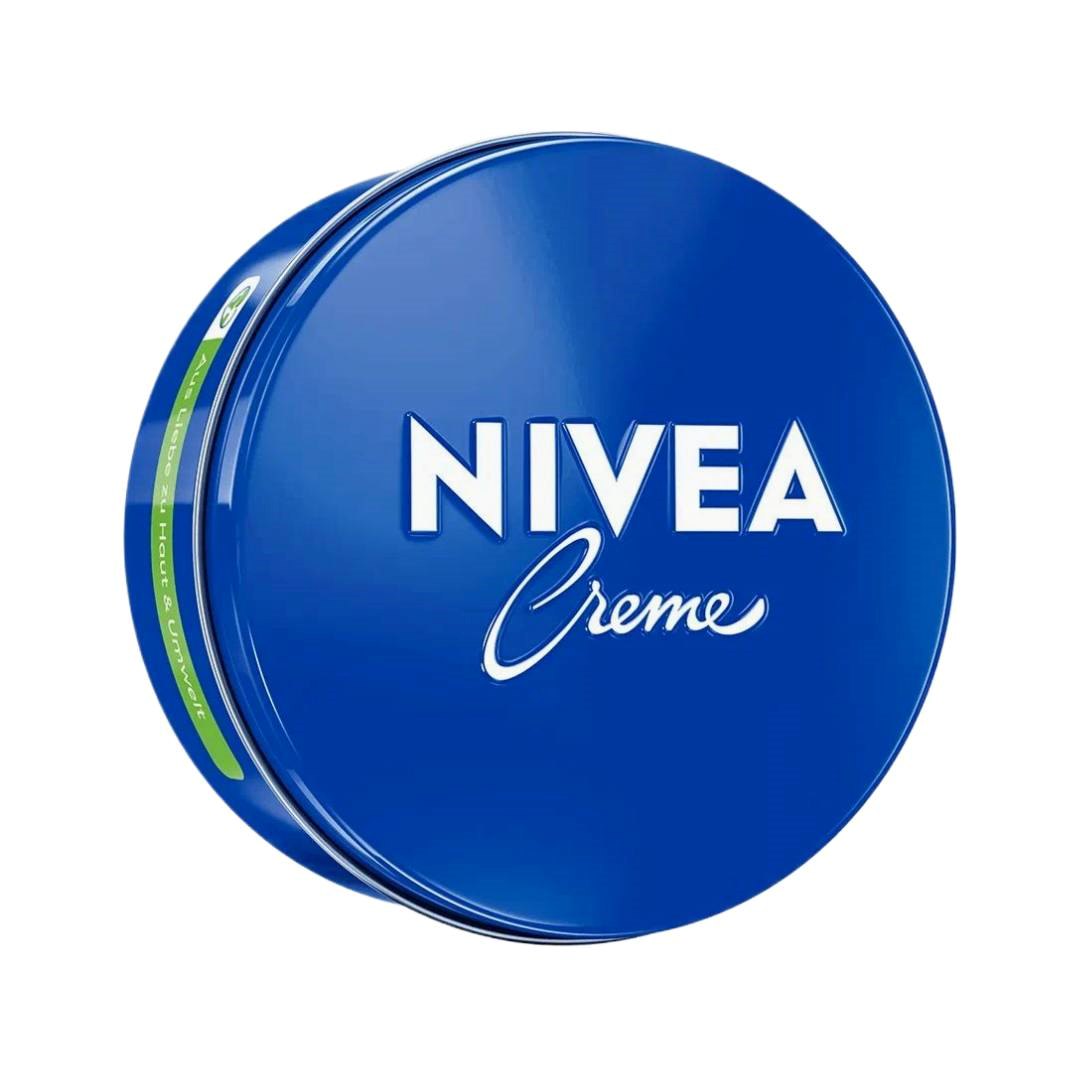
The change was more than a simple color update. The new design was clean, simple, and distinctive. The blue tin gradually became inseparable from the NIVEA name, and its basic visual identity has remained remarkably familiar ever since.
In fact, 2025 marked 100 years of the iconic blue NIVEA tin. That is quite an achievement for a piece of packaging. The design has managed to remain recognizable across generations while the NIVEA product range around it has continued to grow.
A Familiar Part of Everyday Life
For me, NIVEA Creme is not just a product I know from a supermarket shelf. I remember my grandmother in Germany using NIVEA Creme for as long as I can remember. The iconic blue tin was always there in the bathroom, along with other NIVEA products.
That is probably one of the best examples of why this brand has such a strong place in German everyday life. You could grow up seeing the same blue tin in your family’s bathroom, then encounter it again years later and immediately recognize it.
There is something reassuring about that kind of familiarity. NIVEA Creme was not presented as a complicated or exclusive skincare product. It was simply there, ready to be used as part of everyday life.
For me, that personal memory also explains why the blue tin feels like more than just packaging. It is connected with a particular generation and with memories of family life in Germany.
Simple, Recognizable and Versatile
NIVEA Creme is known for its rich, creamy texture and is used for everyday skin care on areas such as the face, hands, and body. Its versatility is another reason the classic blue tin has remained so useful in households.
You do not need a complicated routine to understand what the product is for. A small amount of the rich cream can be worked into the skin, making it a practical choice when the skin needs a more substantial moisturizer.
That simplicity is part of its appeal. While the skincare market has become increasingly specialized, with separate products for almost every imaginable purpose, NIVEA Creme has remained the familiar all-round classic in the blue tin.
Why the Blue-and-White Design Works So Well
There is something else that should not be underestimated: the packaging.
The combination of deep blue, white lettering, and the round tin is immediately recognizable. You can spot a NIVEA tin on a bathroom shelf without having to read the label carefully.
That visual identity has remained remarkably consistent for a very long time. Beiersdorf has continued to develop the NIVEA brand, but the classic blue tin remains at the center of its visual heritage.
In 2025, Beiersdorf celebrated the centenary of the blue tin and noted that more than four blue NIVEA Creme tins were sold every second worldwide in 2024. NIVEA Creme is also sold in more than 170 countries, showing just how far this originally Hamburg-based product has traveled.
A German Skincare Icon With Global Recognition
NIVEA is closely connected to Hamburg and to the history of Beiersdorf, but the brand has long since become international. Today, NIVEA products are sold around the world, while the classic blue tin continues to carry a distinctly German sense of familiarity and tradition.
The international success of NIVEA is particularly interesting because the blue tin has never needed to become unrecognizable in order to travel. Its simple design and familiar name have remained at the center of the brand while the product range has expanded into many different areas of skin care.
That combination of German heritage and international recognition is one of the things that makes NIVEA such an interesting brand to look at from a German perspective.
The Cream Behind the Familiar Tin
Of course, packaging alone cannot explain why a skincare product remains popular for more than a century. The cream itself is an important part of the story.
NIVEA Creme has a distinctive rich texture and a characteristic fragrance that many people immediately associate with the product. Its formula has been refined over the decades, but the basic character of the classic cream has remained recognizable.
That consistency matters. Someone who remembers the blue tin from childhood can open one today and still recognize the product by its appearance, texture, and scent.
Why NIVEA Creme Has Lasted So Long
Looking at NIVEA Creme today, I think its longevity comes from several things working together.
There is the history that reaches back to 1911. There is the blue tin introduced in 1925. There is the simple, recognizable character of the cream itself. And there is the fact that NIVEA has remained relevant to everyday skincare while continuing to develop a much larger product range.
But there is also something that statistics cannot really measure: familiarity. A product that has been sitting in family bathrooms for generations can become part of people’s memories in a way that a new product simply cannot reproduce overnight.
My own memory of my grandmother’s blue NIVEA tin is a small example of that. I am sure many other people have similar memories of seeing that familiar blue container somewhere in their family home.
NIVEA Creme Today
The classic blue tin is still at the heart of the NIVEA story. At the same time, the brand now offers a much broader range of skin care products for different needs and routines.
If you would like to see the classic cream as well as other German NIVEA products available through GermanBuy, you can browse our NIVEA collection.
For me, though, the original NIVEA Creme in the blue tin remains the product that best represents the brand. It is simple, recognizable, and closely connected with more than a century of German skincare history.
A Little More About the Classic Blue NIVEA Cream
There are many questions surrounding the classic NIVEA Creme, especially because the product has been around for so long. If you are interested in one of the questions that often comes up when people discuss the traditional blue cream, you can also read our article Is NIVEA Blue Cream Non-Comedogenic? Debunking the Myths.
A Blue Tin That Became Part of Skincare History
So, why is NIVEA Creme so popular?
There is no single answer. It is the combination of a long history, a familiar cream, a remarkably successful package design, and the trust that can develop when a product remains part of everyday life for generations.
The blue tin first appeared in 1925. A century later, it is still instantly recognizable.
That says quite a lot about the staying power of a truly classic product.
Sources & Further Reading:
Wikipedia: NIVEA





One Comment
Comments are closed.