What is the national food of Germany?

Germany does not have one officially designated national dish. Instead, German cuisine is shaped by a remarkable variety of regional dishes and traditions. From Sauerbraten and bratwurst to schnitzel, roulades, potato dishes, and regional specialties, what people consider “typical German food” often depends on where in Germany they are from.
Sauerbraten: A Classic German Roast
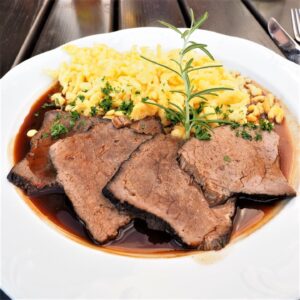
Sauerbraten is one of the dishes most often associated with traditional German cooking. The name refers to the preparation method: a roast is marinated before being slowly cooked, creating the characteristic savory and slightly tangy flavor.
There is no single recipe for Sauerbraten. Regional versions differ in their marinades, sauces, meat, and accompaniments. Beef is commonly used today, although other meats have also been used traditionally. In the Rhineland, for example, Sauerbraten is a well-known regional specialty.
A typical serving may include a rich sauce along with potato dumplings, potatoes, red cabbage, or other traditional side dishes. The combination of slow-cooked meat, flavorful gravy, and hearty sides makes Sauerbraten a classic example of the substantial home-style cooking associated with Germany.
Is Sauerbraten the National Dish of Germany?
It is understandable that Sauerbraten is sometimes described as a German national dish, especially because it is widely known outside Germany. However, Germany does not have one official national food.
German cuisine developed regionally over many centuries. Local agriculture, climate, history, and neighboring countries all influenced what people cooked and ate. As a result, a dish that is considered especially typical in one part of Germany may be much less common in another.
Germany’s national culinary identity is therefore better represented by its regional variety than by a single dish.
Regional German Cuisine
German food changes considerably from north to south and from east to west. Northern Germany has strong traditions involving fish and seafood, while western regions are known for dishes such as Rhenish Sauerbraten. Bavaria and Baden-Wuerttemberg have their own famous specialties, including dishes such as Weisswurst, Maultaschen, and various roast and dumpling dishes.
Bratwurst is another food strongly associated with Germany. There are numerous regional varieties, including Thuringian Rostbratwurst and Nuremberg Rostbratwurst. These are not simply different names for the same sausage; each regional specialty has its own traditional characteristics.
This regional diversity is one of the most interesting things about German food. There is no single “German taste.” Instead, traditional cuisine reflects the landscape, ingredients, and history of the region where a dish developed.
What About Wurstsalat?
Wurstsalat, or German sausage salad, is a traditional dish, but it is not a national dish of Germany. It is particularly associated with southern Germany and neighboring German-speaking regions.

Unlike a typical green salad, Wurstsalat is made with sliced sausage and usually includes ingredients such as onions, pickles, and a vinegar-based dressing. The exact recipe varies by region.
It is often served as a simple cold meal or snack, accompanied by bread. In southern Germany, it is a familiar part of traditional food culture and can be found in restaurants, beer gardens, and casual dining settings.
Other Foods Commonly Associated with Germany
When people outside Germany think of German food, they often mention bratwurst, schnitzel, sauerkraut, potato dishes, and hearty roasts. All of these have a place in German food culture, but none represents the entire country on its own.
Other well-known examples include roulades, goulash, pork knuckle, potato dumplings, red cabbage, and regional specialties such as Maultaschen. Even familiar dishes can vary considerably depending on where they are prepared.
For example, German roulades are traditionally prepared as rolled slices of beef with a savory filling, while goulash reflects the long-standing culinary exchange between German-speaking regions and neighboring Central European cuisines.
German Food Is Regional Food
One of the best ways to understand German cuisine is to think of it as a collection of regional food traditions rather than a single national menu. Recipes were shaped by the ingredients available locally, by agriculture and climate, and by centuries of cultural exchange.
That is why there are so many answers to the question, “What is the national food of Germany?” Sauerbraten may be one of the strongest candidates, but bratwurst, schnitzel, roulades, potato dishes, and countless regional specialties all tell part of the story.
So, What Is Germany’s National Food?
If you need to name just one dish, Sauerbraten is a reasonable choice because it is a classic German roast with a long tradition and strong regional roots. But the more accurate answer is that Germany has no single national dish.
The real character of German cuisine lies in its variety. From a hearty Sauerbraten in the Rhineland to bratwurst in Thuringia or Bavaria, traditional German food is closely connected to regional identity.
For anyone interested in German food, that variety is part of the fun. There is always another regional specialty to discover and another traditional dish that tells a different story about Germany.
GermanBuy Tip: If you want to prepare traditional German dishes at home, our selection of German cooking products includes seasoning mixes for classics such as Sauerbraten, roulades, and goulash.
Source: Germany Travel