The German Advent Wreath: Four Candles and Christmas Tradition

In Germany, the Advent wreath is one of those traditions that quietly changes the feeling of a home. As December approaches, evergreen branches, candlelight, and Christmas decorations begin to appear on dining tables, coffee tables, and windowsills.
For many families, the wreath is more than a Christmas decoration. It marks the four Sundays leading up to Christmas and creates a simple ritual that brings everyone together during Advent.
But why are there four candles? Why does another candle get lit each Sunday? And is there really a strict rule about what a German Advent wreath should look like?

What Is a German Advent Wreath?
A German Advent wreath, known as an Adventskranz, traditionally consists of evergreen branches and four candles. Each candle represents one of the four Sundays of Advent.
The idea is simple. On the first Sunday, one candle is lit. On the second Sunday, two candles glow. The third Sunday brings three, and on the fourth Sunday all four candles are burning.
This gradual increase in candlelight creates a visual countdown to Christmas. The wreath does not simply decorate the room; it changes a little each week as Christmas gets closer.
Traditional wreaths often use fir branches, but German Advent wreaths can look very different from one household to another. Some are decorated with pinecones, ribbons, dried flowers, berries, or small wooden ornaments. Others are deliberately simple, with four candles and little else.
Why Does a German Advent Wreath Have Four Candles?
The four candles correspond to the four Sundays of Advent.
Advent begins on a Sunday and leads into the Christmas season. Because the calendar changes every year, the exact number of days between the beginning of Advent and Christmas Eve can vary. The four Advent Sundays, however, remain the central rhythm of the traditional countdown.
Lighting one additional candle each Sunday gives the season a sense of progress. The first Sunday feels like the beginning. By the fourth Sunday, the room is brighter and Christmas is very close.
There is something wonderfully simple about that ritual. No complicated countdown is needed. You only have to look at the wreath to see how far Advent has progressed.
The Four Sundays of Advent
The First Sunday of Advent
The first candle marks the beginning of Advent. For many families, this is when the Christmas season really starts at home.
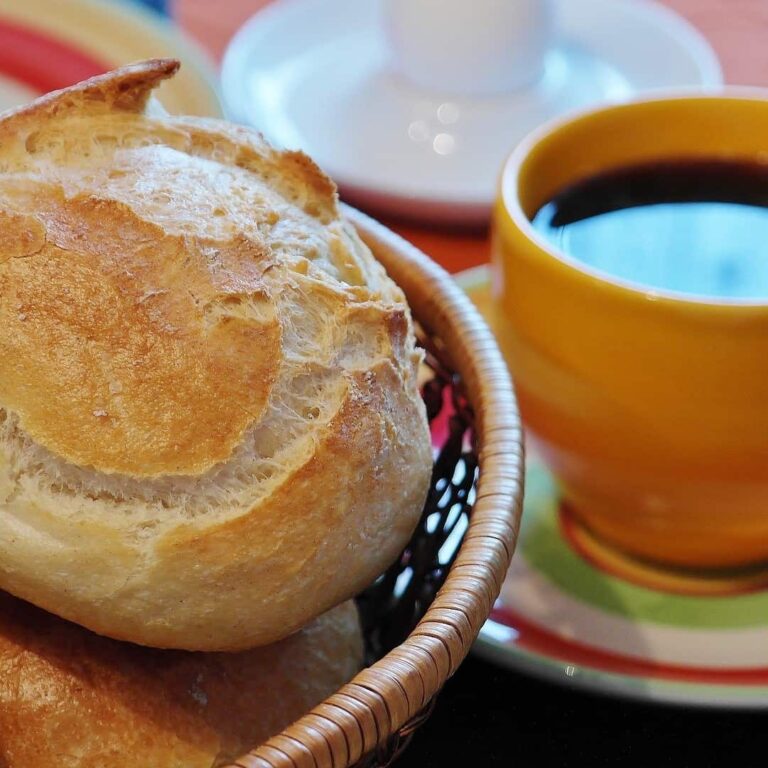
The wreath may become the center of an Adventskaffee, a traditional German coffee gathering during the Advent season. A pot of coffee or tea, homemade Christmas cookies, and the glow of the first candle can turn an ordinary Sunday afternoon into something that feels distinctly seasonal.
The Second Sunday of Advent
On the second Sunday, two candles are lit.
By now, the kitchen may already smell like Christmas. Vanillekipferl, Lebkuchen, Zimtsterne, and other German Christmas cookies are common favorites during Advent. In some homes, the cookie tin seems to disappear almost as quickly as it is filled.
The Third Sunday of Advent
Three candles now shine on the wreath, and Christmas is getting noticeably closer.
In many households, the scent of Christmas cookies fills the kitchen while gift wrapping slowly begins to take over the dining table. A Christmas market visit, an afternoon at home, or a quiet cup of coffee can all become part of the Sunday routine.
The Advent wreath simply sits nearby, adding another little reminder that Christmas is approaching.
The Fourth Sunday of Advent
On the fourth Sunday, all four candles are lit.
This is one of the most anticipated moments of Advent. The wreath is now at its brightest, Christmas preparations are usually well underway, and the wait is almost over.
Depending on the calendar, the fourth Sunday of Advent can fall very close to Christmas Eve. That makes the final candle especially meaningful: after several weeks of waiting, Christmas is finally just around the corner.
Is There Really a Strict Rule for the Four Candles?
Not really.
The four-candle tradition is well established, but German Advent wreaths do not all follow one exact design. There is no requirement that every wreath use red candles, a particular type of greenery, or a specific arrangement.
Some families choose classic red candles. Others prefer white, cream, green, or natural colors that match their Christmas decorations. Some wreaths are lush and traditional, while others are modern and minimalist.
There is also no requirement that the wreath be perfectly round or made from a particular type of greenery. The familiar circular shape is traditional, but modern Advent arrangements can take many forms.
What matters most is the familiar rhythm: four candles, four Sundays, and one more candle glowing as Christmas approaches.
Where Did the Advent Wreath Come From?
The modern Advent wreath has a distinctly German history and is closely associated with Johann Hinrich Wichern, a Hamburg theologian and the founder of the Rauhes Haus.
In 1839, Wichern created an early Advent wreath for the children at the Rauhes Haus in Hamburg. His original design looked very different from the four-candle wreaths found in German homes today. It had a candle for each day of Advent, with larger white candles for the Sundays and smaller red candles for the weekdays.
The idea gave the children a way to see and count the days as they waited for Christmas. Over time, the elaborate daily-candle design became simpler. The four-candle Advent wreath eventually became the familiar version used in homes across Germany.
The original tradition is still maintained at the Rauhes Haus today, where Wichern wreaths continue to use candles for the individual days of Advent.
What Does the Advent Wreath Mean?
The Advent wreath represents anticipation, light, and the gradual approach of Christmas.
The evergreen branches also fit naturally into the season. While much of the landscape becomes bare during winter, evergreen plants remain green. Together with candlelight, they create the warm atmosphere that many people associate with German Advent.
For Christian families, the wreath has a religious meaning connected with preparing for Christmas. For others, it has become a beloved seasonal tradition centered more on family, home, and the feeling of waiting.
That flexibility is part of what makes the tradition so enduring. The same four candles can mean something slightly different to every family.
“Advent, Advent, ein Lichtlein brennt”
If you have spent time around German Christmas traditions, you may have heard the familiar opening:
“Advent, Advent, ein Lichtlein brennt.”
The well-known German Advent rhyme follows the same simple progression as the wreath: first one candle, then two, then three, then four. Children often learn it during the Advent season, and the rhyme is a natural part of the excitement surrounding the weekly candle-lighting ritual.
For anyone learning about German Christmas traditions, it is a lovely example of how closely the Advent wreath, the Christmas countdown, and family rituals are connected.
How German Families Use the Advent Wreath
The Advent wreath is usually more than something that sits on the table as decoration. It can become part of the rhythm of the entire Advent season.
On Sunday, family members may gather around the wreath and light the appropriate candles. There might be coffee, tea, hot chocolate, or a plate of homemade cookies. Children may watch as an adult lights the candles, and Christmas music may play quietly in the background.
For some families, the ritual is religious. For others, it is simply a cozy Sunday tradition.
This is where the Advent wreath fits so naturally into German Christmas culture. It does not need to be a big event. Sometimes the memorable moments are very ordinary: a dark December afternoon, warm drinks on the table, the smell of freshly baked cookies, and candlelight reflected in the windows.
Can You Make a German Advent Wreath at Home?
Absolutely.
A traditional wreath can be made with evergreen branches attached to a wreath base, with four candles arranged around it. Florists, garden centers, and seasonal markets in Germany commonly offer wreaths and materials during the weeks before Advent.
You can also create a much simpler version at home. Four candles on a tray surrounded by evergreen branches can capture the same basic idea without requiring elaborate craft skills.
If you make one yourself, candle safety is important. Keep the candles stable, place the arrangement on a heat-resistant surface, and never leave burning candles unattended. Evergreen branches can become dry as the season progresses, so check the arrangement regularly.
Why the Advent Wreath Still Feels Special
There is a reason the Advent wreath has remained part of German Christmas culture for so long. It gives the season a rhythm.
Christmas can easily become a long list of shopping, baking, decorating, parties, and preparations. The Advent wreath offers something much simpler. Once a week, another candle is lit. For a few minutes, everyone can slow down and enjoy the moment.
For me, that is one of the most beautiful things about German Advent traditions. They do not always need to be complicated. A wreath on the table, a few Christmas cookies, familiar music, and time with family can be enough to make December feel different.
And when the fourth candle is finally glowing, you know that Christmas is no longer far away.
A German Christmas Tradition Worth Bringing Home
If you are familiar with Advent calendars, Christmas markets, or German holiday baking, the Advent wreath adds another piece to the picture. It is a tradition built around waiting rather than rushing.
Four candles. Four Sundays. One candle added each week.
That simple countdown has become one of the warmest symbols of Advent in Germany. Whether your wreath is traditional, handmade, modern, or simply four candles arranged on your table, the idea remains the same: slow down, enjoy the season, and let a little more light into the home each week.
Maybe that is what makes the German Advent wreath so timeless. It does not ask for much. It simply gives the season a little more light, one Sunday at a time.
Christmas greetings,
Mary