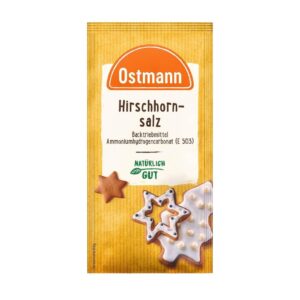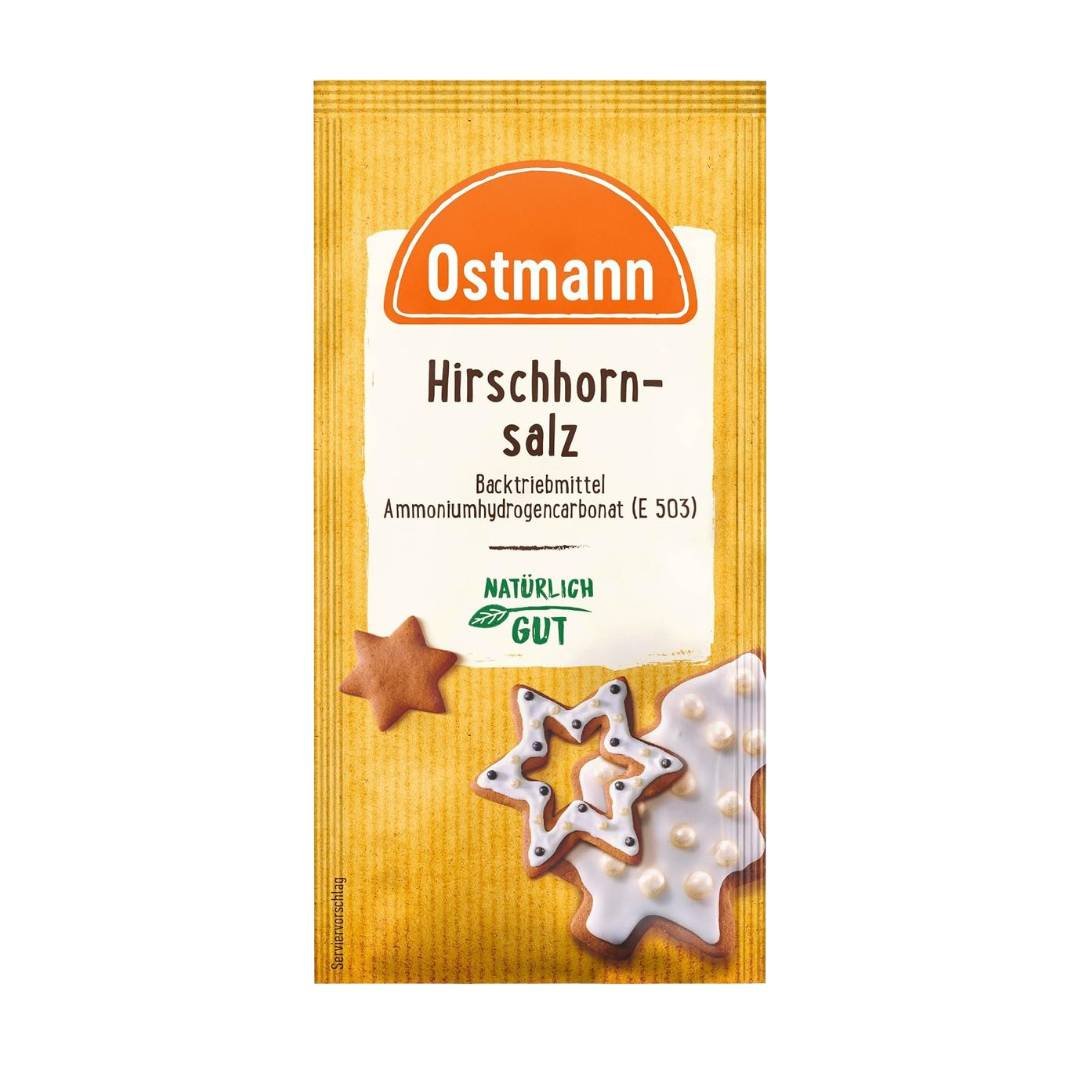
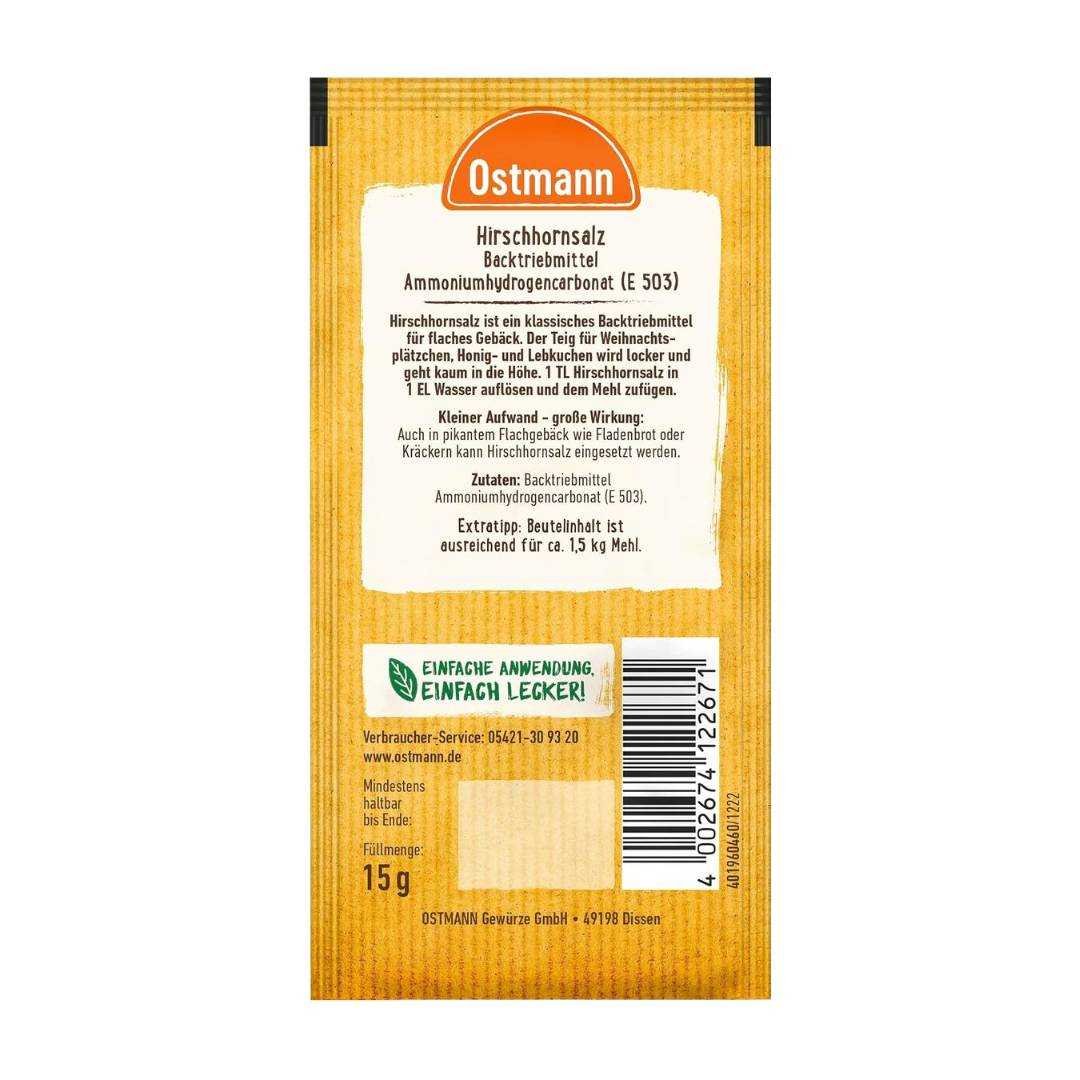
Ostmann Hirschhornsalz – German Baker’s Ammonia
Ostmann Hirschhornsalz is a traditional German baking leavening agent made with ammonium hydrogen carbonate (E503). Essential for authentic German Christmas baking, this classic baker’s ammonia is perfectly suited for traditional gingerbread, Lebkuchen, Spekulatius, and other thin, crisp cookies.
- Shipping: shipped from Germany to your door
- Tracking: tracking available for every order
Ostmann Hirschhornsalz – Traditional German Baker’s Ammonia
Ostmann Hirschhornsalz is a traditional German baking ingredient made with ammonium hydrogen carbonate (E503). In English, this ingredient is commonly known as baker’s ammonia or ammonium bicarbonate.
It works especially well in thin, crisp baked goods. German bakers traditionally use Hirschhornsalz for cookies, gingerbread, crackers, Spekulatius and other pastries that benefit from a light texture.
During baking, baker’s ammonia releases gases that help loosen the dough. Thin baked goods allow these gases to escape easily, which makes Hirschhornsalz a good choice for many traditional German cookie recipes.
Use Ostmann Hirschhornsalz according to your recipe. For the recommended preparation, dissolve 1 teaspoon in 1 tablespoon of water and add the mixture to the flour. One 15 g packet is sufficient for approximately 1.5 kg of flour, depending on the recipe.
Content: 15g / 0.52 oz
Made in Germany
Frequently Asked Questions
Is Ostmann Hirschhornsalz the same as baker’s ammonia?
Yes. Ostmann Hirschhornsalz contains ammonium hydrogen carbonate (E503), which is commonly called baker’s ammonia or ammonium bicarbonate in English.
Is baker’s ammonia the same as baking soda?
No. Baker’s ammonia and baking soda are different leavening agents. Baker’s ammonia contains ammonium hydrogen carbonate, while baking soda contains sodium bicarbonate.
What is Ostmann Hirschhornsalz used for?
Hirschhornsalz works particularly well in thin, relatively dry baked goods such as cookies, gingerbread, crackers and traditional German pastries.
What can I use instead of baker’s ammonia?
There is no universal one-to-one substitute. The right alternative depends on the recipe and the type of baked good. Baking powder or baking soda may work in some recipes, but they do not work in exactly the same way.
Why is baker’s ammonia good for thin cookies?
Baker’s ammonia releases gases during baking. Thin cookies allow those gases to escape easily, which helps create a light and crisp texture.
Why is it called Hirschhornsalz?
The name Hirschhornsalz comes from the historical production of this baking ingredient. In the past, it was obtained by dry distillation of grated deer antlers, which were traditionally called “Hirschhorn” in German. This process produced ammonium salts that became known as Hirschhornsalz.
Although the name suggests horn, deer antlers are actually made primarily of bone tissue. Historically, manufacturers also used other nitrogen-rich animal materials, including horns, hooves, claws and leather.
Today, Hirschhornsalz is produced chemically rather than from animal materials. The main ingredient, ammonium hydrogen carbonate, can be produced by combining ammonia and carbon dioxide. The modern baking ingredient therefore has no connection to its historical animal-derived source.
| Shipping Weight | 0.07 kg |
|---|---|
| Condition | New |
| GTIN | 4002674122671 |
| Brand | Ostmann |
| Original German Product Name | Ostmann Hirschhornsalz |
| Content | 15 g / 0.52 oz |
| Edition | Original German Language Edition |
| English Name | Baker's ammonia / ammonium bicarbonate |
| Product Type | Leavening agent |
| Recommended Use | Especially suitable for thin and relatively dry baked goods such as cookies, gingerbread, crackers and traditional German pastries. |
| Suggested Preparation | Dissolve 1 teaspoon (5 ml) in 1 tablespoon (15 ml) of water and add to the flour. One 15 g / 0.52 oz packet is sufficient for approximately 3.3 lb (1.5 kg) of flour, depending on the recipe. |
| Important Note | Only use for flat, dry baked goods. Do not use for thick cakes, as the ammonia gas needs to escape completely during baking. |
| Storage | Store according to the instructions on the package. |
| Ingredients | Ammonium hydrogen carbonate (E503) |
| Country/Region of Manufacture | Germany |
Related products
Knorr Fix Schmorbraten Braised Meat Mix
Original price was: $2.79.$2.49Current price is: $2.49.Maggi Fix & Fresh Goulash
Original price was: $2.99.$2.49Current price is: $2.49.Knorr Fix Chili Con Carne Mix
Original price was: $2.79.$2.49Current price is: $2.49.Maggi Würze Liquid Seasoning – 250g / 8.8oz
Original price was: $6.99.$5.90Current price is: $5.90.