Maggi Seasoning: Unveiling the Flavor Magic
Some foods are remembered for a particular taste, while others are remembered simply because they were always there. In Germany, Maggi Wurze belongs to the second category for many people. The familiar dark liquid seasoning has been part of German cooking for generations, and the distinctive bottle is still easy to recognize.
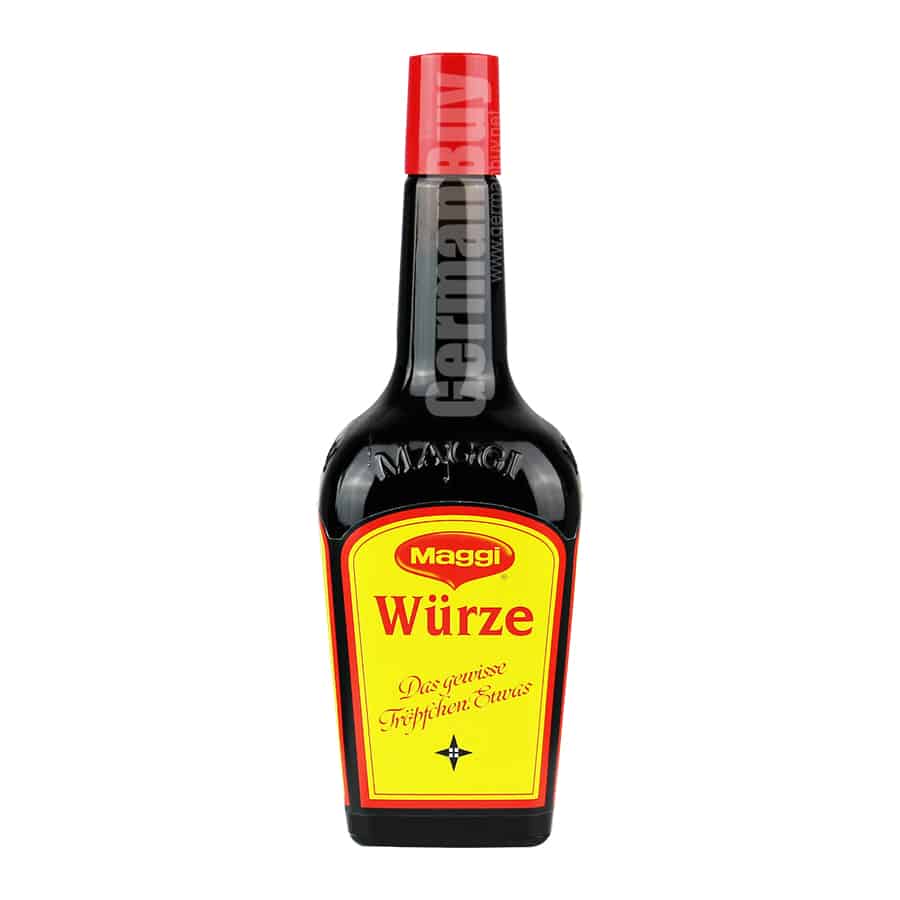
I have always found it interesting how certain products become part of everyday food culture without anyone really thinking of them as something special. Maggi Wurze is a good example. It is not a complicated sauce, and it is not tied to just one traditional recipe. Instead, it is the kind of seasoning that can quietly become part of the way a family cooks.
What Is Maggi Wurze?
Maggi Wurze is a German liquid seasoning with a concentrated savory flavor. It is commonly used to season and refine soups, stews, sauces, salads, and other everyday dishes.
It is worth pointing out that Maggi Wurze is not simply another name for soy sauce. The classic German product uses fermented wheat-based vegetable protein and has its own distinctive flavor profile. The current German formulation also contains water, salt, flavorings, and other seasoning ingredients. Maggi describes the product as vegan.
Because the flavor is concentrated, only a small amount is usually needed. That makes Maggi Wurze less of a sauce that you pour over a dish and more of a seasoning that you add gradually while cooking or at the table.
Where Did Maggi Seasoning Come From?
The story begins with Julius Maggi, a Swiss entrepreneur and food pioneer. During the industrialization of the late nineteenth century, Maggi was looking for practical and affordable foods that could provide nourishment while also being quick to prepare.
In 1886, Maggi introduced its first ready-to-cook soups and also developed the liquid seasoning that would become known as Maggi Wurze. The seasoning quickly became an important part of the growing Maggi brand.
The connection with Germany came very early. In 1887, Maggi opened its first German branch in Singen, Baden. Production and bottling of Maggi Wurze followed there, helping establish the product in the German market.
Today, Maggi is part of Nestle, but the familiar German Maggi Wurze has a history in Germany that goes back well over a century.
The Famous Maggi Bottle
Part of the story is the bottle itself.
In 1887, Julius Maggi personally designed the characteristic brown Maggi seasoning bottle with its yellow-and-red label. The basic appearance became one of the most recognizable elements of the brand and has remained remarkably consistent over the years.
That is one reason the bottle can feel almost like a piece of household history. For someone who grew up in Germany, seeing it on a kitchen table can bring back memories of family meals, simple soups, or a parent reaching for the bottle while cooking.
For me, that is one of the more interesting things about traditional food products. Their importance is not always about sophistication. Sometimes it is simply about being present through hundreds of ordinary meals.
How Do Germans Use Maggi Seasoning?
There is no single German dish that defines Maggi Wurze. Its strength is its versatility.
- Soups and broths: A few drops can add a deeper savory note to many types of soup.
- Stews: It can be used as part of the final seasoning of hearty meat or vegetable dishes.
- Sauces and gravies: A small amount can add additional savory depth.
- Egg dishes: Some people enjoy a little Maggi with scrambled or fried eggs.
- Salads and dressings: Maggi Wurze can also be used to season salads and salad sauces.
- At the table: In some households, the bottle is simply placed on the table so everyone can season their own food.
The important thing is to use it carefully. Maggi Wurze is concentrated, so I would start with a small amount and taste before adding more. Once you get used to the flavor, it becomes quite easy to judge how much a particular dish needs.
Why Does Maggi Wurze Feel So Familiar in Germany?
When people talk about German food, they often think about dishes such as Schnitzel, Sauerbraten, Bratwurst, or potato dishes. But food culture is also made up of much more ordinary meals.
A simple soup after work, a stew on a cold evening, or a quick meal prepared from whatever happens to be in the kitchen can be just as much a part of everyday German life.
Maggi Wurze fits naturally into that world. It does not require a complicated recipe or special cooking technique. It is simply there when someone wants to adjust the flavor of a dish.
That everyday usefulness is probably one of the reasons the product has remained so familiar. It is a practical seasoning that can be used while cooking or added directly to a finished dish.
Maggi Wurze Is Not the Same Everywhere
There is one detail that can be confusing for shoppers outside Germany. Maggi is an international brand, but Maggi products and formulations can vary from one country to another.
The version most familiar from German supermarkets is the German-market Maggi Wurze. That is the version I am referring to in this article and the version we offer at GermanBuy.
If you grew up in Germany and are looking for the familiar product, this distinction matters. An international product carrying the Maggi name is not necessarily identical to the German Wurze.
Which Size Makes Sense?
At GermanBuy, we carry German-market Maggi Wurze in different sizes.
Our 1,000 g bottle of Maggi Wurze is a good choice for anyone who already knows the product and uses it regularly. It is also the size that makes sense when Maggi Wurze is something you keep as a regular kitchen staple.
If you would rather start with a smaller bottle, we also offer Maggi Wurze in a 250 g bottle.
Another German Flavor Connection: Dresden-Style Worcester Sauce
There is another seasoning that makes me think immediately of German food culture, although it comes from a very different tradition: Exzellent Worcester Sauce Dresden Style.
If you know Wurzfleisch, you probably know why I mention it here.
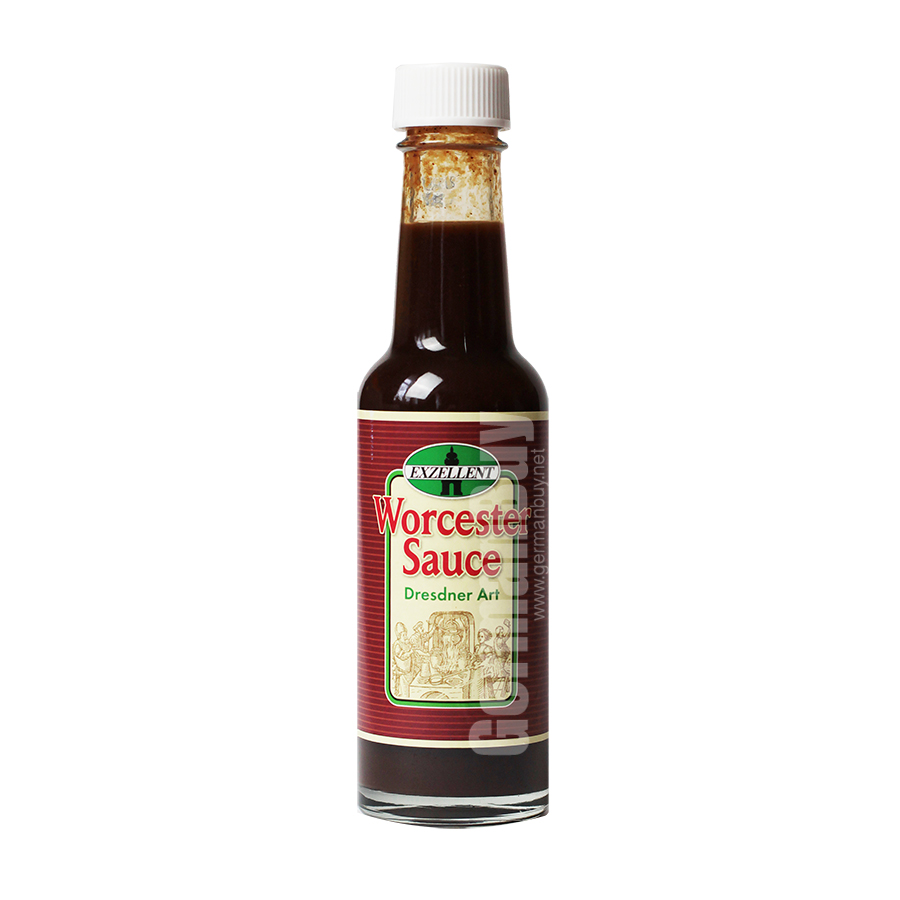
Wurzfleisch is a dish particularly associated with eastern Germany. It is generally prepared with pieces of meat in a savory sauce and is traditionally served with Worcester-style seasoning. For many people who grew up in the former East Germany, Worcester sauce is closely connected with this dish and with the flavors of everyday East German cooking.
What makes the Dresden connection particularly interesting is that German Worcester-style sauces developed their own character. During the GDR era, Worcester sauce was produced in Dresden, and a Dresden-style version became an established part of East German food culture.
That is why I think Dresden-style Worcester Sauce is a fitting companion to this story. Maggi Wurze represents one familiar strand of German everyday seasoning, while Dresden-style Worcester sauce opens a window into a more specific regional and historical food tradition.
Simple Products, Strong Food Memories
Neither Maggi Wurze nor Worcester sauce needs to be the star of a meal. Their role is often much smaller: a few drops here, a little seasoning there.
Yet those small additions can become part of a person’s memory of food. That is something I have always found fascinating about everyday cooking. The foods we remember most clearly are not necessarily the most elaborate ones. Sometimes they are the ordinary flavors that appeared again and again at home.
For me, Maggi Wurze is a good example of that kind of food memory. It is a simple seasoning, but it has been part of German kitchens for well over a century and remains instantly recognizable to many people.
When I write about German food, I think these everyday products deserve attention alongside the famous specialties. They tell us something about how people actually cook and eat at home, and they help explain why certain flavors become so closely connected with a country and its everyday life.
If you are looking for the German-market version, you can find Maggi Wurze Original Liquid Seasoning from Germany at GermanBuy.